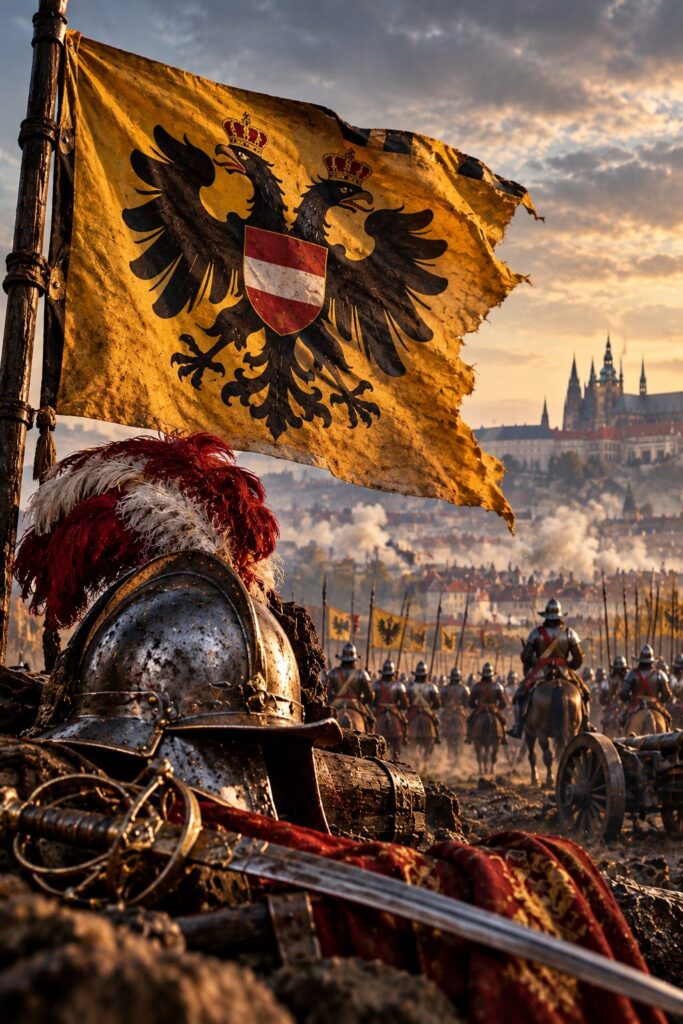
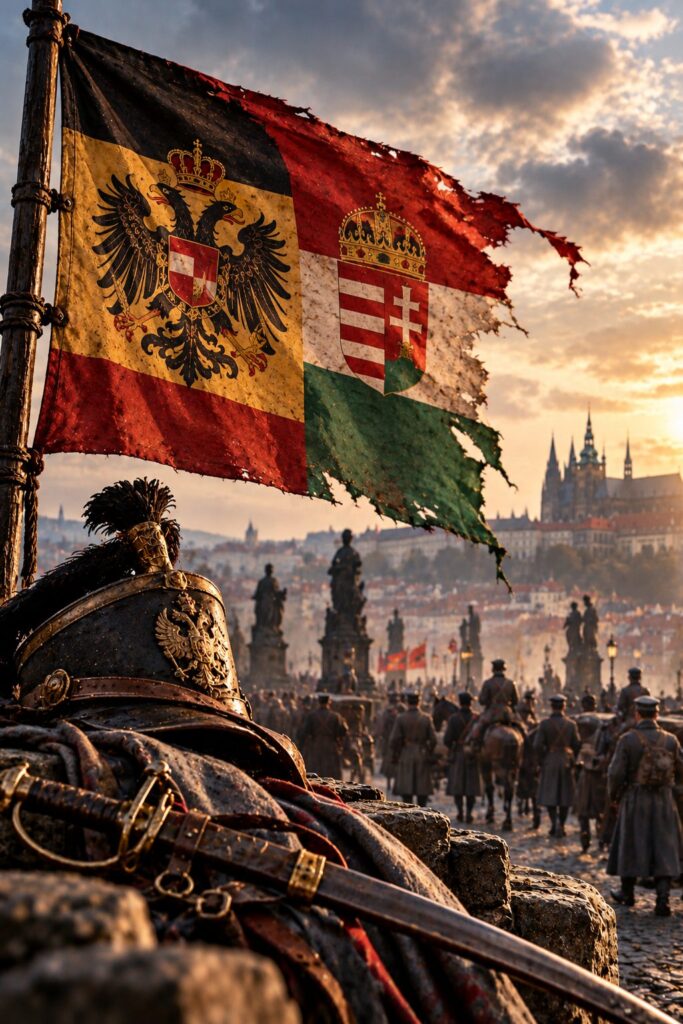
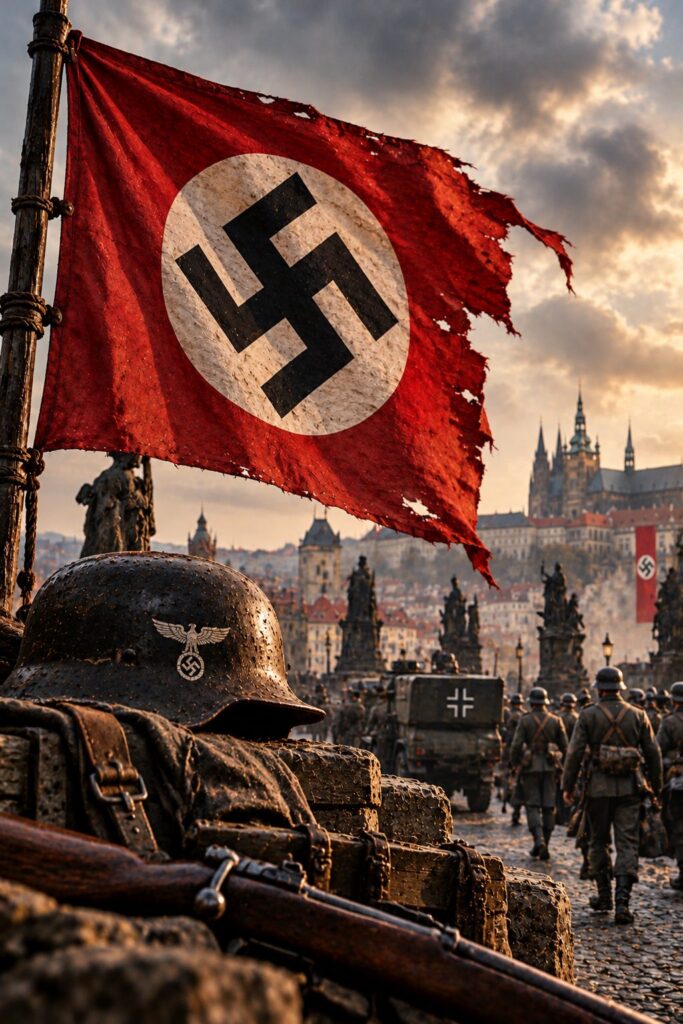
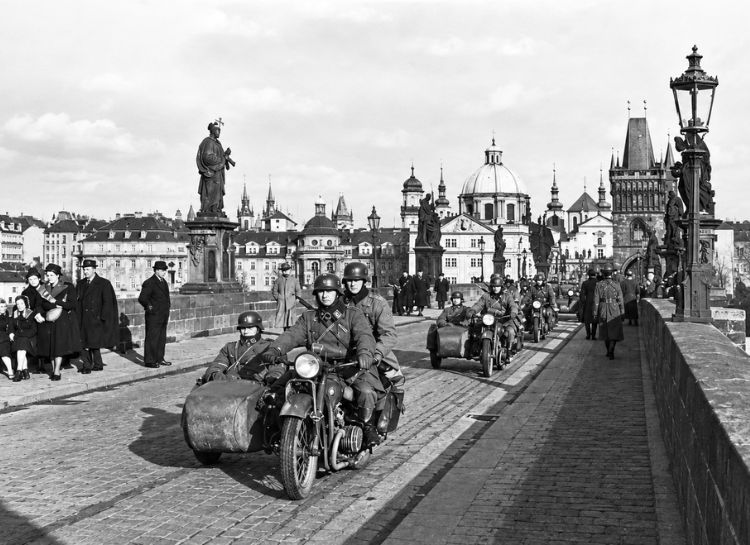
Prague war history is not simply a story of battles and invading armies. It tells the story of a city that repeatedly fought to protect its religious beliefs, political independence and national identity. From the Hussite Wars to the Nazi occupation and the Soviet-led invasion of 1968, each conflict changed Prague and the lives of its inhabitants.
Some conflicts brought fighting directly into the city’s streets. Others changed who controlled Bohemia, what its people could believe, and whether they could govern themselves. Today, historic buildings, memorials and public squares reveal how these events shaped the Czech capital.
If you walk Prague without this history, you see pretty buildings. If you walk it with it, you see why those buildings survived, and what they cost.

1. The Hussite Wars (1419–1434): When Religious Conflict Reached Prague’s Streets
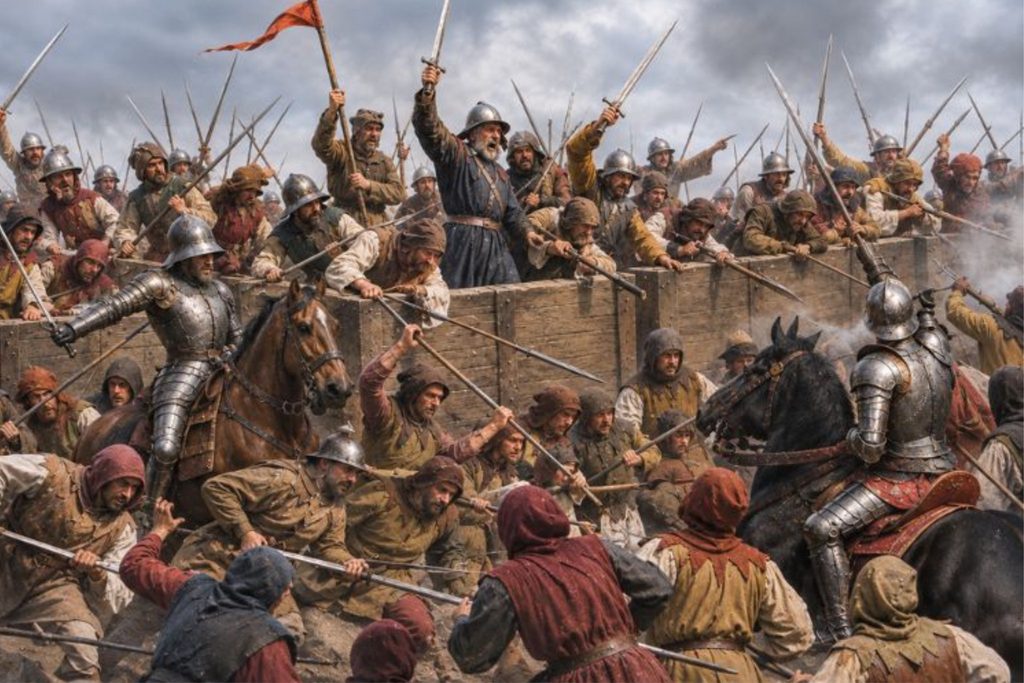
The Hussite Wars began after years of religious and political tension in Bohemia. In 1415, the Council of Constance condemned religious reformer Jan Hus for heresy and executed him.
Hus had criticized corruption within the Catholic Church and demanded religious reform. His execution intensified opposition among his followers, particularly in Prague, where his teachings had attracted considerable support. To understand the religious background behind these events, explore our guide to Prague’s religious history, from Jan Hus and the Hussite movement to the Catholic transformation of Bohemia and modern secular Prague.
The crisis reached a turning point on July 30, 1419, during the First Defenestration of Prague. Hussite supporters stormed the New Town Hall and threw several town councillors from its windows. The incident helped turn religious disagreement into open rebellion.
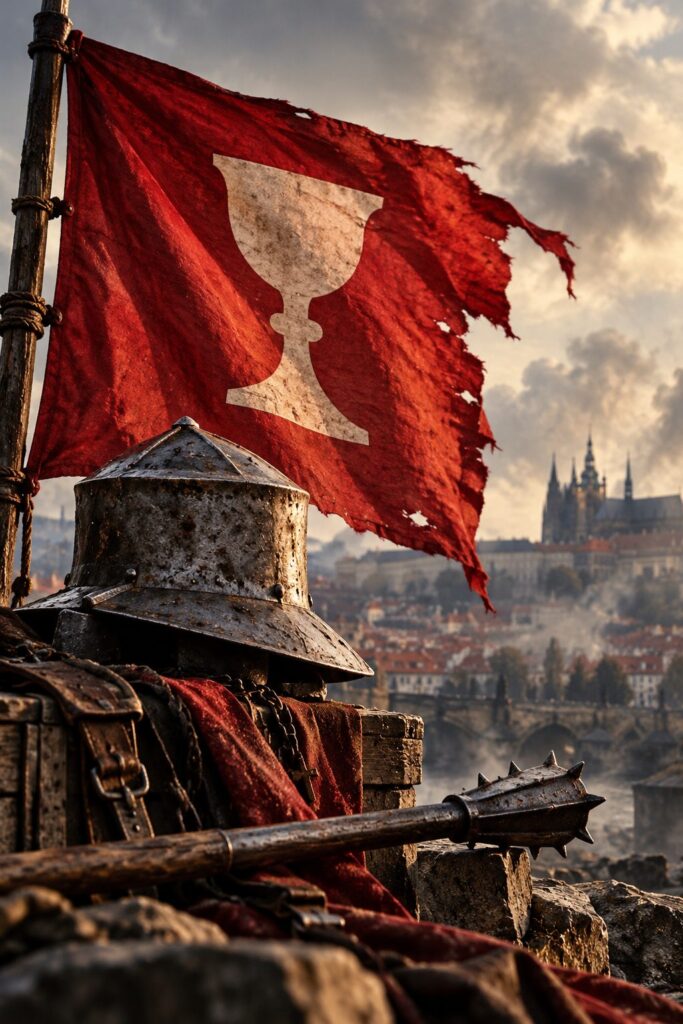
The conflict soon spread across the Czech lands. Catholic forces and successive crusading armies attempted to suppress the Hussite movement. However, the Hussites developed effective military tactics and resisted repeated attacks.
One of the most important confrontations occurred at Vítkov Hill on July 14, 1420. Hussite forces under Jan Žižka defeated a crusading army that threatened Prague. Their victory protected the city and became one of the defining military moments of the conflict.
The Hussite movement eventually divided into competing factions. In 1434, moderate Hussites and their Catholic allies defeated the radical Hussites at the Battle of Lipany, bringing the main phase of the wars to an end.
This chapter of Prague war history established the city as a major centre of religious resistance and changed the relationship between political and religious authority in Bohemia.
Where to See the Hussite Legacy in Prague Today
- New Town Hall: Visit Karlovo náměstí, where the First Defenestration took place in 1419.
- Vítkov Hill: See the monumental equestrian statue of Jan Žižka and visit the National Memorial overlooking the historic battlefield.
- Prague Historical Figures: Discover more about Jan Hus and Jan Žižka in our guide to Prague’s historical figures.
The Hussite Wars also marked an important turning point in Prague’s political development. Explore our guide to Prague Political History to understand how religious conflicts reshaped political authority in Bohemia.
2. The Thirty Years’ War (1618–1648): The Conflict That Changed Bohemia Forever
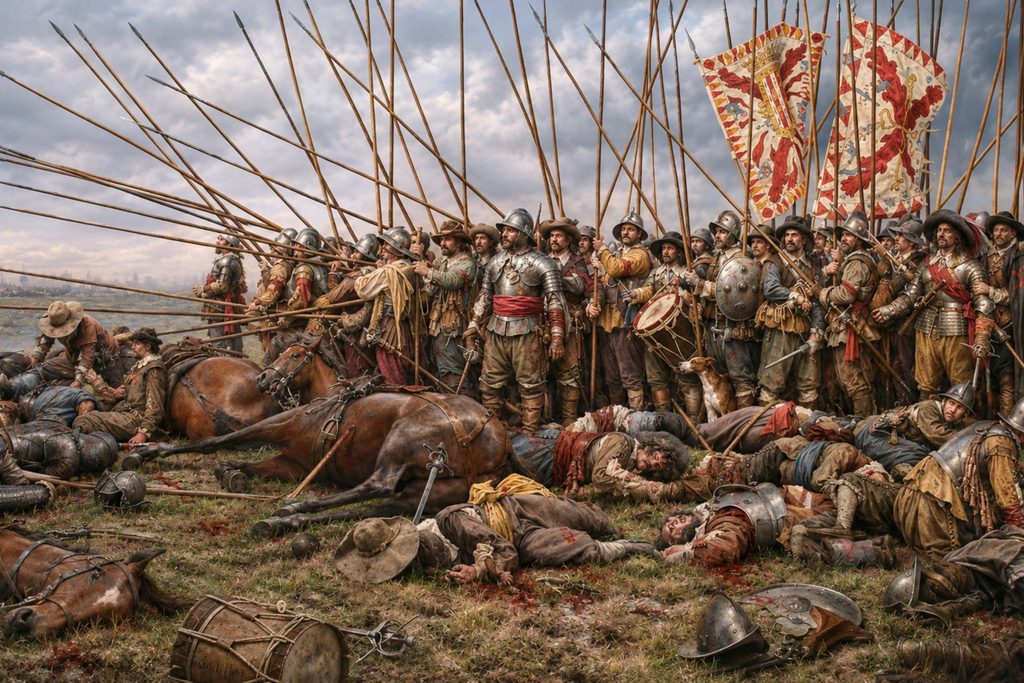
Few conflicts had consequences as lasting as the Thirty Years’ War. Its origins reach back to Prague, where religious tensions between Protestant Bohemian estates and the Catholic Habsburg monarchy eventually erupted into rebellion.
On May 23, 1618, Protestant nobles entered Prague Castle. They threw two Catholic royal governors and their secretary from a window of the Bohemian Chancellery. All three survived the fall.
Historians call this incident the Second Defenestration of Prague. It triggered the Bohemian Revolt and helped set the wider European conflict in motion.
The Battle of White Mountain and Its Consequences
The rebellion reached a decisive turning point at the Battle of White Mountain on November 8, 1620, just outside Prague. Catholic Habsburg forces defeated the Bohemian Protestant army, ended the revolt and restored imperial control.
The consequences were severe. On June 21, 1621, Habsburg authorities executed 27 leaders of the Bohemian revolt in Old Town Square. Their deaths became a powerful symbol of the defeat of the Bohemian estates and their loss of political independence.
Look for the crosses in the pavement near the Old Town Hall. Originally, 27 crosses commemorated the executed leaders. In 2011, the Czech art group Ztohoven added a 28th cross in memory of Martin Fruwein of Podolí. He probably died by suicide before his execution, and the authorities subsequently beheaded his body.
The crosses are just one example of how Prague monuments preserve the city’s dramatic history. Explore more landmarks in our Prague Monuments: Why They Were Built and When guide.
The Habsburg authorities also introduced extensive religious and political changes. Protestant nobles and other opponents faced pressure to convert or leave the country. Meanwhile, Catholicism became dominant throughout the Czech lands.
Prague experienced another major military confrontation near the end of the war. In 1648, Swedish forces captured Lesser Town and Prague Castle. However, defenders in the Old Town resisted their advance across the Vltava. Fighting continued until the Peace of Westphalia ended the wider conflict.
The Thirty Years’ War remains one of the most consequential chapters in Prague war history. It fundamentally transformed Bohemia’s political and religious direction for generations.
Where to See the Thirty Years’ War Legacy in Prague Today
- Prague Castle, Old Royal Palace: Visit the former Bohemian Chancellery in the Ludvík Wing, where the Second Defenestration took place.
- Old Town Square: Find the 28 crosses in the pavement near the Old Town Hall, commemorating the executed Bohemian leaders.
- Charles Bridge: Explore the bridge and surrounding Lesser Town area, which formed part of the setting of the Swedish attack in 1648.
Read our Old Town Square Prague guide and Prague Castle guide to explore these historic locations.
3. The Seven Years’ War and the Battle of Prague (1757)
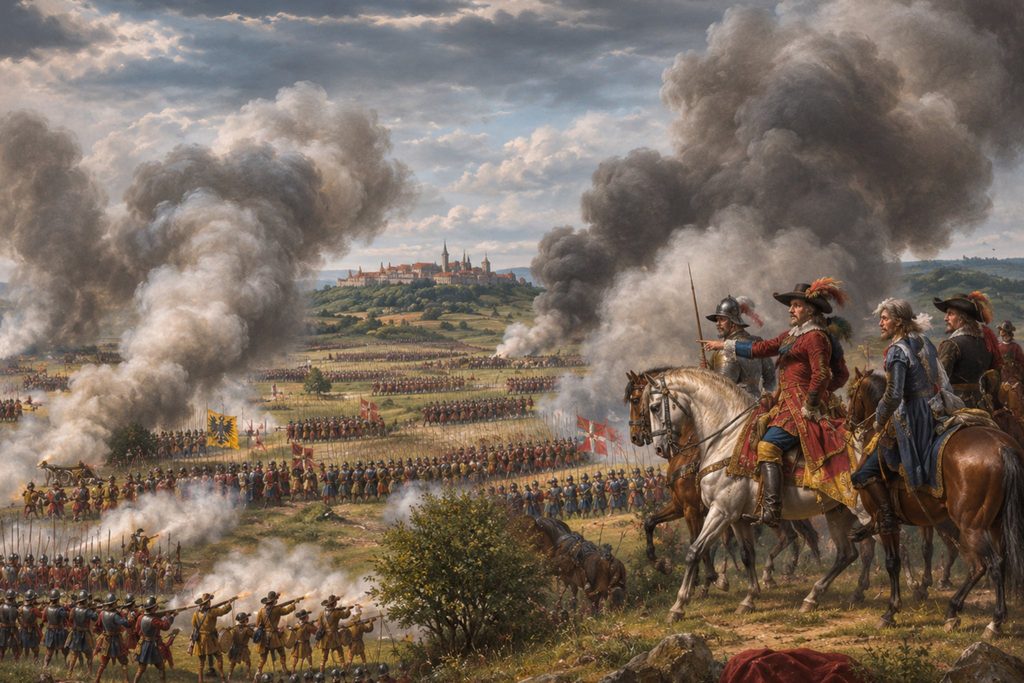
More than a century after the Thirty Years’ War, another major European military conflict reached Prague.
During the Seven Years’ War, Prussia under Frederick the Great sought to expand its influence in Central Europe. In 1757, Prussian forces advanced into Bohemia and confronted the Austrian army near Prague.
The Battle of Prague took place on May 6, 1757. Although the Prussians achieved a tactical victory, they suffered considerable losses. Meanwhile, the Austrian forces retreated into the city.
Rather than immediately attacking Prague, Frederick’s army surrounded it and began a siege. Prussian artillery bombarded the city, damaging buildings and causing suffering among its inhabitants.
The siege continued until June 1757, when an Austrian relief army defeated the Prussians at the Battle of Kolín. Frederick then abandoned the siege and withdrew his forces.
Unlike the Thirty Years’ War, this conflict did not permanently transform Prague’s religious or political identity. Nevertheless, it demonstrated the city’s strategic importance and exposed its population to the destruction of eighteenth-century European warfare.
The Battle of Prague adds another important military episode to Prague war history, although visitors will find fewer direct memorials to this conflict than to later events.
Where to Explore the Historical Context in Prague Today
There is no single monument dedicated specifically to the 1757 siege. However, visitors can explore the wider history of Prague’s military defences at Vyšehrad. Its Baroque fortress formed part of the city’s defensive system during the Habsburg period.
The National Museum’s permanent History exhibition also provides useful context. It covers the history of the Czech lands from the eighth century to the First World War. If you’d like to explore more of the city’s collections and exhibitions, discover our guide to Prague Museums: 17 Unusual Museums You Won’t Find in Guidebooks.
These places help explain Prague’s development as a fortified city, even though neither serves as a dedicated memorial to the 1757 battle.
4. World War I and the Birth of Czechoslovakia (1914–1918)
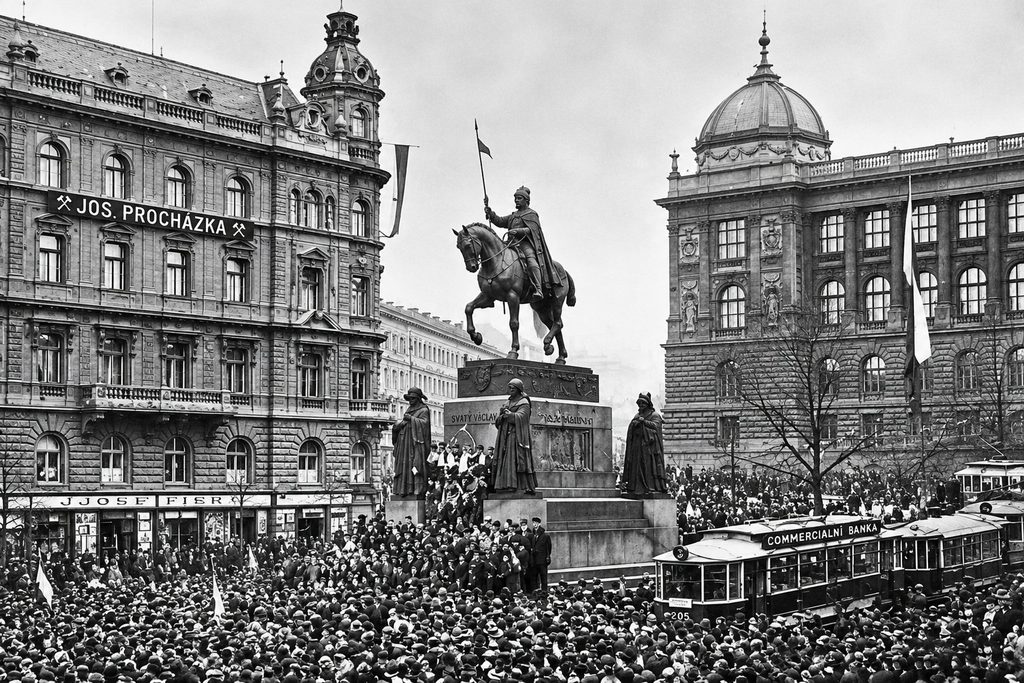
World War I did not bring a major battle to Prague. However, its consequences changed the city’s political future more dramatically than many military confrontations.
At the beginning of the war in 1914, Prague belonged to Austria-Hungary, a vast multinational empire under Habsburg rule. The empire sent thousands of Czech soldiers to fight, while civilians at home faced shortages, economic difficulties and growing political dissatisfaction.
As the war continued, support for the Austro-Hungarian monarchy weakened. Czech political leaders increasingly pursued independence. Meanwhile, military defeats pushed the empire closer to collapse.
The decisive moment came in October 1918. Following the disintegration of Austria-Hungary, Czech political leaders proclaimed Czechoslovak independence in Prague on October 28, 1918.
The Municipal House became an important centre of the emerging Czechoslovak state. Wenceslas Square also attracted crowds celebrating independence.
Beyond its role in Czechoslovak independence, Municipal House is one of Prague’s finest architectural landmarks. Discover more remarkable buildings in our Prague Architecture: 25 Famous Buildings That Tell the City’s Story guide.
For Prague, the change was enormous. After centuries under Habsburg rule, the city became the capital of an independent Czechoslovak Republic.
This period of Prague war history shows that conflicts did not always need to reach the city’s streets to transform its future. World War I changed Prague through the collapse of an empire rather than a battle in the capital.
Where to See This Turning Point in Prague Today
- Municipal House: Visit the building associated with the proclamation of Czechoslovak independence.
- Wenceslas Square: Explore the historic square where crowds celebrated the establishment of the new state.
This was not a battle fought in Prague. It was the political transformation that turned the city into the capital of a new independent country.
5. Nazi Occupation and World War II (1938–1945)
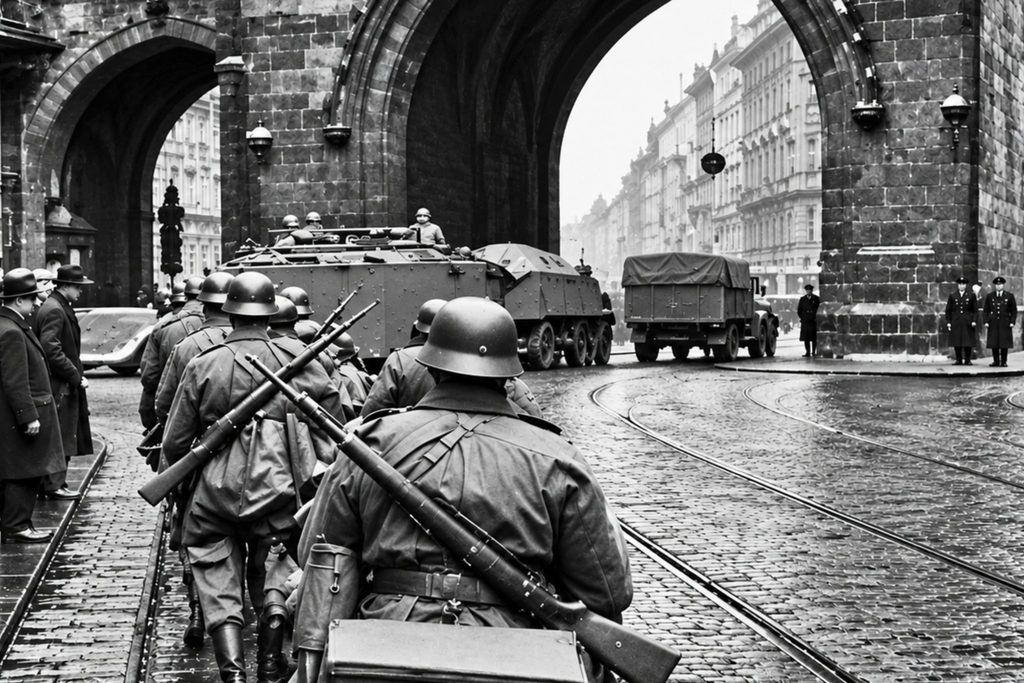
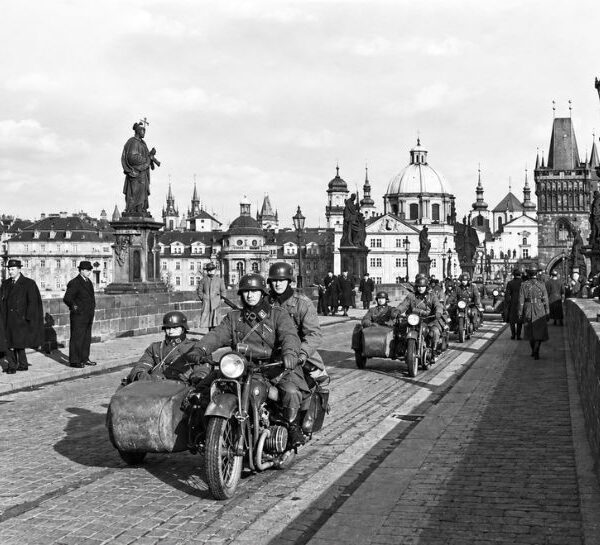
The Nazi occupation marked one of the darkest periods in Prague’s modern history. It brought foreign military control, political repression, persecution and resistance.
The crisis began with the Munich Agreement of September 1938. Under its terms, Czechoslovakia had to surrender the Sudetenland to Nazi Germany. This territorial loss weakened the country and made further German expansion easier.
On March 15, 1939, German troops entered Prague and occupied the remaining Czech territories. Nazi Germany subsequently established the Protectorate of Bohemia and Moravia.
The occupation affected almost every part of daily life. Nazi authorities arrested political opponents, closed Czech universities and systematically persecuted Jewish communities. Deportations and mass murder during the Holocaust devastated Jewish life across the Czech lands.
Operation Anthropoid and the Resistance Against Nazi Rule
One of the most significant resistance operations occurred on May 27, 1942. Czechoslovak paratroopers attacked Reinhard Heydrich, the acting Reich Protector, during Operation Anthropoid.
Heydrich died from his injuries on June 4, 1942. The Nazis responded with brutal reprisals. They destroyed Lidice and Ležáky and executed thousands of people.
The operation became one of the most significant acts of resistance against Nazi rule in occupied Europe. Its consequences remain visible in Prague through the memorial dedicated to the paratroopers who carried it out.
The Prague Bombing and the Uprising of 1945
Prague also experienced Allied bombing during the final months of the war. On February 14, 1945, American bombers mistakenly attacked parts of Prague during a raid intended for Dresden. The bombing killed hundreds of civilians and damaged residential areas and historic buildings.
As Nazi Germany approached defeat, Prague became the scene of another major confrontation.
On May 5, 1945, Czech resistance fighters and civilians launched the Prague Uprising. They built barricades and fought German forces across the city. The opposing sides agreed to a ceasefire on May 8, and most German forces withdrew that evening. Soviet troops entered Prague on May 9, while isolated fighting continued in parts of the city.
The uprising became a defining moment of Czech resistance and marked the end of Nazi rule in the capital.
Few periods of Prague war history left such deep scars. Today, memorials, museums and personal stories preserve the memory of those who suffered and resisted during the occupation.
Where to See the World War II Legacy in Prague Today
- Church of Saints Cyril and Methodius, Resslova Street: Visit the National Memorial to the Heroes of the Heydrich Terror in the church’s underground crypt. The paratroopers took refuge here before their final confrontation with Nazi forces.
- National Memorial on Vítkov: Explore its exhibitions to understand the wider history of Czechoslovak statehood and twentieth-century conflicts.
- Prague Historical Figures: Our historical figures guide also explores the role of Reinhard Heydrich in Prague’s wartime history.
6. The Soviet-led Invasion of Czechoslovakia (1968): Tanks in the Streets of Prague
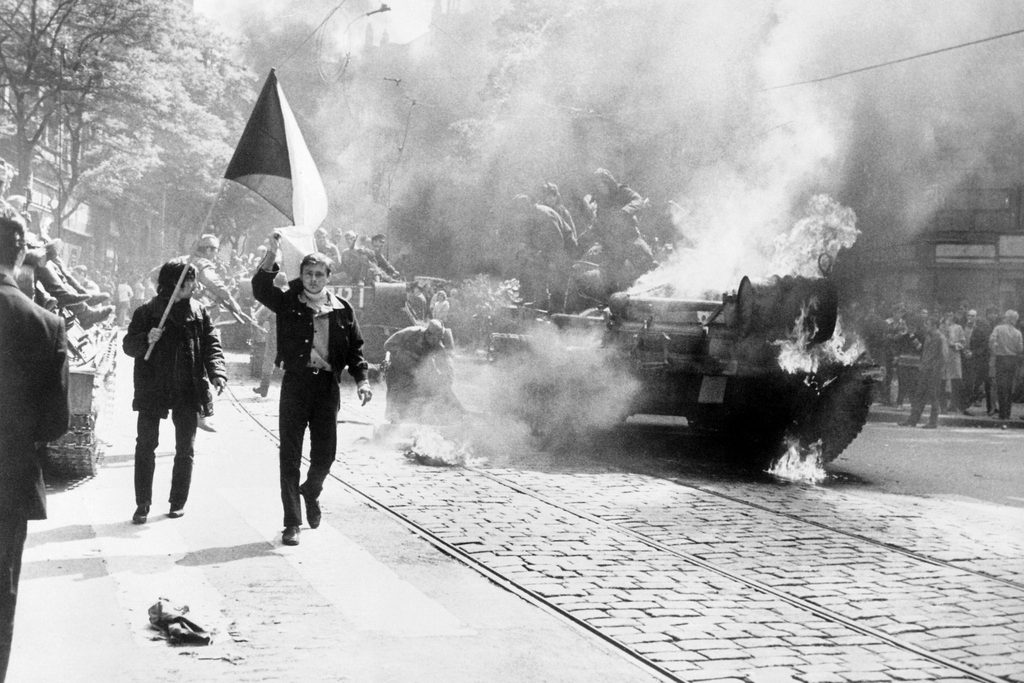
The events of August 1968 were not a conventional war. However, they represented another major foreign military intervention in Prague’s history.
Earlier that year, Czechoslovakia had entered a period of political reform known as the Prague Spring. Under Alexander Dubček, the Communist leadership introduced changes intended to create a more open political system. These included greater freedom of expression and reduced censorship.
The reforms alarmed the Soviet Union and other Warsaw Pact governments. Their leaders feared that political liberalisation could weaken communist control across Eastern Europe.
During the night of August 20–21, 1968, Warsaw Pact forces under Soviet leadership invaded Czechoslovakia. Tanks and military vehicles entered Prague, occupied key locations and surrounded government buildings.
Residents responded with widespread civilian resistance. They protested, attempted to confuse occupying troops and organised public demonstrations against the intervention.
Soviet Tanks Enter Prague and the National Museum Attack
One of the most recognisable sites of the invasion was the National Museum at the top of Wenceslas Square. Soviet soldiers fired on the building on August 21, 1968. Their gunfire damaged the façade, stone columns, sculptures and interior.
Restoration teams later repaired the building. However, the National Museum deliberately retained visible stone repair patches in areas that had suffered damage. A commemorative plaque also recalls the attack. These marks represent repairs rather than untouched bullet holes.
The invasion ended the Prague Spring reforms. A period known as Normalization followed, during which the Communist leadership restored strict political control and restricted public freedoms.
On January 16, 1969, student Jan Palach set himself on fire in protest against the invasion and the growing public resignation that followed it. He died three days later, on January 19.
The events of 1968 remain a crucial part of Prague war history because they demonstrate how foreign military intervention could reverse political reform. Their consequences shaped Czech society for another two decades.
Where to See the 1968 Invasion Legacy in Prague Today
- National Museum: Look for the commemorative plaque and surviving stone repair patches on the historic building’s façade. These marks recall the Soviet shooting in August 1968.
- Wenceslas Square: Visit the memorial associated with Jan Palach and the events that followed the invasion.
For a closer look at the area, see our guide to Old Town Square and Prague’s historic squares, which also covers Wenceslas Square.
7. The Velvet Revolution (1989): The End of Communist Rule
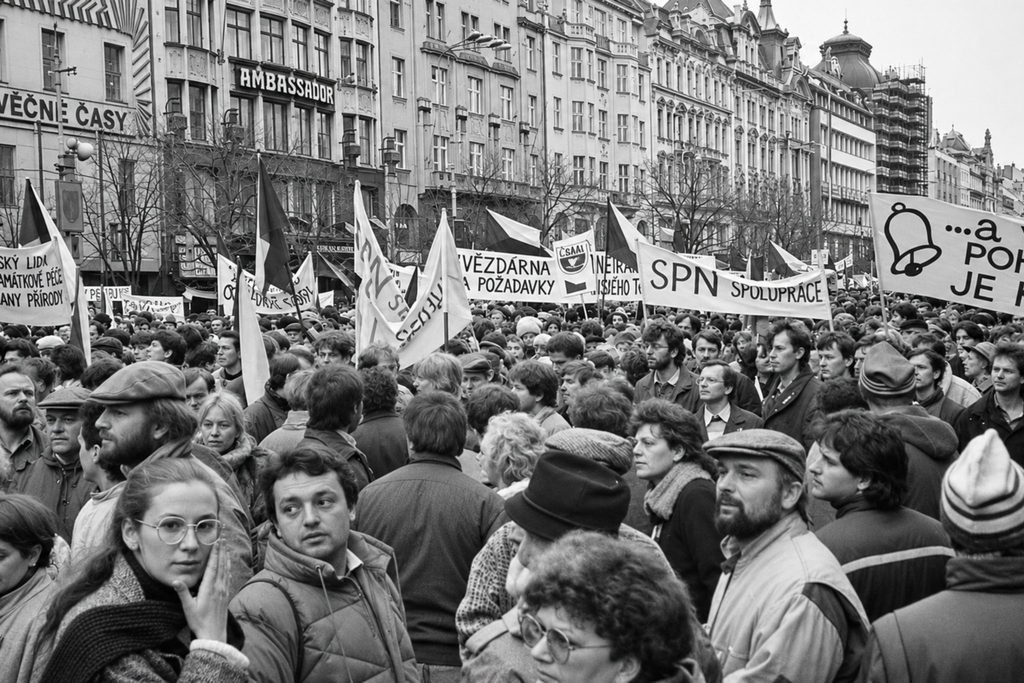
The Velvet Revolution was neither a war nor a military invasion. Instead, a largely peaceful mass movement ended communist rule in Czechoslovakia and changed Prague’s political future.
By the late 1980s, communist governments across Eastern Europe faced growing pressure for political reform. In Czechoslovakia, dissatisfaction with restrictions on freedom, political repression and economic conditions had increased for years.
The turning point came on November 17, 1989. Security forces violently dispersed a student demonstration on Prague’s Národní třída.
News of the police action spread quickly and triggered widespread protests. Students, intellectuals, artists and ordinary citizens joined demonstrations demanding political change.
Wenceslas Square became the centre of the movement. Hundreds of thousands of people gathered there, rang keys and demanded an end to communist rule. The Velvet Revolution also brought historic streets and public spaces into the heart of Prague’s modern history. If you’d like to explore more of the city’s famous routes and thoroughfares, read our guide to Prague Streets.
Opposition groups also played a central role. Civic Forum, with Václav Havel among its leading figures, helped negotiate the political transition.
By December 1989, the communist leadership had lost power. On December 29, the Federal Assembly elected Václav Havel president of Czechoslovakia in Vladislav Hall at Prague Castle.
The movement became known as the Velvet Revolution because of its largely peaceful character. It stood in contrast to the violent conflicts that had shaped earlier periods of Czech history.
Although it was not a war, the Velvet Revolution provides an essential conclusion to Prague war history. It ended four decades of communist rule and opened the way for democratic political change.
Where to See the Velvet Revolution Legacy in Prague Today
- Národní třída: Visit the memorial commemorating the November 17 student demonstration and the police crackdown that triggered the revolution.
- Wenceslas Square: Explore the location of the enormous public demonstrations that brought communist rule to an end.
- Letná Park: Visit the area where massive demonstrations took place in November 1989.
- Prague Castle: See Vladislav Hall, where Václav Havel became president on December 29, 1989.
How Prague War History Shaped the City’s Identity
Prague’s history involves much more than its architecture and monuments. Centuries of religious disagreement, military confrontation, foreign occupation and political transformation shaped the city’s identity.
The Hussite Wars established Prague as an important centre of religious resistance. The Thirty Years’ War transformed Bohemia’s political and religious direction. Later conflicts demonstrated the city’s strategic importance, while the collapse of Austria-Hungary created the conditions for an independent Czechoslovak state.
The Nazi occupation brought persecution and destruction. The Soviet-led invasion of 1968 ended a period of political reform. Finally, the Velvet Revolution brought communist rule to an end without a full-scale armed conflict.
Today, visitors can explore Prague war history through historic buildings, memorials, museums and public squares. Many of these locations witnessed important moments in Czech history.
Understanding these places adds another dimension to exploring Prague. Behind familiar landmarks are stories of resistance, sacrifice and the long struggle for political and religious freedom.
Frequently Asked Questions About Prague’s Wars
Prague experienced several major conflicts, including the Hussite Wars, the Thirty Years’ War, the Seven Years’ War and World War II. The city also witnessed the Soviet-led invasion of 1968.
The Battle of Vítkov Hill in 1420 helped protect Prague from crusading forces. The Battle of White Mountain in 1620 ended the Bohemian revolt and transformed the region’s political future.
Religious and political tensions between Protestant Bohemian estates and the Catholic Habsburg monarchy triggered the Bohemian Revolt. The Second Defenestration of Prague in 1618 sparked the wider conflict.
Yes. American aircraft mistakenly bombed Prague on February 14, 1945, killing civilians and damaging historic buildings. The city also experienced intense fighting during the Prague Uprising in May 1945.
On August 20–21, Warsaw Pact forces led by the Soviet Union invaded Czechoslovakia. Soviet troops entered Prague, fired on the National Museum and ended the Prague Spring reforms.
The Velvet Revolution was a largely peaceful movement in November and December 1989 that ended communist rule in Czechoslovakia. Major demonstrations took place at Wenceslas Square and Národní třída.
German forces occupied Prague on March 15, 1939. The Czech territories of Bohemia and Moravia subsequently became the Protectorate of Bohemia and Moravia until the end of World War II.
Final Thoughts of Prague War History
Prague’s history is a story of resistance, sacrifice and the struggle for independence. From the Hussite Wars and the Thirty Years’ War to the Nazi occupation and the Soviet-led invasion of 1968, each conflict left a lasting mark on the city and its people.
Today, you can still discover this history in Prague’s castles, churches, memorials and public squares. These places are more than beautiful landmarks; they tell stories of battles, lost freedoms and the courage of generations who fought for their beliefs and their country’s future.
Understanding Prague war history gives you a different perspective on the city. As you explore its streets, you’ll begin to see beyond the architecture and recognise the historical events that helped shape modern Prague.
 Hussite Wars: Religious conflicts that challenged Church authority and reshaped medieval Bohemia.
 Battle of White Mountain: 1620 defeat of the Bohemian Revolt that strengthened Habsburg rule.
 Siege of Prague (1648): Swedish forces captured Prague Castle and Lesser Town but failed to conquer the Old Town.
 First World War: Global conflict that contributed to the collapse of Austria-Hungary and the creation of Czechoslovakia.
 Nazi Occupation: German occupation from 1939 to 1945, marked by persecution, resistance, and political repression.
 Prague Uprising (1945): Czech resistance fighters and civilians fought German forces in the streets during the final days of occupation.