Prague political history is not simply a list of kings and presidents. It is the story of who held power in the city, how political systems worked, and why authority repeatedly changed hands.
Each transformation brought more than a new ruler. It also introduced different institutions, laws and restrictions on what people could say, believe or vote for. As a result, Prague experienced monarchy, imperial government, parliamentary democracy, Nazi occupation and Communist rule.
For centuries, Prague served as the capital of the Kingdom of Bohemia, a political centre within an empire, the capital of Czechoslovakia and, eventually, the capital of the modern Czech Republic. Understanding Prague political history helps explain why Prague Castle remains the seat of power and why Wenceslas Square has repeatedly become a gathering place for political protest and public change.
Quick Timeline: Prague’s Political Transformations
- 1198: The Kingdom of Bohemia gains formal royal status.
- 1526: The Habsburg dynasty gains the Bohemian throne.
- 1620: The Battle of White Mountain leads to the centralization of Habsburg power.
- 1918: Czechoslovakia becomes an independent state.
- 1939: Nazi Germany occupies the Czech lands and establishes the Protectorate of Bohemia and Moravia.
- 1948: The Communist Party consolidates one-party rule.
- 1968: The Prague Spring reform movement ends with a Warsaw Pact invasion.
- 1989: The Velvet Revolution brings down Communist rule.
- 1993: The Czech Republic becomes an independent state.
- 1999: The Czech Republic joins NATO.
- 2004: The Czech Republic joins the European Union.
A Bohemian state existed from the 9th–10th centuries, but the formal Kingdom of Bohemia dates to 1198, when Přemysl Otakar I received royal status.

1. Prague Political History: Kingdom of Bohemia, Estates vs King
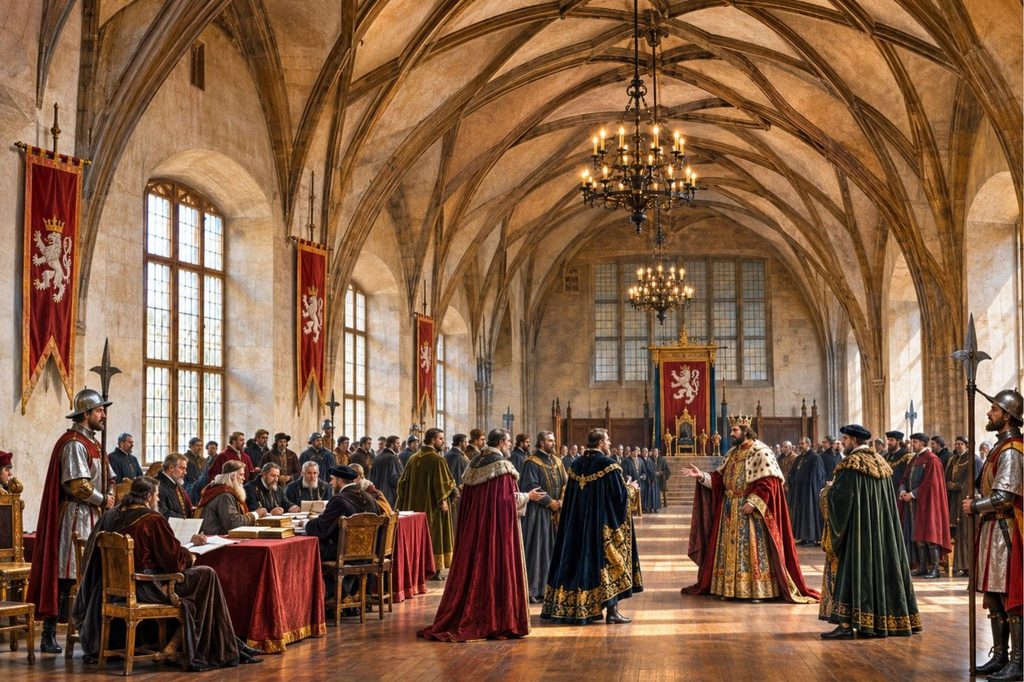
The Kingdom of Bohemia became a powerful state within the Holy Roman Empire. Prague also became its capital, its political centre and the seat of its king.
But the king did not rule alone.
In fact, power was shared with the Bohemian Estates, a political assembly that, in its classic form, included the higher nobility, the lower nobility and knights, and representatives of the royal towns, including Prague.
Their composition and influence changed over time. In some periods, the Estates were strong enough to elect the king and block taxation. In other periods, a powerful monarch could dominate them. This constant tension defined Bohemian politics: a ruler trying to centralize authority while the Estates tried to protect their privileges.
The Bohemian Estates and Royal Authority
The Estates approved taxes and new laws and, during certain periods, participated in choosing the monarch. The king therefore needed their cooperation to govern effectively.
Prague Castle was the physical centre of this political system. The king lived there, while important political meetings also took place within the castle complex. To understand how this historic seat of power developed, explore our guide to Prague monuments and the history behind their construction.
Charles IV and Prague’s Political Importance
Under the Luxembourg dynasty, especially during the reign of Charles IV in the 14th century, Prague reached its political peak. Under Charles IV, Prague became the principal imperial residence and a major centre of the Holy Roman Empire, as well as the capital of the Kingdom of Bohemia.
He founded Charles University in 1348 and expanded Prague’s importance as a centre of imperial administration and European politics.
Even at its peak, royal authority had limits. For example, the king had to work through institutions, customs and the Estates.
Still, that balance would break in the 17th century.
2. Habsburg Rule (1526–1918): From Autonomy to Centralization in Prague Political History
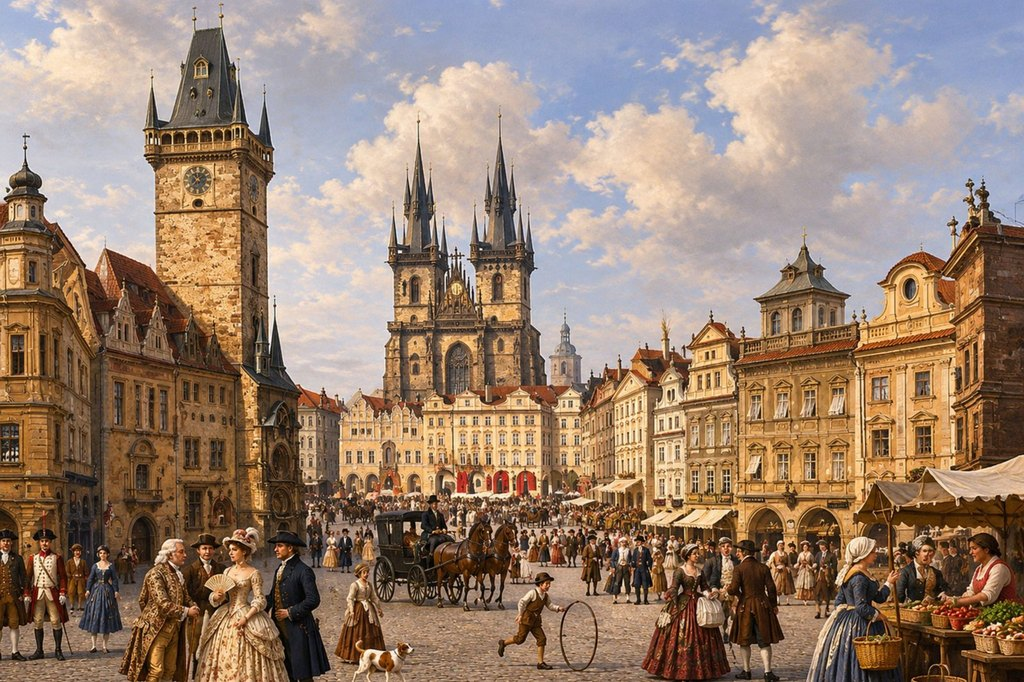
In 1526, the Habsburg dynasty gained the Bohemian throne. At first, little changed. The Habsburgs also promised to respect Bohemian privileges, and the Estates continued to function.
Then the turning point came after 1620.
How the Battle of White Mountain Changed Prague Political History
In 1618, Protestant members of the Estates rebelled in the Second Defenestration of Prague. Two years later, Habsburg forces defeated the Bohemian army at the Battle of White Mountain.
The defeat also marked a turning point in Prague’s religious history, as the Habsburg authorities began a long process of Catholic recatholicization that pressured Protestant communities to convert or leave Bohemia.
The Habsburgs used their victory to dismantle much of the old political system. This was a major turning point in Prague political history:
- The Estates lost power. They became a much weaker institution, with decisions increasingly controlled by the monarchy.
- Political authority moved to Vienna. Imperial officials made the important decisions about Bohemia, not Prague.
- Land changed hands. The Habsburgs confiscated property from rebellious nobles and gave it to families loyal to them.
- Language policy changed. The Renewed Land Ordinance of 1627 for Bohemia established German as equal to Czech in administration. Over time, German became dominant in government, courts and higher education. Czech did not disappear, but it lost much of its position in state administration. The executions of 27 Bohemian leaders in Old Town Square in 1621 remain one of the darkest episodes of this period. Discover the story behind the memorial crosses in our guide to 16 strange and dark stories in Prague.
Prague remained an important city, but it was no longer an independent political centre. Instead, it became a provincial capital within the Habsburg monarchy.
The Czech National Revival and Demands for Autonomy
This system lasted for almost 300 years. During the 19th century, the Czech National Revival changed the political conversation. Czech intellectuals and politicians also demanded greater autonomy, Czech-language education and recognition of Bohemian historic rights. This revival reshaped Prague political history by turning language and culture into political demands.
They did not initially demand full independence. Instead, many called for political self-government within the Habsburg Empire.
The monarchy made some concessions. For example, the 1882 division of Charles University into separate Czech-language and German-language institutions gave Czech speakers instruction in their own language. Yet the Habsburgs never restored Bohemian political autonomy.
By 1914, Prague had a strong national identity but no sovereign political institutions of its own. So World War I would change that completely.
Habsburg rule also shaped Prague’s architecture and urban form, as imperial authority was expressed through Baroque palaces, churches and administrative buildings. See our guide to Prague architecture for how political power influenced the city’s appearance.
3. The First Czechoslovak Republic (1918–1938): Democracy in Prague Political History
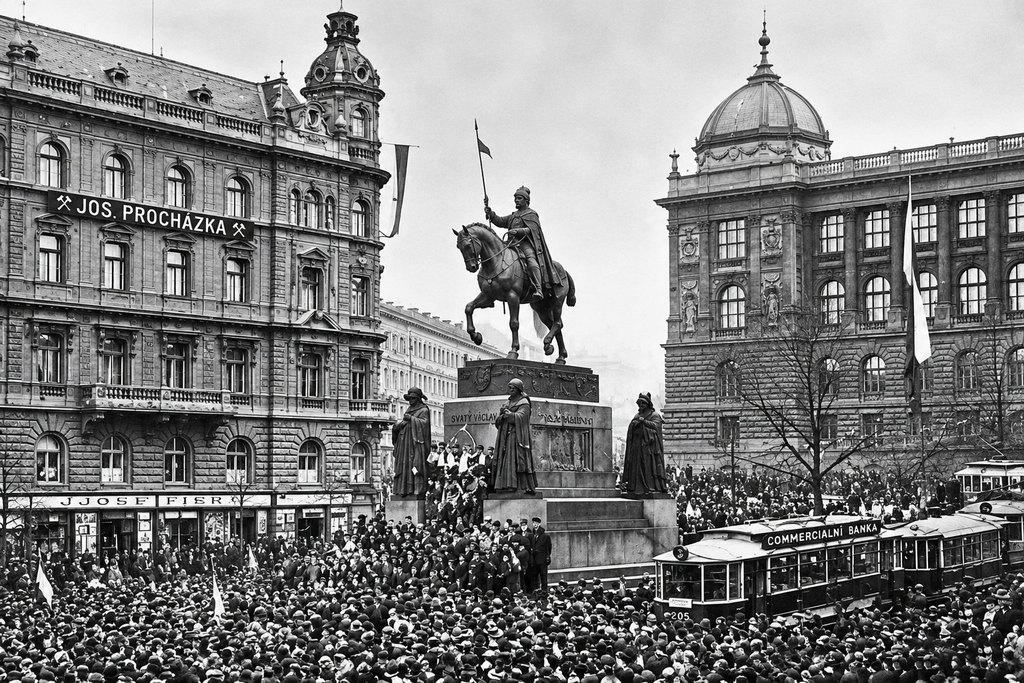
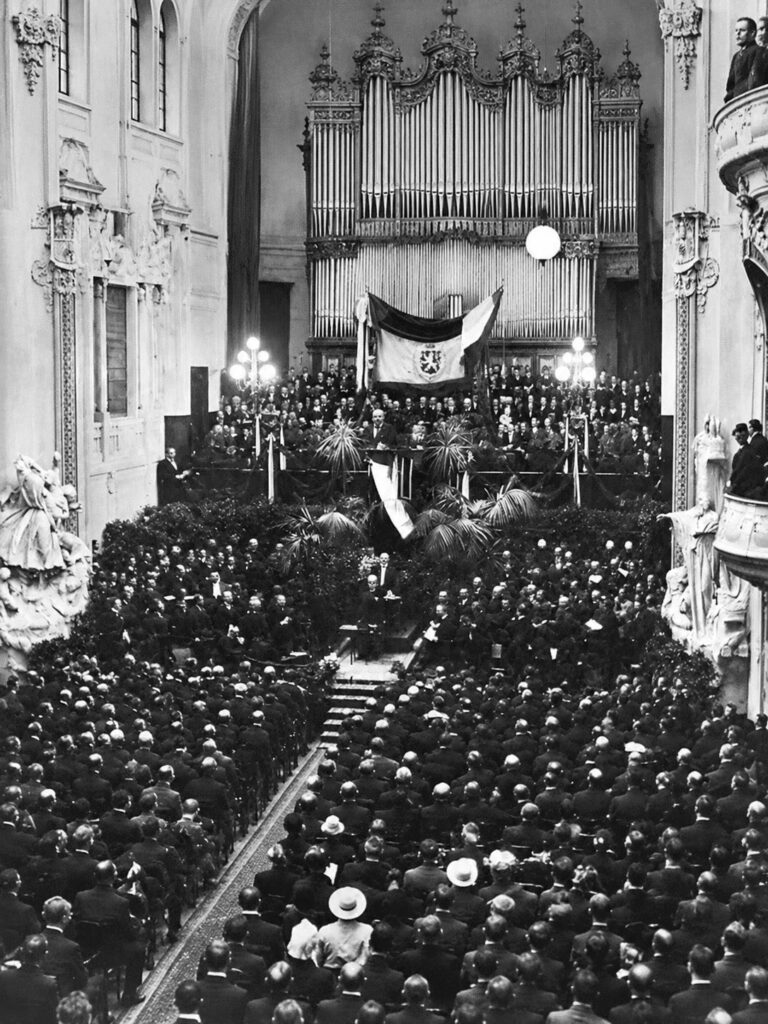
On October 28, 1918, Czechoslovakia declared independence in Prague. For the first time in almost 300 years, the city was again the capital of a sovereign state.
This time, the system was not a monarchy. Instead, it was a parliamentary democracy. This was a new chapter in Prague political history.
The Political Institutions of the First Republic
The 1920 Constitution established the main political institutions:
- Parliament: A two-chamber National Assembly, consisting of a Chamber of Deputies and a Senate, elected through universal suffrage. People aged 21 and above could vote for the Chamber of Deputies.
- President: Parliament elected the president for a seven-year term. Tomáš Garrigue Masaryk became the first president and a symbol of the new democracy.
- Government: A prime minister and cabinet responsible to Parliament.
- Political pluralism: Multiple parties competed in free elections.
Prague became the centre of a functioning democracy. Newspapers could also criticize the government, opposition parties held seats in Parliament, and courts operated independently.
The system allowed different political groups to compete for influence rather than placing all authority in the hands of one ruler or party.
Minority Relations and the Republic’s Decline
However, the First Republic was not without problems. Czechoslovakia was a multinational state. Germans, Hungarians, Slovaks, Ruthenians and Poles also made up a substantial part of its population.
German political parties were represented in Parliament, but many German-speaking citizens felt excluded from real political influence. Similarly, Slovak politicians demanded greater autonomy, while economic differences between industrial Bohemia and more rural Slovakia added further tension.
Despite these challenges, Czechoslovakia remained one of the few functioning parliamentary democracies in Central and Eastern Europe during the interwar period.
Its end came under external pressure. In 1938, Nazi Germany demanded the Sudetenland, the border region with a large German-speaking population. Under the Munich Agreement, Czechoslovakia had to surrender the territory, effectively ending the First Republic.
For more on the people who shaped this period, see our guide to Prague historical figures, including the country’s first president, Tomáš Garrigue Masaryk.
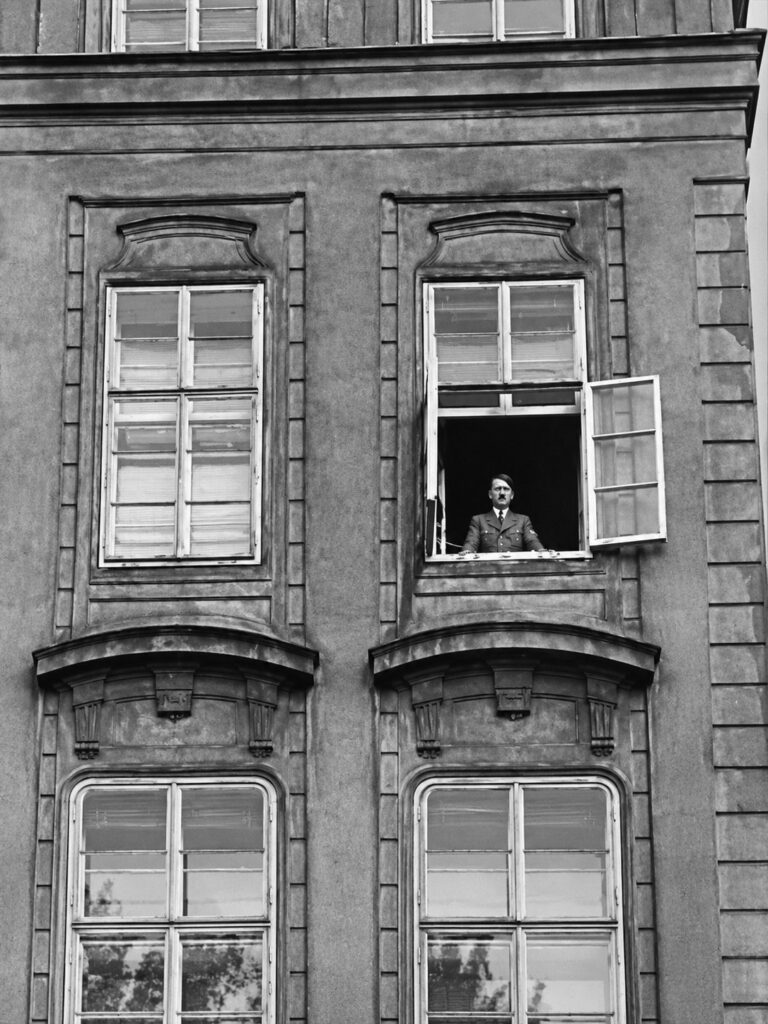
4. Nazi Occupation and the End of Czech Political Independence (1939–1945)
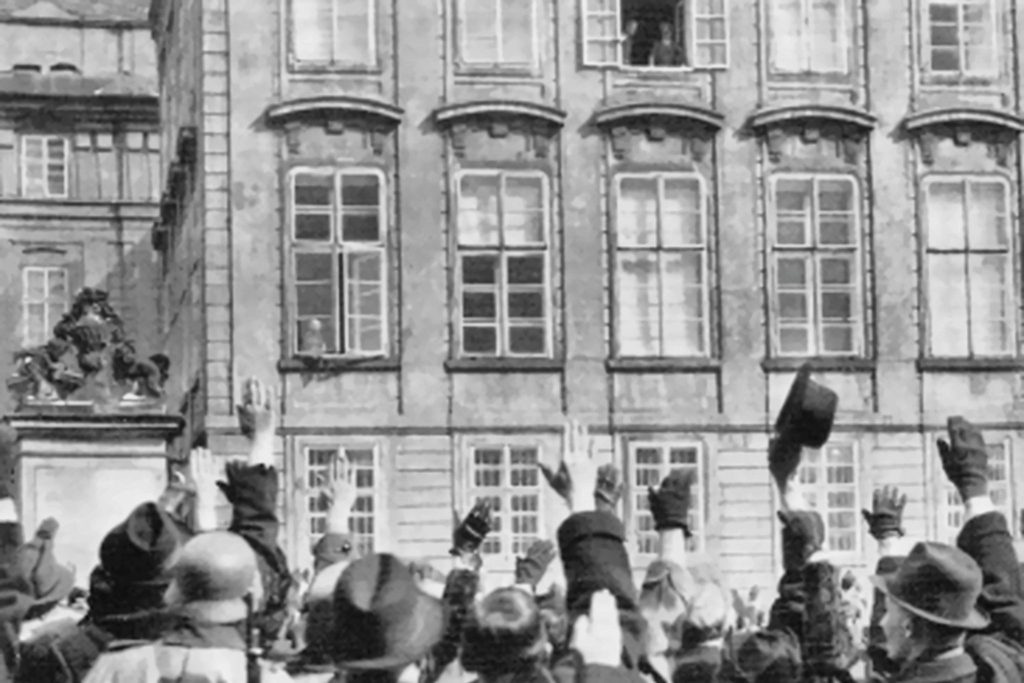
On March 15, 1939, German troops entered Prague. After that, Czechoslovakia ceased to exist as an independent state.
Nazi Germany established the Protectorate of Bohemia and Moravia. This was not a simple annexation. Yet it ended a key period in Prague political history.
The 1939 decree retained a limited Czech administration. A Czech president, Emil Hácha, and a Czech government and civil service continued to exist. However, German authorities held overriding power.
The Protectorate’s Political Administration
The Reich Protector, a German official appointed by Berlin, could veto Czech laws, dismiss Czech officials and issue decrees that overruled the Czech administration. In practice, Czech officials had to implement German orders.
Independent political life was destroyed:
- Political parties: The Nazis banned independent parties and allowed only a single collaborationist movement.
- Parliament: The government dissolved Parliament, and no elections took place.
- Press: German authorities imposed strict censorship.
- Universities: The Nazis closed Czech universities in November 1939 following student protests.
- Jewish citizens: Nazi authorities excluded Jewish people from political and civil life, then deported and murdered them during the Holocaust.
Prague Castle became the seat of the Reich Protector.
For six years, Prague had no democracy, free press or political opposition that could operate openly.
The system ended with Germany’s defeat in May 1945. Czechoslovakia was restored, but its political future still remained uncertain.
5. Communist Rule (1948–1989): How One-Party Government Shaped Prague Political History
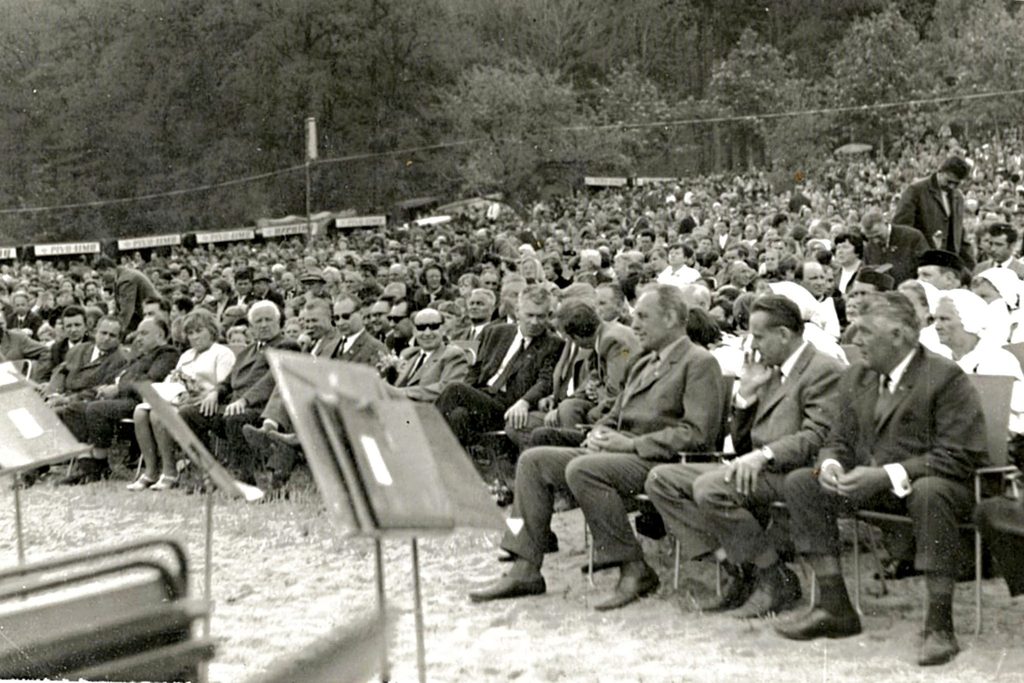
During this period, Prague’s political system placed state institutions, public information and political activity under Communist Party control. This period still shapes how many Czechs view Prague political history today.
The Communist Takeover: From Elections to One-Party Rule
Communists did not come to power out of nowhere in 1948.
In the free elections of May 1946, the Communist Party of Czechoslovakia won approximately 38% of the vote in the Czech lands, making it the largest single party. So it entered government through the electoral process.
In February 1948, the Communists consolidated their power. After non-Communist ministers resigned in protest, Communist leader Klement Gottwald formed a new government dominated by the Communist Party. President Edvard Beneš accepted the new government under intense political pressure.
Within months, the political system changed:
- Other parties lost independence. They had to join the National Front, a coalition created in 1945 that the Communists turned into a controlled organization after 1948.
- Elections lost their democratic meaning. Voters could choose from a single National Front list rather than freely competing political parties.
- The state expanded its control over the economy. Major industries, banks and businesses were nationalized.
- The 1948 Constitution declared Czechoslovakia a people’s democracy, but real political authority belonged to the Communist Party rather than Parliament.
How Communist Political Control Worked
The Communist system relied on several methods to maintain its authority.
First, the Party controlled the state. The Communist Party made the main political decisions, while Parliament, the government and courts implemented them. The Party leader held the greatest political influence.
Second, censorship controlled information. The authorities controlled newspapers, books, films and radio.
Third, the secret police monitored dissent. The StB (State Security) watched citizens, recruited informers and arrested people it considered a threat to the regime. Dissidents, including members of Charter 77, faced harassment for demanding respect for human rights. Václav Havel was one of its original spokespersons, alongside Jan Patočka and Jiří Hájek.
For ordinary people, politics was rarely about choosing between competing parties. Instead, it was often about keeping a job, avoiding trouble and deciding how much to cooperate with a system they could not freely challenge.
Prague Spring: An Attempt to Reform the System
In 1968, Alexander Dubček tried to reform the Communist system from within. His programme, known as Socialism with a Human Face, proposed greater freedom of the press, less censorship and more open political discussion.
This was not initially an attempt to end communism. Instead, it was an effort to make the system more democratic.
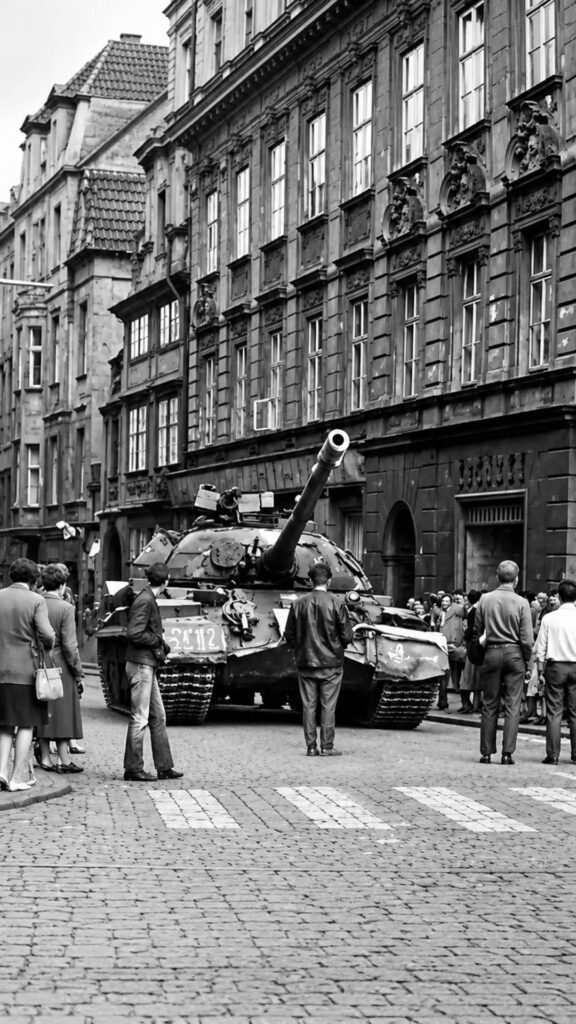
The Soviet Union viewed the reforms as a threat. On August 20–21, 1968, Warsaw Pact forces invaded Czechoslovakia and ended the reform movement.
For more details about the conflicts that shaped the city, see our guide to Prague’s Defining Wars.
After the invasion, a period known as Normalization restored strict political control. Reformers also lost their positions, censorship returned and thousands of people lost their jobs.
Communist rule continued for another 21 years. The system gradually lost legitimacy as the economy stagnated and public dissatisfaction grew. Under Mikhail Gorbachev, the Soviet Union also became less willing to use military force to preserve Communist governments in Eastern Europe.
6. Velvet Revolution to Velvet Divorce (1989–1993)
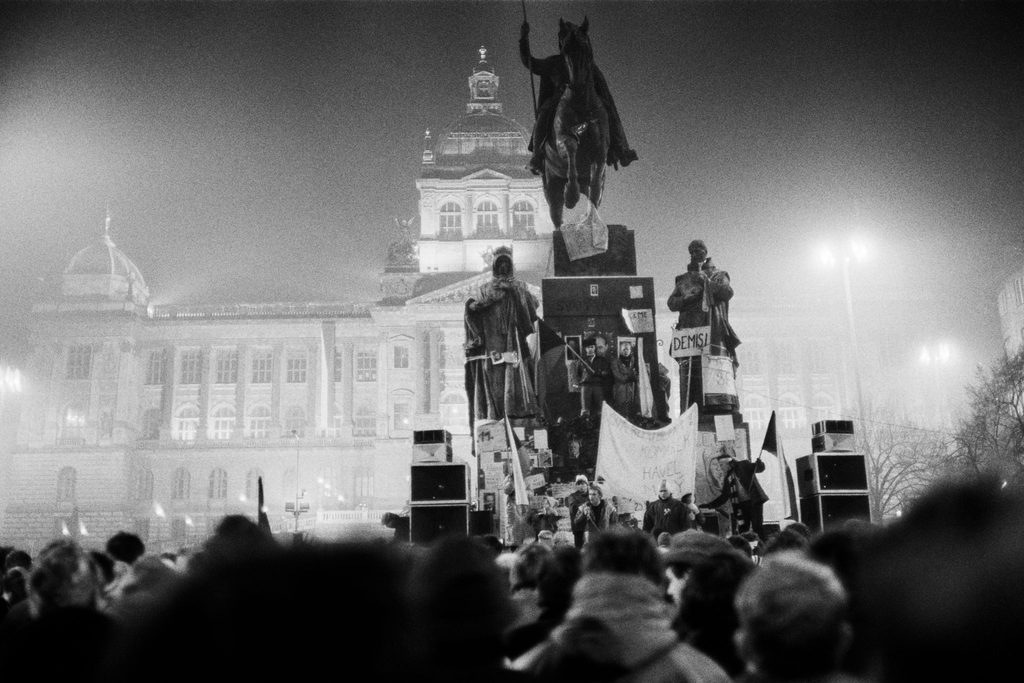
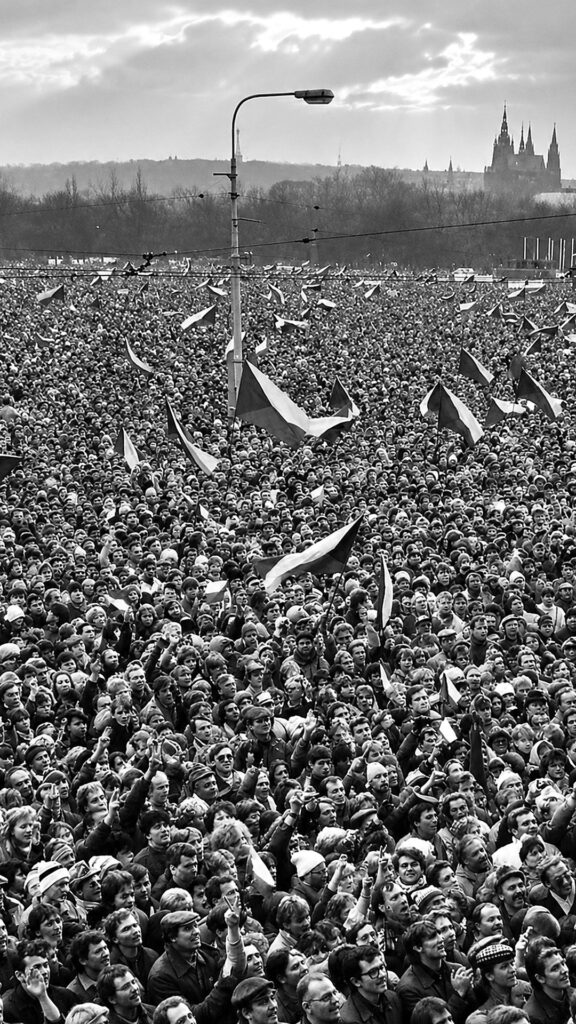
In November 1989, Communist rule in Czechoslovakia collapsed peacefully.
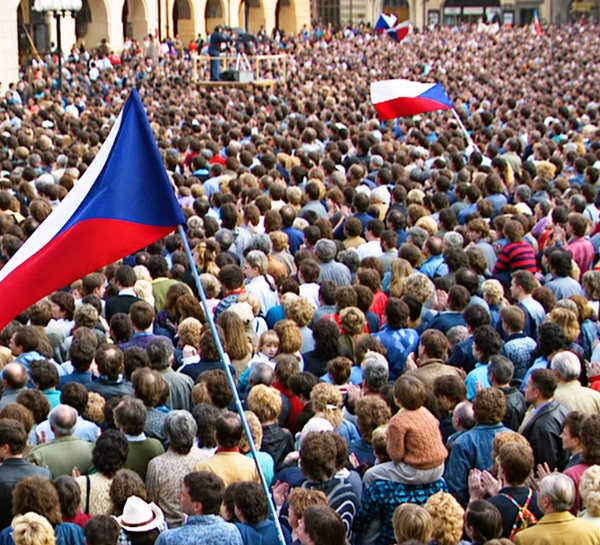
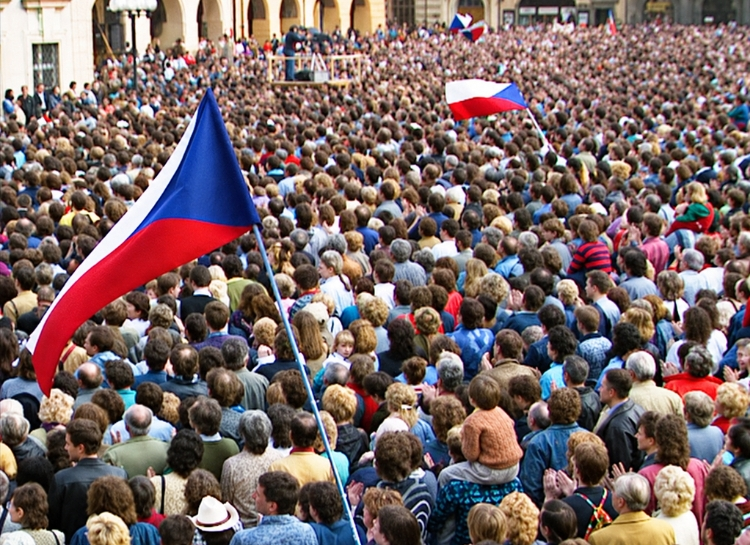
A student demonstration on Národní třída was violently dispersed on November 17. In the following days, hundreds of thousands of people gathered in Wenceslas Square and other parts of Prague to demand political change.
Today, visitors can explore Národní Street and other historic locations through our guide to 20 famous streets in Prague.
The opposition movement Civic Forum, led by Václav Havel, negotiated with the Communist government. Within weeks, the Communist Party gave up its monopoly on power.
On December 29, 1989, Havel was elected president. To discover more about Václav Havel and other influential personalities connected with the city, explore our guide to Famous People in Prague.
The Velvet Revolution and the Return of Democracy
Political transformation happened quickly. Political pluralism also returned, censorship ended, independent media regained freedom and free elections took place in June 1990. The Velvet Revolution remains central to Prague political history because it restored democracy without violence.
For the first time in decades, citizens could choose between competing political parties and participate in an open democratic system.
The Political Separation of Czechoslovakia
One major question remained: Would Czechoslovakia stay together?
Czech and Slovak politicians disagreed about the future of the federation. Czech leaders generally favoured a more centralized arrangement, while Slovak leaders wanted a confederation with greater autonomy.
After months of negotiations, both sides agreed on a peaceful separation.
On January 1, 1993, Czechoslovakia dissolved into two independent states: the Czech Republic and Slovakia. This became known as the Velvet Divorce, a negotiated political separation without violence.
Prague then became the capital of the independent Czech Republic.
7. Prague Political History Today: Capital of the Czech Republic
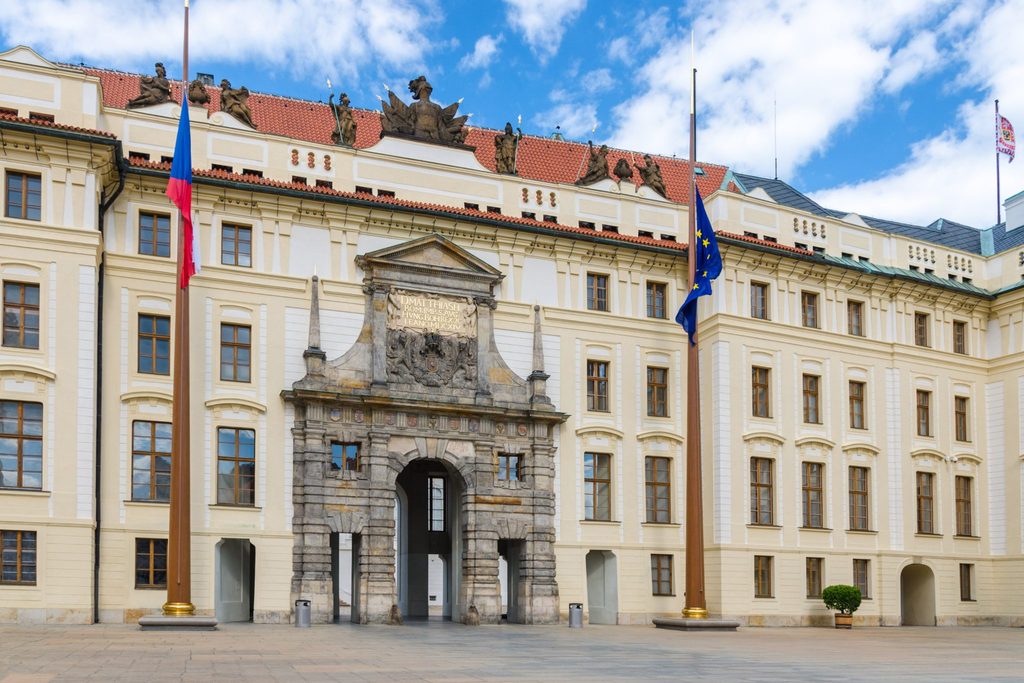
Today, Prague is the capital of a parliamentary democracy governed under the Constitution of the Czech Republic. This final chapter completes the story of Prague political history from kingdom to modern democracy.
How the Czech Parliamentary System Works
The country’s political institutions have separate responsibilities:
- Parliament: Makes laws through two chambers, the Chamber of Deputies, with 200 members, and the Senate, with 81 members.
- President: Serves as head of state and has been elected directly by citizens since 2013. The president appoints the prime minister and represents the country abroad.
- Government: Led by the prime minister, it manages the country’s day-to-day affairs and is responsible to the Chamber of Deputies.
- Constitutional Court: Protects the constitution and fundamental rights.
Prague’s Role in European Politics Today
The Czech Republic’s international position also changed after the end of Communist rule.
NATO membership in 1999: The country joined the North Atlantic Treaty Organization, becoming part of a collective defence alliance.
European Union membership in 2004: The Czech Republic joined the EU, integrating the country into European political and economic institutions.
Prague Castle, which served as a royal residence under Bohemian kings and later as the seat of Czechoslovak presidents, is once again the seat of the Czech president. Similarly, Wenceslas Square remains a place where citizens gather to protest, celebrate and demand political change.
The difference is that today, they can do so without fear of tanks or secret police.
Final Thoughts
Prague’s political past is a story of changing systems and repeated struggles over who should hold power. The city moved from a medieval kingdom to Habsburg imperial rule, experienced parliamentary democracy, endured Nazi occupation and Communist control, and eventually became the capital of an independent democratic republic.
These changes are still reflected in Prague’s institutions, historic buildings and public spaces. Prague Castle, once home to Bohemian kings and later the centre of different political regimes, also remains the seat of the president. Wenceslas Square continues to represent the power of public participation and political change.
Understanding this history adds another dimension to visiting Prague. Its landmarks are not only architectural attractions; they also tell the story of a city that repeatedly experienced the consequences of political decisions.
Frequently Asked Questions About Prague Political History
Prague was the capital of the Kingdom of Bohemia, ruled by Bohemian kings. From 1526, the Habsburg dynasty held the Bohemian throne, and after 1620, political authority was increasingly centralized in Vienna.
Prague became the capital of independent Czechoslovakia on October 28, 1918. It later became the capital of the independent Czech Republic on January 1, 1993.
Czech and Slovak political leaders disagreed about the future structure of their federation. After peaceful negotiations, they agreed to dissolve Czechoslovakia into two independent states on January 1, 1993.
The Communists had already won approximately 38% of the vote in the free 1946 elections. In February 1948, they used a political crisis to form a Communist-dominated government and then brought other parties under the Communist-controlled National Front, ending meaningful electoral competition.
The Velvet Revolution was the peaceful movement that ended Communist rule in Czechoslovakia in November and December 1989. Mass demonstrations and negotiations led to political change and the restoration of democracy.
Yes. The Czech Republic is a parliamentary democracy with free elections, political pluralism, independent courts and freedom of speech and the press. Prague is its capital and the seat of government.
 Bohemian Kingdom: Prague became the political center of Bohemia, serving as the seat of its kings and royal government.
 Charles IV (1346–1378): Prague became the capital of the Holy Roman Empire during his reign, strengthening its imperial importance.
 Habsburg Rule (1526–1918): The Habsburg dynasty governed the Bohemian lands, gradually reducing Prague's political autonomy.
 Czechoslovak Independence (1918): The collapse of Austria-Hungary led to an independent republic, with Prague becoming its capital.
 Nazi Occupation (1939–1945): German occupation ended Czechoslovak independence, bringing political repression and the loss of civil freedoms.
 Communist Rule (1948–1989): The Communist Party established a one-party state. The 1968 Prague Spring introduced reforms before Soviet-led forces invaded.
 Velvet Revolution (1989): Peaceful demonstrations ended communist rule, restored democracy, and paved the way for Václav Havel's presidency.