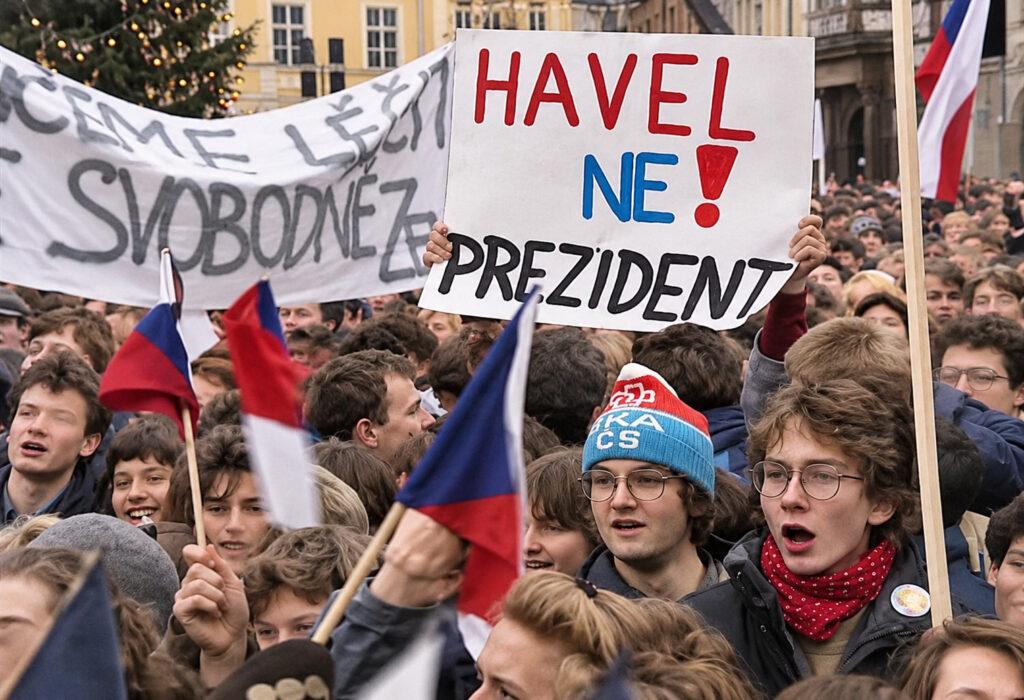
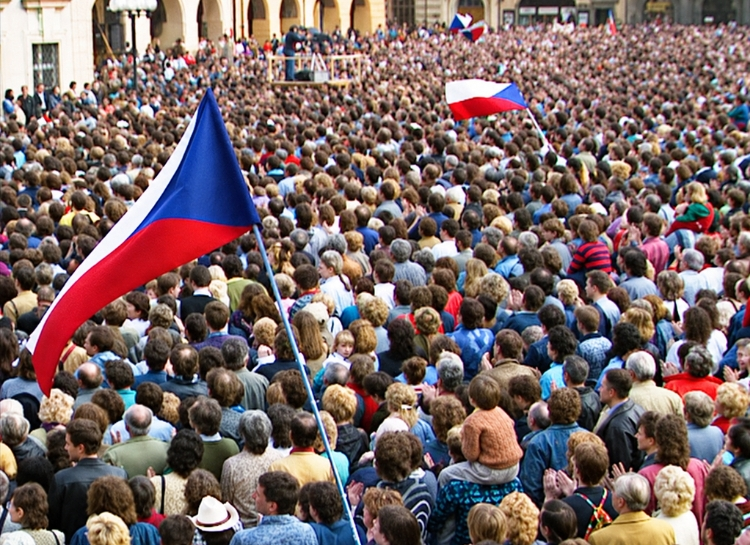
Prague Political History: Crowds waving Czech flags and demonstrating during the Velvet Revolution in Prague in 1989.
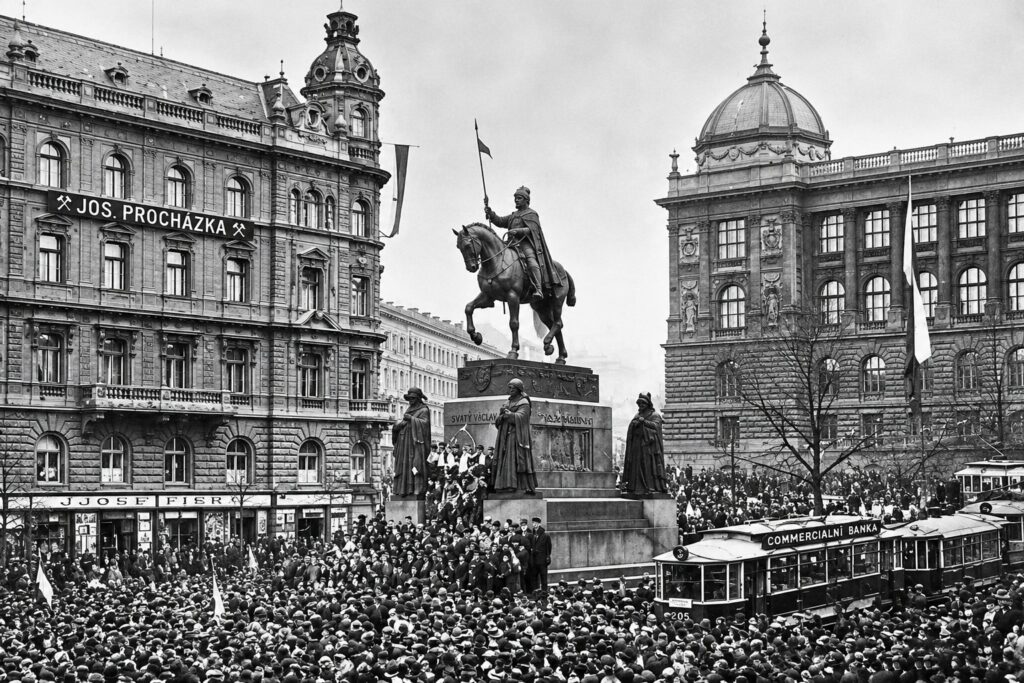
Prague Political History: Crowds gather around the Saint Wenceslas Monument in Prague during the early years of Czechoslovak independence.

Prague Political History

Explore the Political History That Shaped Prague
Explore Prague Political History and discover the political events, leaders, and movements that transformed the city and the Czech lands. From imperial rule and foreign occupation to communist government and democratic independence, uncover how changing political powers shaped Prague's institutions, freedoms, national identity, and modern history.
PRAGUE POLITICAL HISTORY GUIDE

Discover the Political Forces That Shaped Prague's History

Prague's political story spans centuries of changing rulers, competing ideologies, struggles for independence, and movements for democratic freedom. From the Kingdom of Bohemia and Habsburg monarchy to communist rule and the birth of the modern Czech Republic, the city has witnessed defining moments in European political history. These guides explore the major political events, historical figures, and changes in government that shaped Prague and the Czech Republic throughout history.
Crowd waving Czech flags during the Velvet Revolution, a defining moment in Prague political history.

Prague Political History: How Empires, Occupation and Political Revolutions Shaped the City

Prague political history is not simply a list of kings and presidents. It is the story of who held power in the city, how political

Want to Discover More of Prague’s History?

Explore the people, events, beliefs, and traditions that shaped Prague and the Czech lands. Discover fascinating stories, historic landmarks, and defining moments from the medieval era to modern times.

There’s More to Prague Than Meets the Eye

Step into the past and uncover the stories behind Prague’s royal legacy, cultural achievements, religious movements, and political turning points. Dive deeper into the events and personalities that left their mark on the city and shaped Czech identity through the centuries.
Browse Guides
Discover More Prague Categories

The Ultimate Visitor's Guide to Prague

FAQs

PRAGUE POLITICAL HISTORY FAQS

Find answers to common questions about Prague's political history and the events that shaped the Czech lands. Explore the rise of Bohemian rulers, Habsburg authority, foreign occupation, communist government, and the transition to democracy that established the modern Czech Republic.

Prague became a major political center as the seat of Bohemian rulers. Under Charles IV in the 14th century, it served as the capital of the Holy Roman Empire. Its castle and institutions supported government, diplomacy, and imperial administration, strengthening its influence across Central Europe.

The Habsburgs brought Bohemia into a larger dynastic monarchy and strengthened centralized rule. After the Bohemian Estates were defeated at White Mountain in 1620, royal authority expanded and the kingdom lost much of its political autonomy, shaping governance and public life for generations across society.

After Germany occupied the Czech lands in March 1939, Prague became part of the Protectorate of Bohemia and Moravia. Nazi authorities replaced independent government, imposed occupation rule, persecuted opponents, and restricted freedoms. The occupation ended in May 1945 as Czechoslovakia was restored after liberation again.

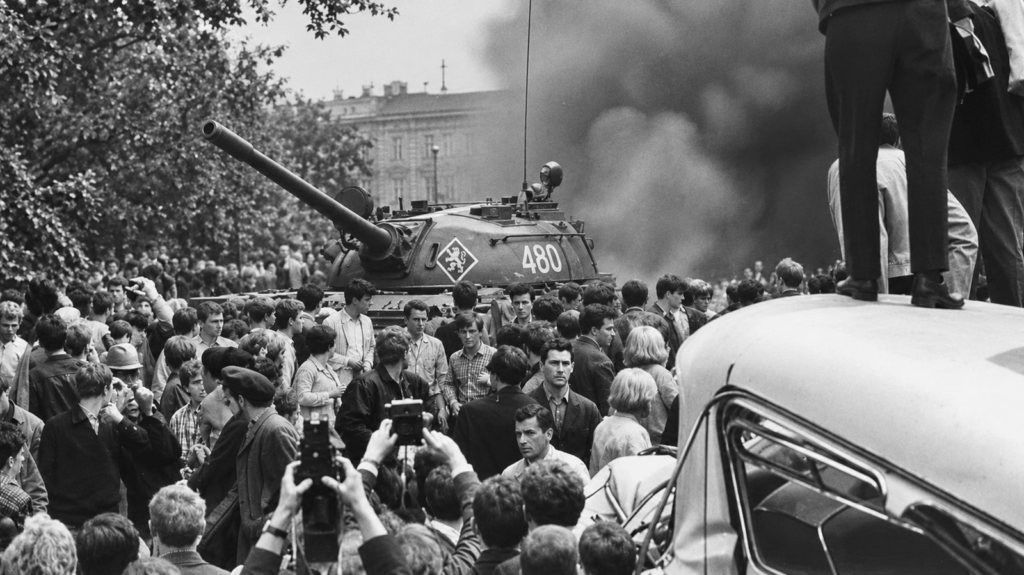
The Prague Spring was a 1968 reform movement led by Alexander Dubček seeking a more open form of socialism. Its proposals relaxed censorship and encouraged public debate. In August, Warsaw Pact forces invaded Czechoslovakia, ending the reforms and beginning political normalization throughout the following years.

Bohemian dukes and kings ruled Prague for much of the medieval period. From 1526, the Habsburg dynasty governed the Bohemian lands within its monarchy. Although Prague remained an important administrative and cultural center, political authority increasingly rested with the Habsburg rulers in Vienna until 1918.

In 1918, the collapse of Austria-Hungary enabled the creation of an independent Czechoslovak state. Prague became its capital, and democratic institutions developed under President Tomáš Garrigue Masaryk. The new republic united Czechs and Slovaks after centuries of Habsburg rule and imperial administration.

In February 1948, the Communist Party seized control of Czechoslovakia and ended the postwar democratic political system. The new regime restricted political opposition, controlled public institutions, and curtailed civil liberties. Prague became the center of a one-party state aligned closely with the Soviet Union for many decades.

The Velvet Revolution was a largely peaceful movement of demonstrations and civic action that ended Communist rule in November 1989. Protests in Prague helped force the government to relinquish power. Václav Havel later became president, and democratic political institutions were gradually restored across the country.