Prague monuments are more than beautiful landmarks scattered across the city. They tell stories of royal ambition, religious conflict, military victories and the struggle for national identity. Behind every statue, bridge and historic building lies a reason for its creation, whether to protect a settlement, honor a religious figure or express the hopes of an entire nation.
Prague’s historic landmarks emerged over more than a thousand years, as the city developed into a center of Bohemian rule, a royal capital and eventually the capital of an independent Czechoslovak state. Understanding their origins reveals how those changing ambitions shaped the city we see today.
This guide explores Prague monuments through three essential questions: when people built them, who commissioned or funded them, and what historical event, practical need or belief inspired their creation.
| Affiliate Disclosure: This article contains affiliate links, including links to Tiqets. If you book through these links, PraguePeek may earn a commission at no additional cost to you. Your support helps us continue creating useful Prague travel guides. |
Prague Monuments at a Glance: Dates and Original Purposes
The following table summarizes ten important landmarks, their construction dates and the reasons behind their creation.
| Monument | Built or founded | Original purpose |
|---|---|---|
| Prague Castle | Around 880 | Fortified seat of rulers |
| St. Vitus Cathedral | 1344, completed in 1929 | Religious and royal center |
| Charles Bridge | 1357 to 1402 | Reliable crossing over the Vltava |
| Old Town Hall and Astronomical Clock | Town Hall from 1338, clock from 1410 | Civic government and public timekeeping |
| Powder Tower | Construction began in 1475 | City gate and royal procession route |
| Marian Column | 1650, reconstructed in 2020 | Religious thanksgiving and remembrance |
| Jan Hus Memorial | Foundation stone in 1903, unveiled in 1915 | Honor a religious reformer and Czech identity |
| National Theatre | Construction began in 1867, foundation stones laid in 1868 | Promote Czech national culture |
| National Memorial at Vítkov | Main construction from 1928 to 1932, decoration continued to 1938 | Honor Czechoslovak legionaries |
| Memorial to the Victims of Communism | Unveiled in 2002 | Remember victims of communist repression |
These dates describe different stages of each project’s history. Some mark the beginning of construction, while others identify completion, opening or reconstruction. Understanding those distinctions helps explain why several Prague monuments look different today from their original designs.

Medieval Prague Monuments: Power, Faith and Defense
Prague’s earliest landmarks reflect a time when rulers needed defensible centers of government, religious institutions and reliable connections between settlements. Their construction accompanied the development of Bohemian political authority.
1. Prague Castle: The Origins of a Seat of Power
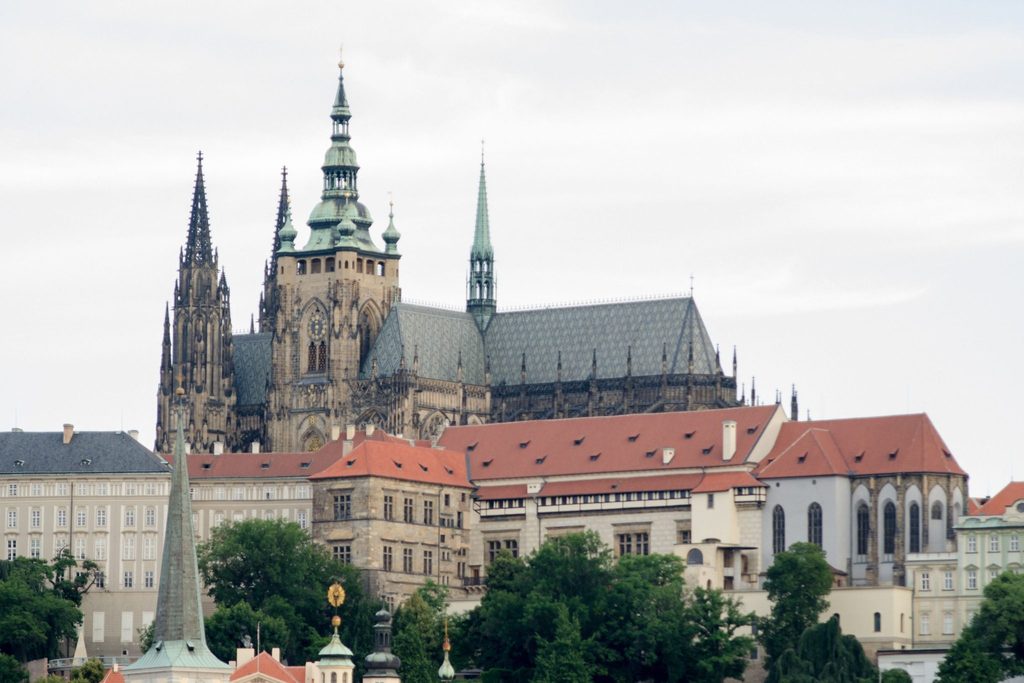
Founded: Around 880
Associated ruler: Prince Bořivoj of the Přemyslid dynasty
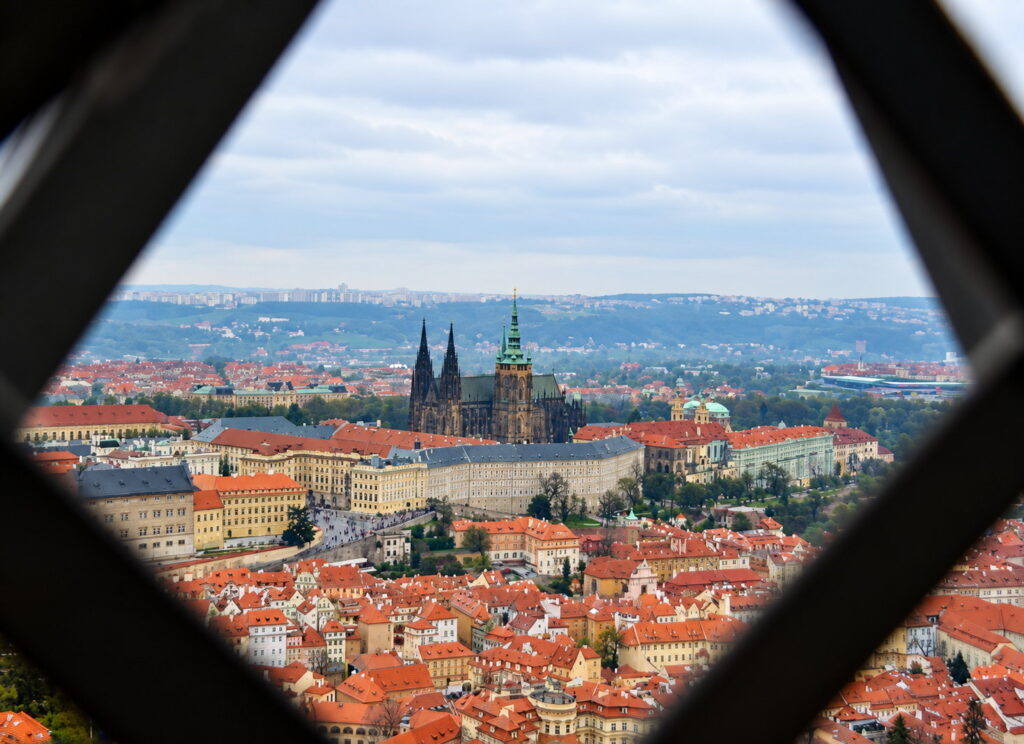
Prague Castle began as a fortified settlement on a hill overlooking the Vltava River. According to Prague Castle’s official history, its origins date to around 880, traditionally linking its foundation to Prince Bořivoj.
The early stronghold had defensive earthworks and a rampart made from clay and stone. The Church of the Virgin Mary served as its first known church building.
Why did the rulers establish the castle? They needed a defensible base from which to exercise authority over their territories. Its elevated position also offered strategic advantages and placed the settlement near important river routes.
Over subsequent centuries, Bohemian princes and kings expanded the complex with churches, palaces and stronger fortifications. Charles IV developed it into an imperial residence during the 14th century, while later rulers continued to transform the site.
Today, Prague Castle represents much more than one ruler’s ambition. Its long history reflects the development of Bohemian and Czech statehood across successive generations. If you’d like to explore this historic complex in person, you can book your Prague Castle entry ticket through Tiqets.
To understand how Bohemian rulers gradually shaped the city’s political authority and statehood, explore our detailed guide to Prague Political History.
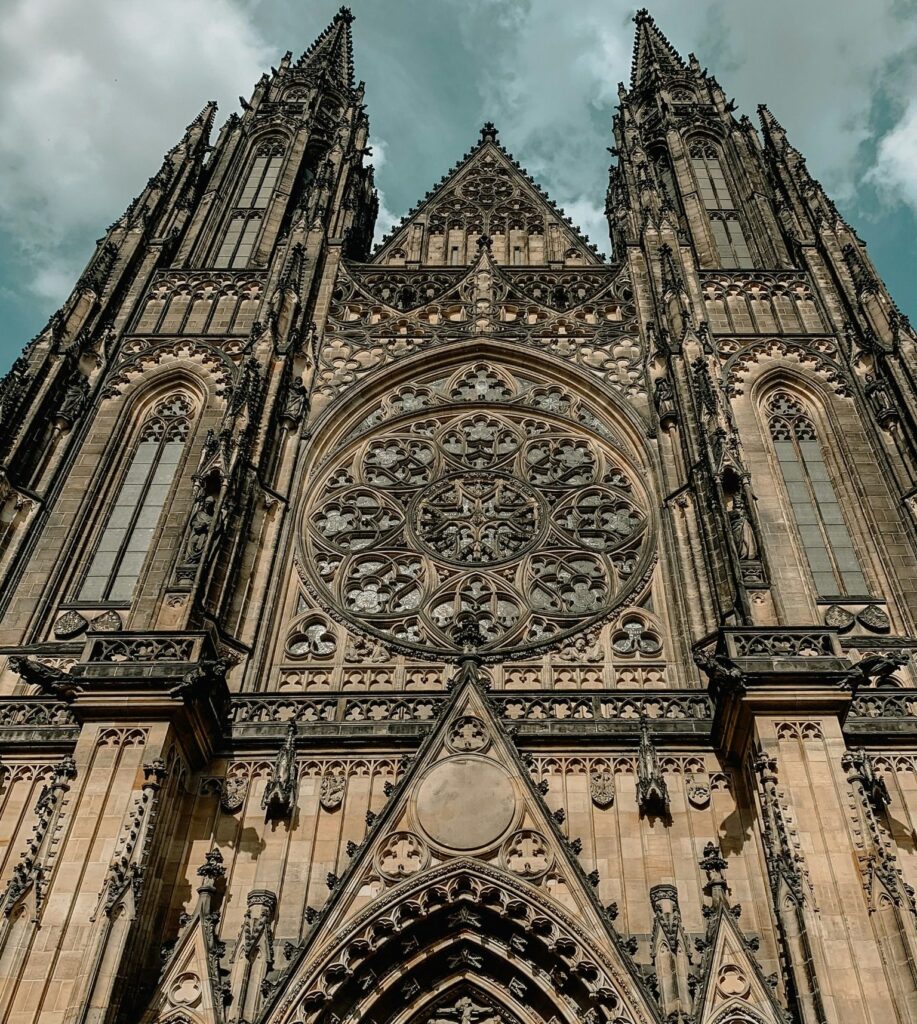
2. St. Vitus Cathedral: A Religious Monument for Bohemian Rulers
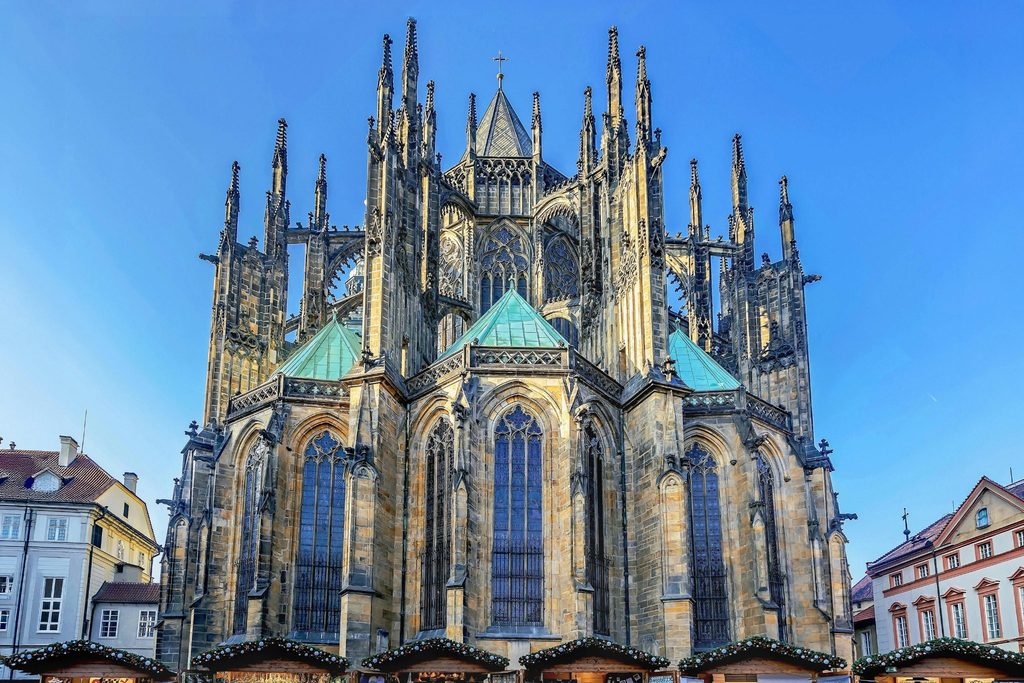
Construction began: 1344
Completed: 1929
Key patron: Charles IV
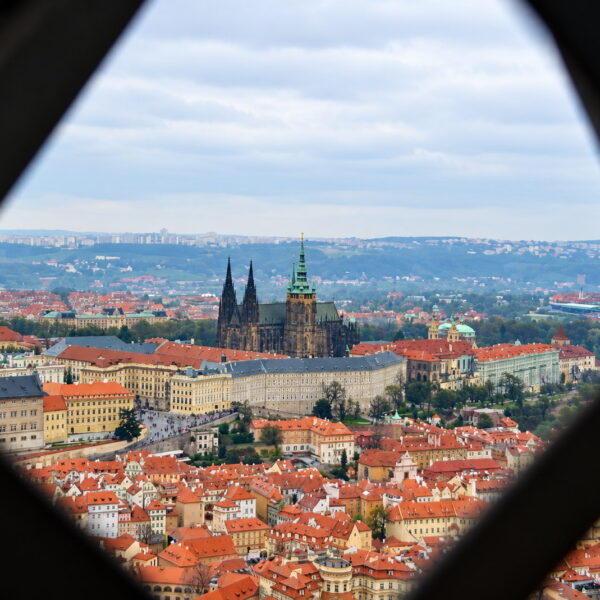
St. Vitus Cathedral emerged as Prague’s importance grew as a religious and political center. In 1344, Prague’s bishopric became an archbishopric, and Charles IV initiated construction of a grand Gothic cathedral within the castle complex.
The cathedral served religious ceremonies and provided a prestigious setting for royal coronations. It also became the burial place of Czech rulers and important religious figures, while its association with patron saints strengthened its place in Bohemian religious life.
Construction stopped during the Hussite Wars in the early 15th century. Later rulers supported additional work, but the cathedral remained incomplete for centuries. Builders resumed a major campaign in the 19th century and completed the cathedral in 1929.
Prague Castle’s official cathedral history documents this extended construction timeline.
This history matters because St. Vitus Cathedral did not emerge from a single building campaign. Political changes, religious priorities and generations of builders shaped its development. If you want to explore more of Prague’s religious architecture, follow our Prague Cathedral Circuit.
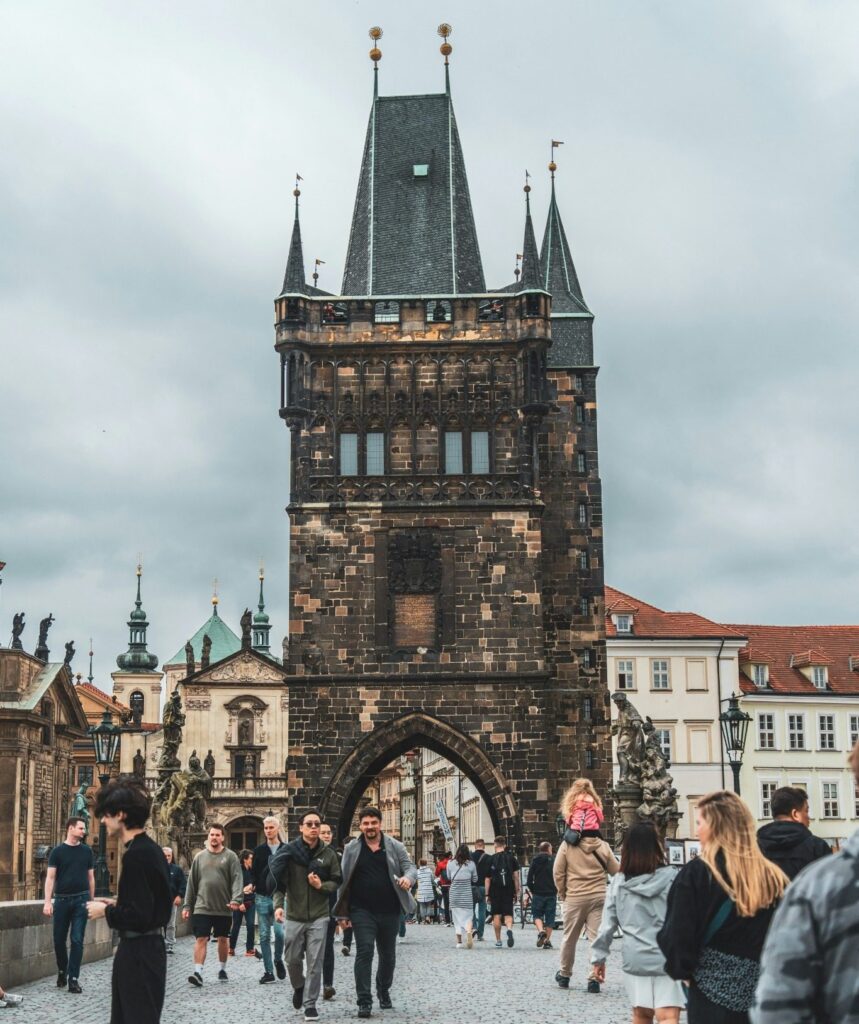
3. Charles Bridge: Why Prague Needed a New River Crossing
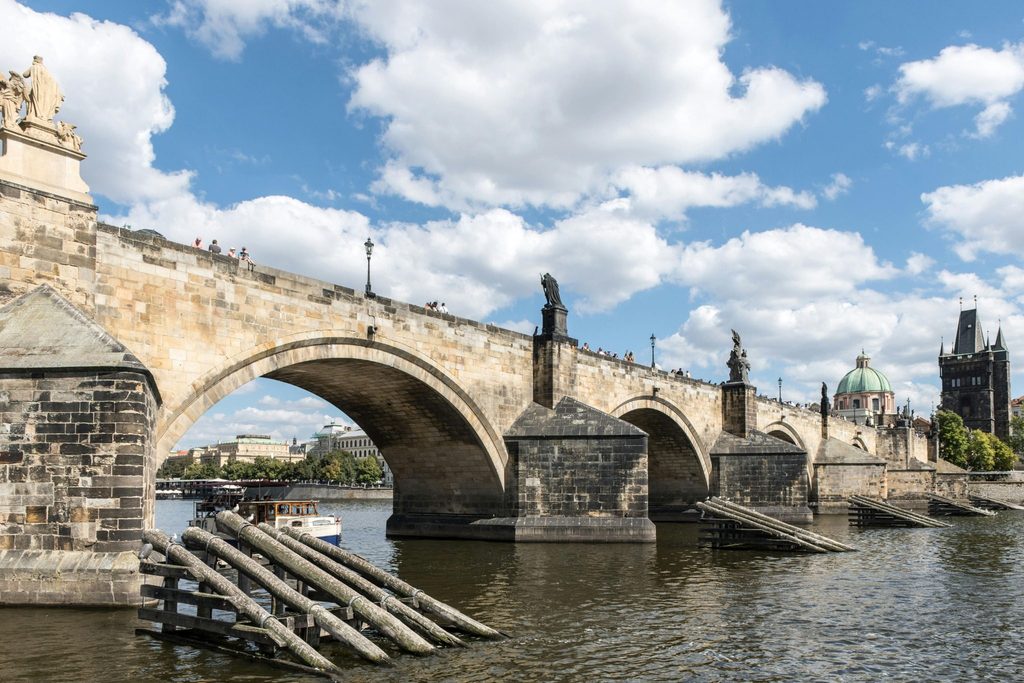
Construction began: 1357
Completed: 1402
Commissioned under: Charles IV
Charles Bridge replaced Judith’s Bridge, an earlier stone crossing that a flood severely damaged in 1342. Losing that bridge disrupted an important connection across the Vltava, affecting commerce, travel and movement between the Old Town and Lesser Town. To learn more about the river that has shaped the city’s development, explore our guide to Prague’s rivers.
Charles IV initiated construction of the replacement in 1357. The bridge opened as a vital route through Prague, and builders completed it in 1402. Petr Parléř played a leading role in the project.
According to Prague City Tourism’s Charles Bridge history, the bridge served an essential practical purpose by connecting important urban districts and supporting the city’s growth.
Its role later expanded. From the 17th century onward, people gradually added statues of saints, giving the bridge a religious character alongside its civic function.
Visitors now associate Charles Bridge with its statues, historic towers and views of Prague Castle. Its origins tell a different story: the city needed a durable replacement after a natural disaster threatened an important crossing. To discover more historic crossings throughout the city, explore our guide to Prague’s bridges.
4. Old Town Hall and Astronomical Clock: Monuments of Civic Pride
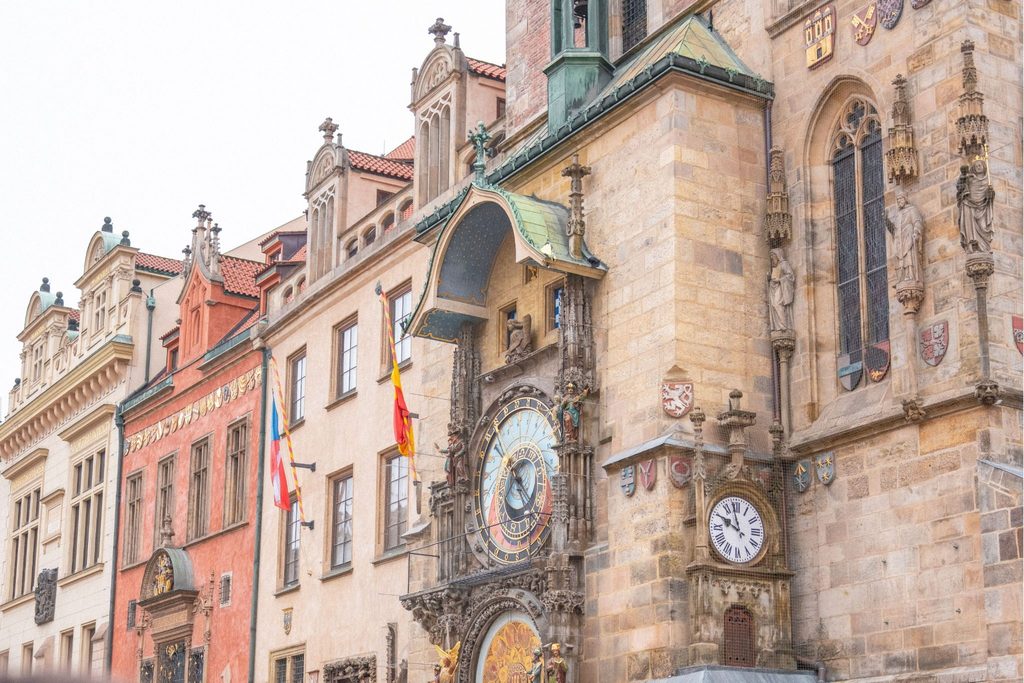
Old Town Hall established: 1338
Astronomical clock installed: 1410
The Old Town Hall reflects the growing importance of municipal government in medieval Prague. Established in 1338, it gave the Old Town a center for civic administration as the district developed into an important commercial community.
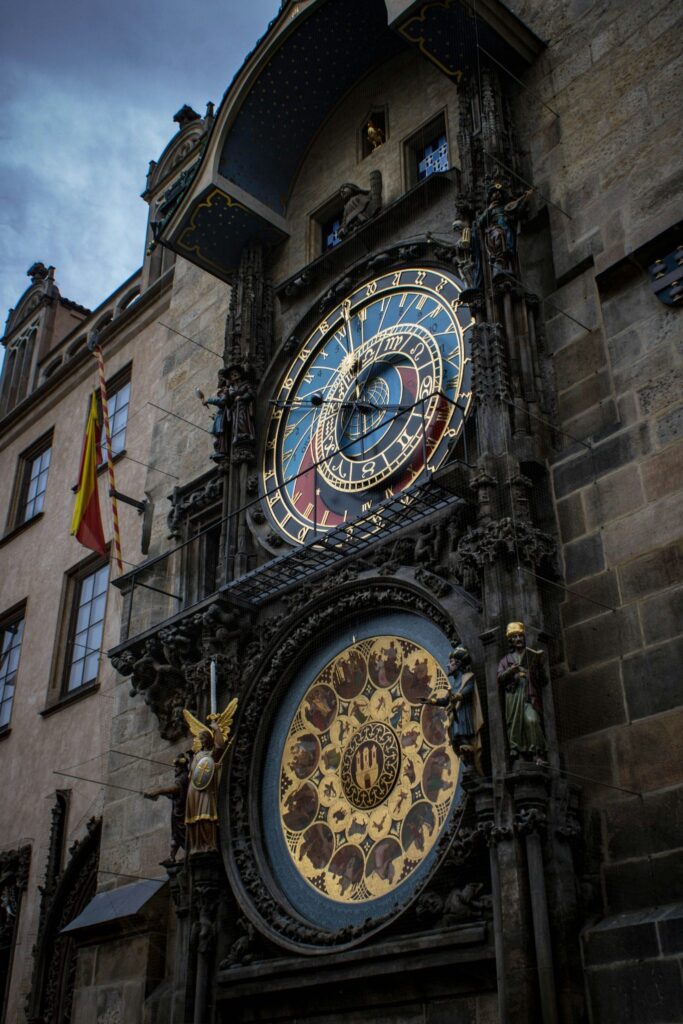
The Astronomical Clock, known as the Orloj, followed in 1410. Clockmaker Mikuláš of Kadaň created its original mechanism, while astronomer Jan Šindel contributed to its design. The clock displayed the time and astronomical information, bringing contemporary knowledge of the heavens into public life.
Prague City Tourism’s clock history explains how later generations modified and improved the mechanism.
Why did the city invest in such an elaborate clock? It offered public timekeeping while demonstrating Prague’s technical knowledge, resources and civic ambition.
The clock suffered serious damage during the Prague Uprising in May 1945, and restorers subsequently repaired it. Its history also inspired legends, including the story that officials blinded its maker to stop him from building another masterpiece. Historians have not established that story as fact. You can see this historic landmark up close by booking an Astronomical Clock entry ticket with an optional audio guide through Tiqets.
Together, the Old Town Hall and the Orloj show how civic institutions and public technology became historic landmarks in their own right. To explore the historic setting surrounding these landmarks, discover our guide to Old Town Square in Prague.
Prague Monuments of Royal Ceremony, Faith and Conflict
During the late medieval and early modern periods, Prague’s landmarks increasingly reflected royal ceremonies, religious devotion and struggles over political and spiritual authority.
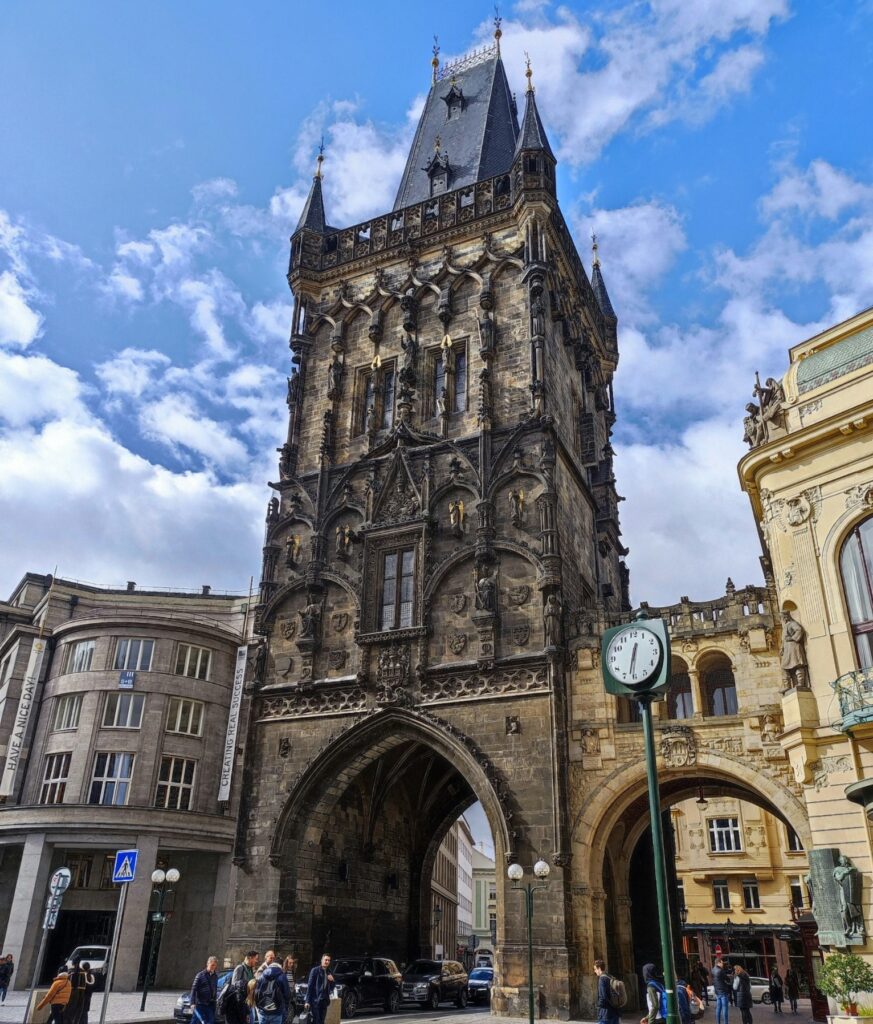
5. Powder Tower: A Historic Gateway for Kings
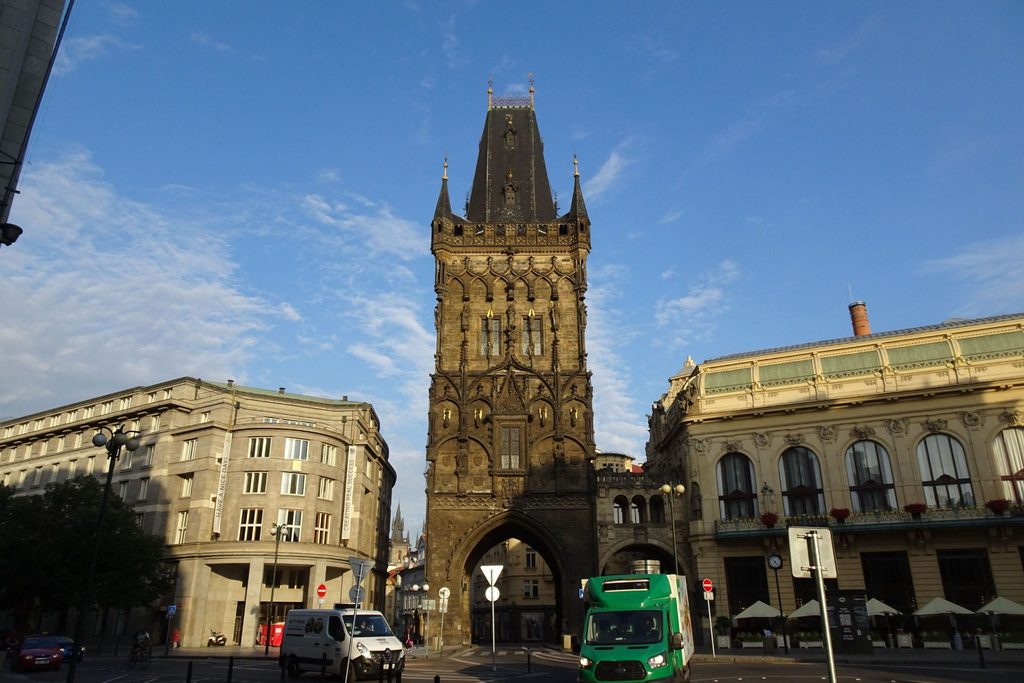
Construction began: 1475
Associated builders: Václav and, later, Matěj Rejsek
The Powder Tower replaced an older, deteriorating city gate. Its position connected the Old Town with a major road leading toward eastern Bohemia, including the historic mining town of Kutná Hora.
The tower also played a ceremonial role. Bohemian kings entered the Old Town through this gateway during coronation processions before continuing along the Royal Route toward Prague Castle.
Construction began in 1475, but the project remained unfinished after 1488, probably because the royal residence moved away from the Old Town. During the 19th century, architects restored the tower and gave it much of its present appearance.
Prague City Tourism’s Powder Tower history explains its development and its later association with gunpowder storage, which gave the tower its modern name.
The Powder Tower combined practical and symbolic functions. It controlled an entrance to the city while providing a ceremonial route that expressed royal authority. You can explore this historic landmark in person with a Powder Gate Tower entry ticket from Tiqets. To discover more historic towers and enjoy some of the city’s best views, explore our guide to Prague’s towers.
6. Marian Column: A Religious Monument with a Changing Meaning
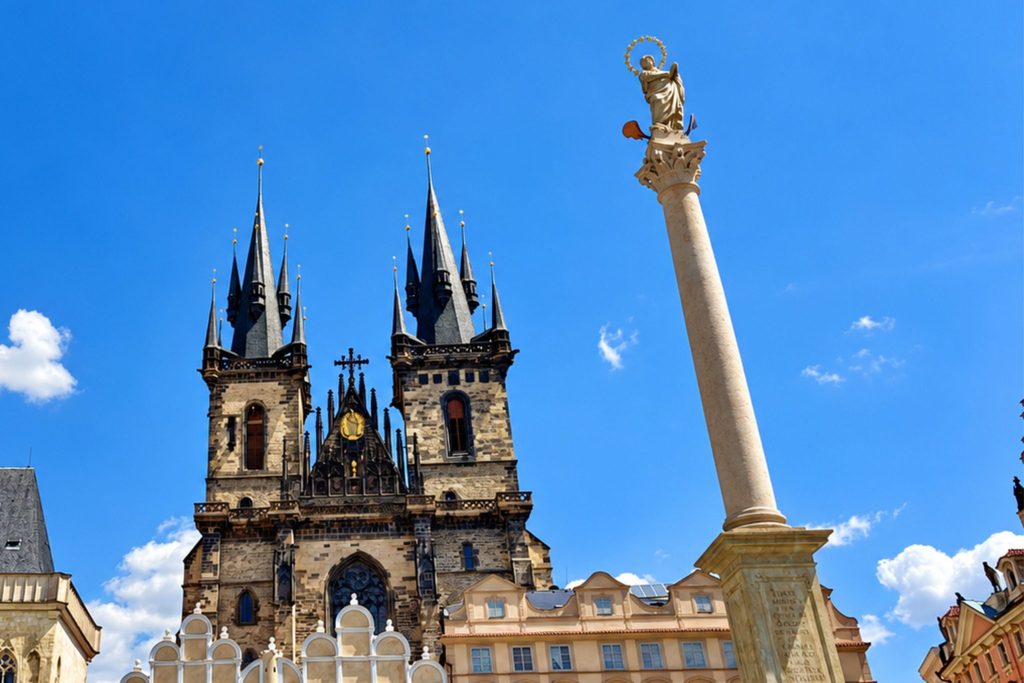
Originally erected: 1650
Reconstructed: 2020
Emperor Ferdinand III commissioned the Marian Column in Prague’s Old Town Square in 1650 as an expression of thanksgiving to the Virgin Mary for what Catholic supporters regarded as her protection of Prague against Swedish forces in 1648, during the final phase of the Thirty Years’ War.
The column expressed religious devotion and became associated with the re-Catholicization of Bohemia after the conflict. Its religious symbolism also reflected the political and religious authority of the Habsburg monarchy.
Its meaning changed dramatically in 1918. Following the establishment of Czechoslovakia and the collapse of Habsburg rule, the column was pulled down on November 3 by a group of Prague citizens who regarded it as a symbol of the former Austro-Hungarian monarchy and Habsburg domination.
Sculptor Petr Váňa later created a replica, which was reinstalled on the original site on June 4, 2020.
The column’s history demonstrates how public monuments can acquire different meanings over time. Originally erected as an expression of religious thanksgiving, it later became a focal point of debates about national identity, religious authority, historical memory and public space.
7. Jan Hus Memorial: A Monument to Religious Reform and National Identity
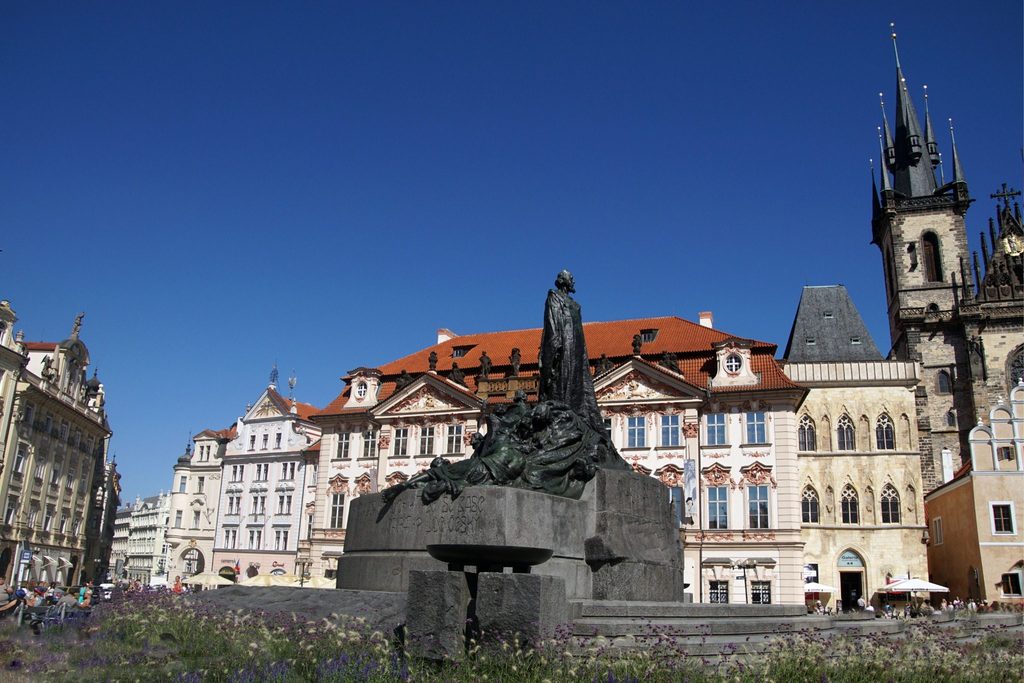
Foundation stone laid: 1903
Unveiled: 1915
Sculptor: Ladislav Šaloun
The Jan Hus Memorial honors the Czech religious reformer who died at the Council of Constance in 1415. Hus criticized certain church practices, and his ideas influenced later religious movements in Bohemia. To understand the historical events behind his influence, explore our guide to Prague’s religious history, from Jan Hus and the Hussite movement to the religious conflicts that transformed Bohemia.
The memorial emerged centuries after his death, during a period when Czech national identity was becoming an increasingly important public cause. Its unveiling in 1915 coincided with the 500th anniversary of Hus’s execution, although the authorities prohibited the planned official ceremony.
Sculptor Ladislav Šaloun designed a composition that places Hus above groups representing different experiences of Czech history, including his religious followers and people associated with persecution after the Battle of White Mountain.
Prague City Tourism’s Jan Hus Memorial history records its foundation stone and unveiling.
The monument does more than honor one individual. Hus had become a symbol through which people could express religious conviction, resistance to authority and Czech national identity. Its prominent position in Old Town Square connects medieval religious history with the political aspirations of the early 20th century. To learn about other influential people who shaped the city’s past, explore our guide to Prague’s historical figures.
Prague Monuments of National Identity and Remembrance
During the 19th and 20th centuries, Prague’s monuments increasingly expressed demands for national recognition. Later memorials also addressed political repression and the human cost of authoritarian rule.
8. National Theatre: A Monument Built Through Public Support
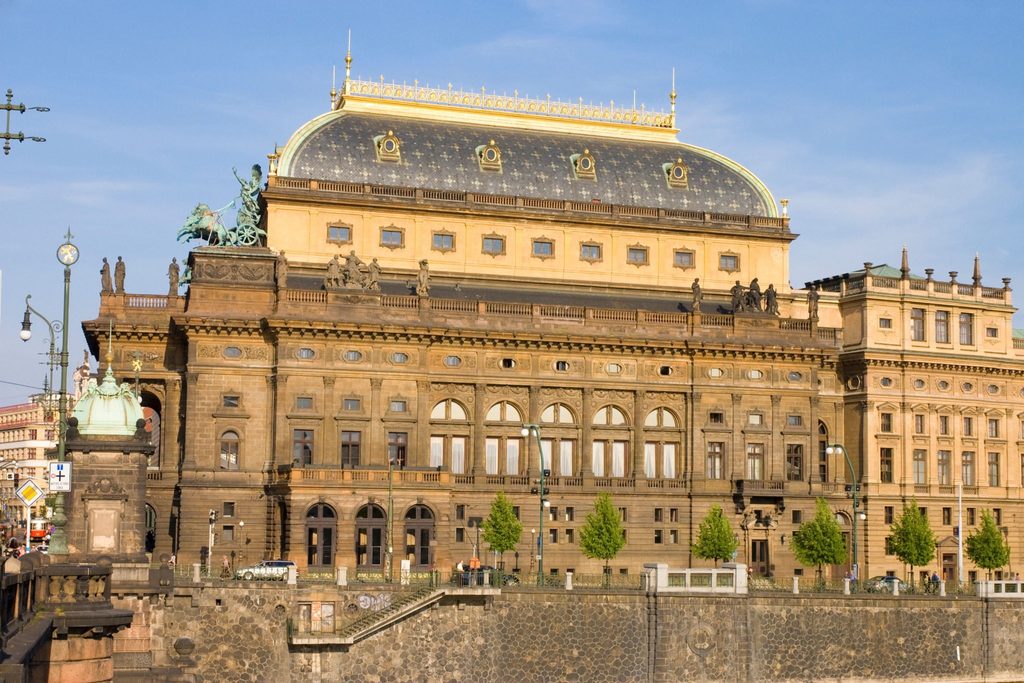
Construction began: 1867
Foundation stones laid: 1868
Opened: 1881, reopened in 1883 after a fire
The National Theatre grew from a desire to establish a major stage for Czech-language culture. During the 19th century, Czech patriots sought institutions that could preserve their language and strengthen national identity.
The project emerged in the 1840s, and public fundraising helped turn the theatre into a national undertaking. Construction began in 1867, and organizers ceremonially laid the foundation stones on May 16, 1868.
The theatre opened in June 1881, but a fire severely damaged it that August. A renewed fundraising campaign supported reconstruction, and the theatre reopened on November 18, 1883.
The National Theatre’s official history documents these milestones and the importance of public contributions.
Why did a theatre matter so much? Drama, music and public performance gave Czech artists a major platform and helped audiences celebrate their cultural identity.
The National Theatre remains an example of a landmark built through collective ambition. Its history shows how a cultural institution can become a monument to the people who helped establish it.
9. National Memorial at Vítkov: Commemorating Czechoslovak Statehood
Construction began: 1928 to 1929
Main building completed: 1932
Interior decoration continued until: 1938
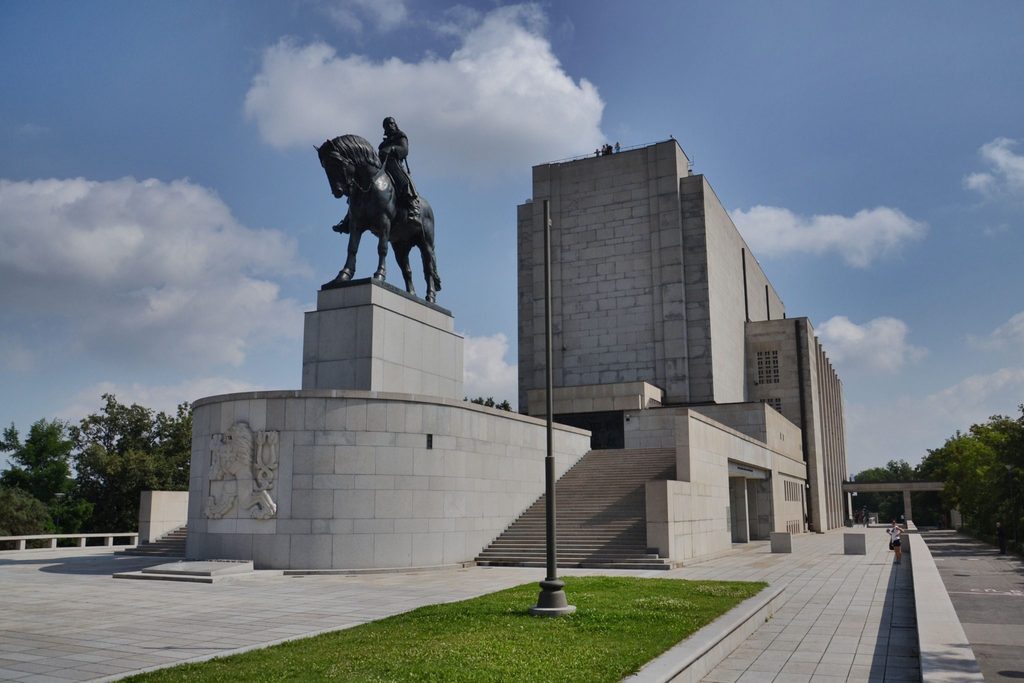
The National Memorial at Vítkov was built primarily to honor the Czechoslovak legionaries who fought during the First World War and to commemorate the creation of an independent Czechoslovak state in 1918. Their military service and the wider Czechoslovak independence movement helped bring an end to Habsburg rule. The memorial was conceived as a national monument celebrating the sacrifices behind the country’s independence and expressing the identity of the newly established republic.
The foundation ceremony took place in 1928, and construction began in 1929. Builders completed the main structure in 1932, while work on its interior decoration continued until 1938. However, the German occupation interrupted plans to put the nearly completed memorial to its intended use.
The memorial’s meaning shifted during the communist period, when authorities transformed it into a mausoleum for Communist Party officials, including President Klement Gottwald. After 1989, its role changed again, and the site became a place for presenting the history of Czech and Czechoslovak statehood.
The large equestrian statue of Jan Žižka in front of the building adds another historical layer. Workers unveiled it in 1950, years after construction of the main memorial. Žižka was a Hussite military leader associated with the Battle of Vítkov in 1420, when his forces defeated a crusader army.
The memorial demonstrates how governments and societies reinterpret public monuments to reflect changing political priorities. Originally intended to honor the struggle for Czechoslovak independence, it later became a symbol of communist power before returning to its broader role in commemorating Czech and Czechoslovak history.
10. Memorial to the Victims of Communism: Remembering Repression
Unveiled: May 2002
Sculptor: Olbram Zoubek
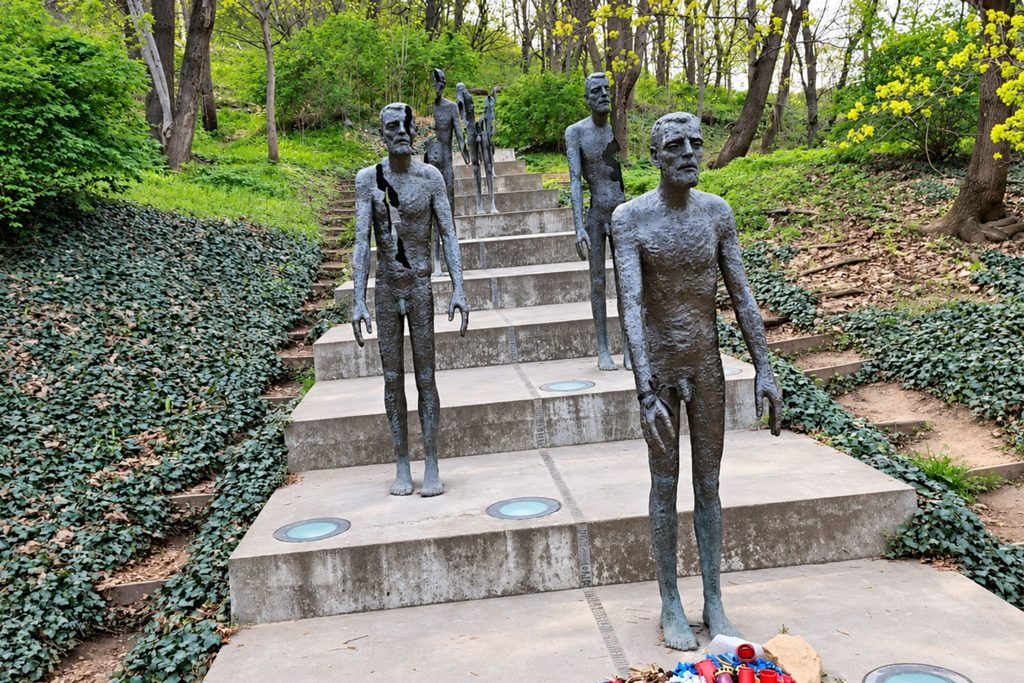
The Memorial to the Victims of Communism stands at the foot of Petřín Hill in Prague. It was built to honor all those whose lives were damaged or destroyed under communist rule in Czechoslovakia between 1948 and 1989. Its purpose extends beyond remembering people who were imprisoned or executed, recognizing the wider human cost of political persecution and totalitarian repression.
Sculptor Olbram Zoubek created the figures in collaboration with architects Zdeněk Hölzel and Jan Kerel. The monument consists of a staircase lined with seven human figures that become increasingly fragmented. This gradual deterioration symbolizes how the communist regime stripped victims of their humanity, dignity and physical integrity.
The memorial was unveiled in May 2002, more than a decade after the fall of communist rule in Czechoslovakia. Its creation provided a lasting public place to acknowledge the suffering of victims and preserve their experiences in the country’s historical memory.
Unlike monuments celebrating rulers or military achievements, this memorial focuses on suffering, loss and remembrance. Its figures represent the human cost of imprisonment, executions, forced emigration and other forms of persecution.
For visitors, the memorial offers a quieter but important contrast to Prague’s grand royal and religious landmarks. It reminds us that the city’s history includes not only architectural achievements and political triumphs, but also the people who suffered under authoritarian rule.
What Prague’s Historical Monuments Reveal About the City
Looking at these landmarks together reveals several recurring reasons why societies build monuments.
Power and defense: Prague Castle began as a fortified seat of authority, while the Powder Tower served as a city gate and ceremonial entrance. Both reflect the need to protect and organize a growing political center.
Faith and religious authority: St. Vitus Cathedral and the Marian Column demonstrate how religious beliefs shaped public life. Their histories also reveal how changing political circumstances can alter the meaning of religious monuments.
Trade and civic development: Charles Bridge and the Old Town Hall served practical needs while expressing Prague’s growing importance. Infrastructure and civic institutions can become historic landmarks even when their original purpose was not commemoration.
National identity: The Jan Hus Memorial and National Theatre connected public monuments with Czech religious history and cultural aspirations.
Remembrance and political change: The Vítkov Memorial and Memorial to the Victims of Communism preserve memories of national achievements, suffering and changing interpretations of the past.
To explore these themes further, read our guide to Prague’s architectural history
Frequently Asked Questions About Prague Monuments
Prague Castle is among the city’s oldest major historic complexes, with origins dating to around 880. Its present buildings developed over many centuries, so the entire complex does not date from the 9th century.
Charles Bridge replaced Judith’s Bridge, which was badly damaged by flooding in 1342. Construction began in 1357 under Charles IV and was completed in 1402.
Prague Castle was founded around 880, traditionally associated with Prince Bořivoj. It expanded through successive periods of Bohemian and Czech history.
Prague was an important center of Christianity and political authority in Bohemia. Churches, cathedrals and religious columns reflected worship, royal patronage and religious conflicts.
The Jan Hus Memorial honors a religious reformer, the National Memorial at Vítkov commemorates Czechoslovak legionaries, and the Memorial to the Victims of Communism remembers those affected by communist repression.
You can see several major landmarks in one day, including Prague Castle, St. Vitus Cathedral, Charles Bridge, Old Town Hall and the Powder Tower. Exploring their histories in depth requires more time.
Final Thoughts: Look Beyond the Stone
The next time you walk through Prague, take a moment before photographing a statue, crossing a bridge or entering a historic square. Ask who wanted it built, what problem it was meant to solve, and what its creators hoped future generations would remember. If you’d like to explore the city through themed routes that connect its history and landmarks, discover our guide to Prague themed walks.
Those questions reveal a city shaped not by one ruler or one period, but by centuries of ambition, belief, conflict and change. Some monuments celebrate power, others preserve cultural identity, and still others remind us of suffering that should not be forgotten. Prague’s architectural story extends beyond its historic monuments. To discover another chapter of the city’s built heritage, explore our guide to Art Nouveau Prague.
The most rewarding way to explore Prague monuments is to see them not as isolated attractions, but as pieces of a much larger historical story. Once you understand why they were built and when, the city becomes more than a beautiful destination. It becomes a place whose past you can begin to understand.
 Charles Bridge: Medieval stone bridge decorated with historic statues.
 Astronomical Clock: Famous Old Town landmark dating back to the medieval era.
 Powder Tower: Gothic gateway that once formed part of Prague’s fortifications.
 St. Vitus Cathedral: Grand Gothic cathedral located within Prague Castle.
 Jan Hus Memorial: Monument honoring the Czech religious reformer in Old Town Square.
 National Museum: Historic landmark overlooking Prague’s famous Wenceslas Square.