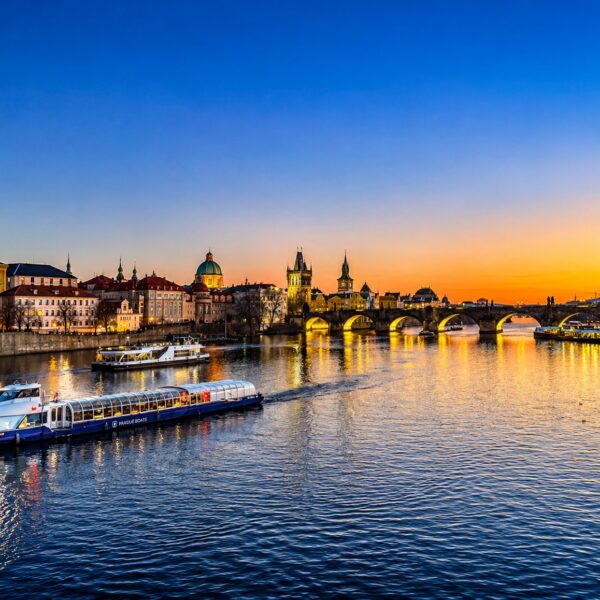

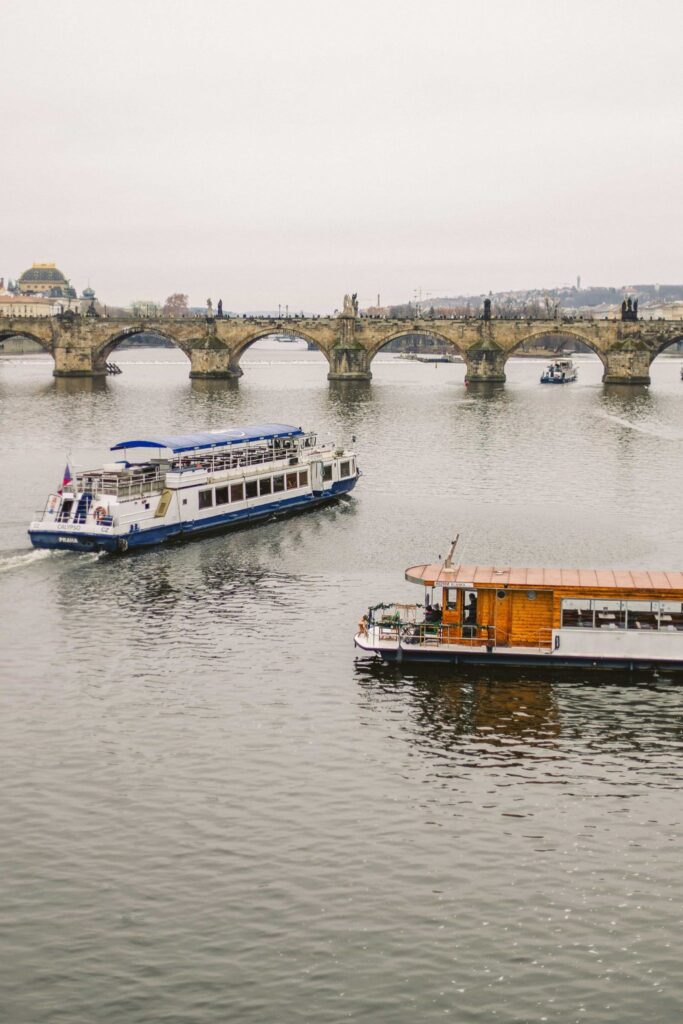
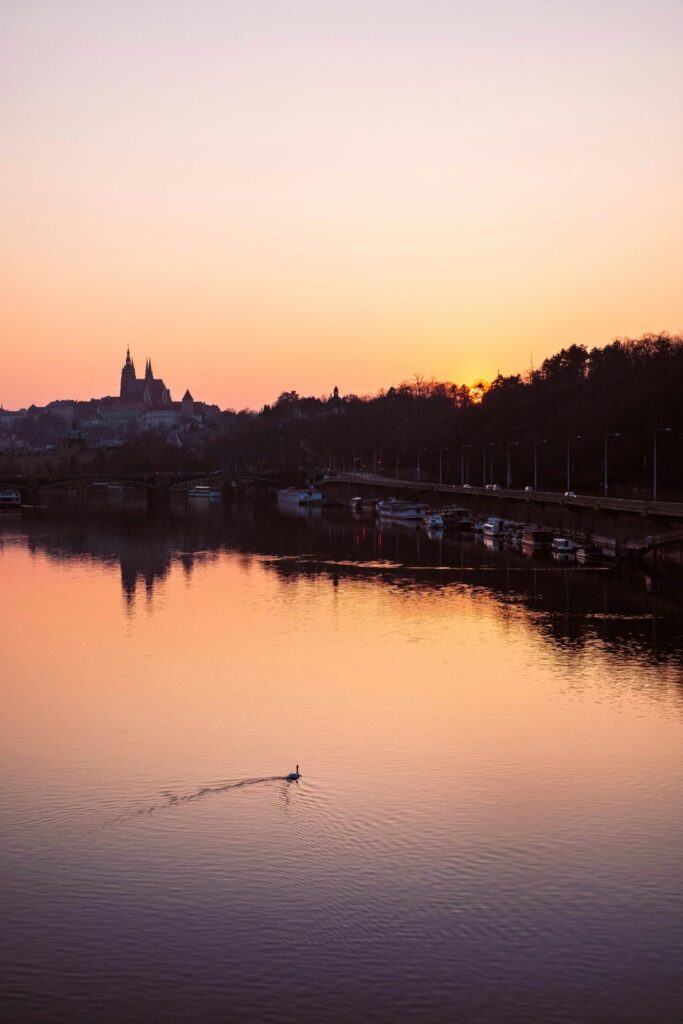
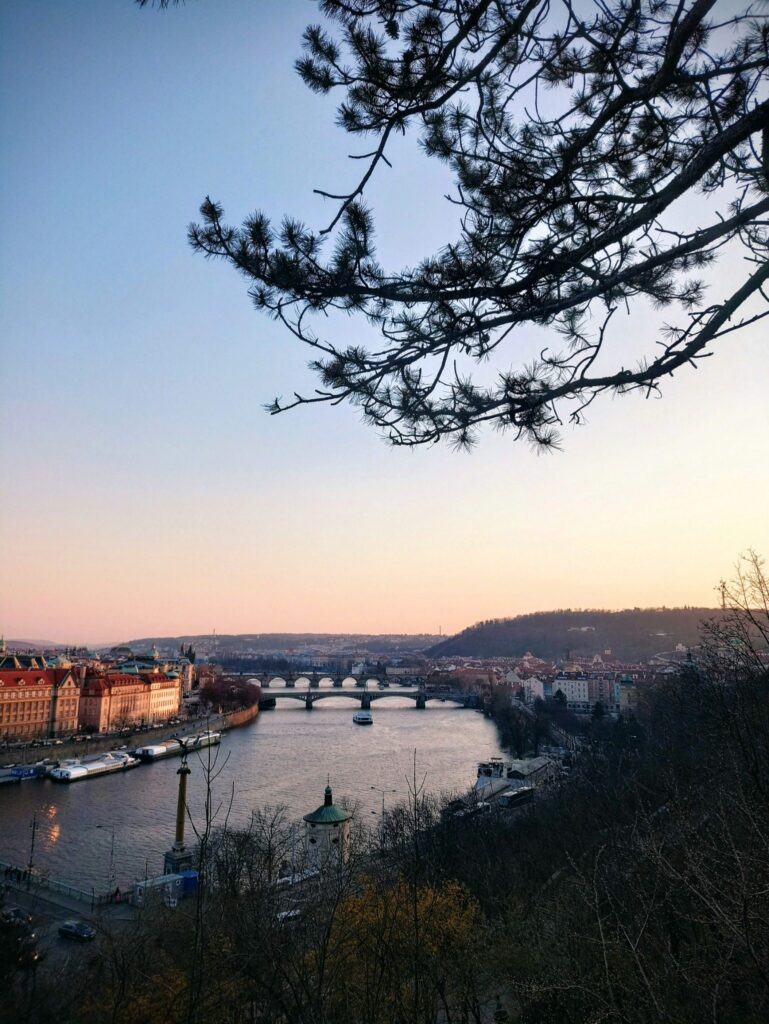
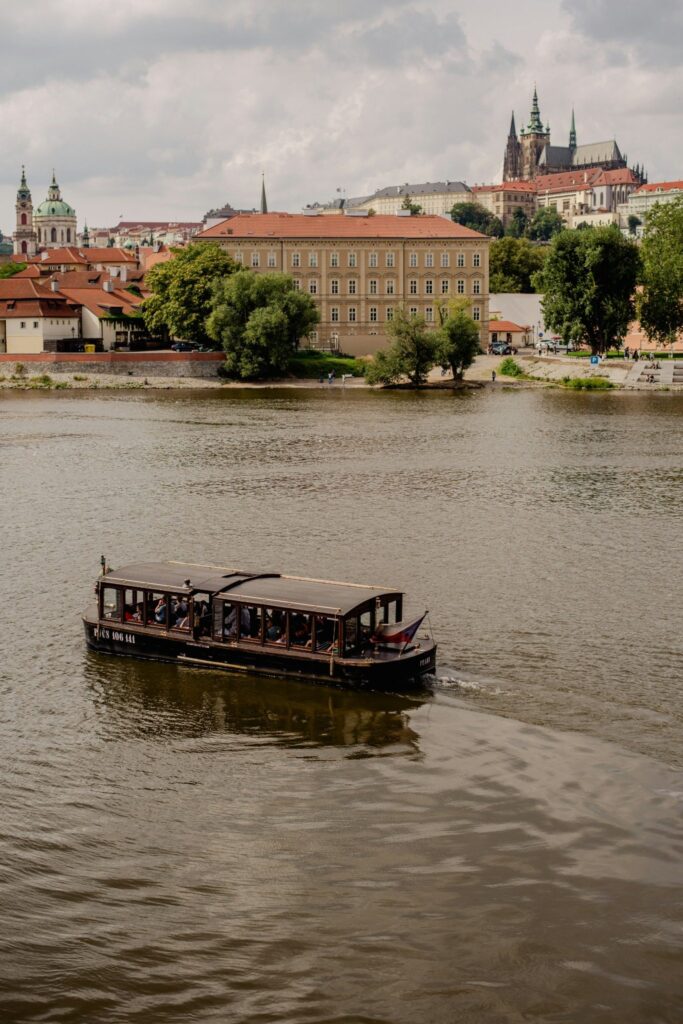
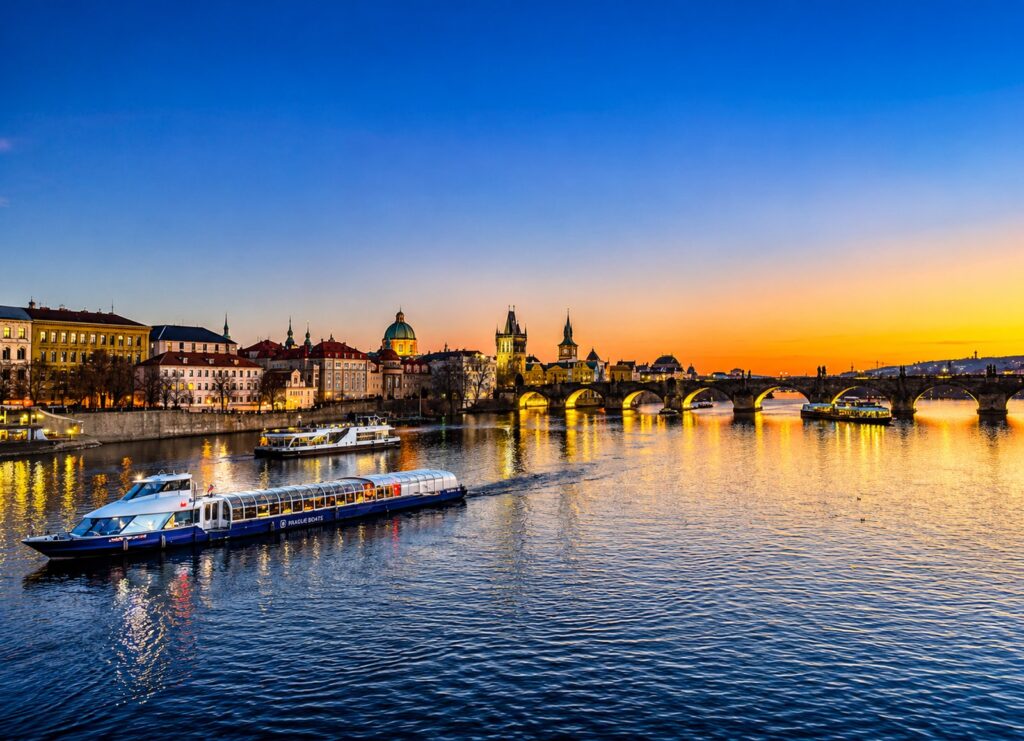
Prague rivers are much more than the Vltava winding beneath Charles Bridge. Most visitors see the famous river, take a few photos, perhaps join a cruise, and move on. But Prague’s waterways stretch far beyond the historic center, creating quiet valleys, green walking routes, old neighborhoods, islands, canals, and surprisingly peaceful corners of the city. In some parts of Prague, a small stream can lead you through a green landscape where the noise of the city seems to disappear.
The Vltava is undoubtedly the star. It flows through the heart of Prague, passes beneath its famous bridges, and provides some of the city’s most memorable views. But the river is also part of a much larger network of waterways. The Berounka joins the Vltava in the southern part of the city, while smaller streams such as Botič, Rokytka, Šárecký potok, and Dalejský potok wind through neighborhoods, valleys, parks, and greener parts of Prague.
Then there is Čertovka, the narrow historic canal at Kampa that looks almost like a tiny river of its own. Together, these waterways reveal a side of Prague that many visitors never see, from lively riverfronts and historic mills to quiet walking paths and natural valleys. If you are wondering what river runs through Prague, the answer is the Vltava, but Prague rivers and waterways tell a much broader story about the Czech capital.
Prague Rivers, Quick Answer
If you only have limited time to experience Prague’s waterways, these are the ones you shouldn’t miss:
- Vltava for Prague’s most famous river views, bridges, and cruises
- Čertovka for the picturesque canal, historic mills, and Kampa
- Náplavka for a lively riverfront, markets, food, and local atmosphere
- Berounka for quieter landscapes and a different side of southern Prague
- Rokytka for green spaces, walking, and a lesser-known side of the city
- Šárecký potok for hiking and the natural scenery of Divoká Šárka
- Dalejský potok for peaceful valleys and walks away from the tourist center
For a first visit, prioritize the Vltava and Čertovka. The other waterways are better suited to longer stays, repeat visits, or travelers who want to explore beyond central Prague.
Prague Rivers at a Glance
You do not need to visit every waterway in Prague to appreciate the city’s relationship with water. The Vltava is essential for first-time visitors, while the smaller waterways are better suited to travelers who want nature, walking routes, quieter neighborhoods, and a different perspective on Prague.
| Waterway | Type | Where to experience it | Best for |
|---|---|---|---|
| Vltava | River | Charles Bridge, Kampa, Náplavka, Vyšehrad | First-time visitors, views, cruises |
| Berounka | River | Southwestern Prague | Nature, cycling, quieter landscapes |
| Botič | Stream | Southern and central Prague | Local exploration and walks |
| Rokytka | Stream | Eastern and northeastern Prague | Nature, walking, urban exploration |
| Čertovka | Canal / Vltava branch | Kampa and Malá Strana | Photos, history, romantic walks |
| Šárecký potok | Stream | Divoká Šárka | Hiking, nature, photography |
| Dalejský potok | Stream | Southwestern Prague | Valleys, hiking, quiet landscapes |
One important detail is worth knowing before you continue. These seven waterways are not all technically rivers. The Vltava and Berounka are rivers, while Botič, Rokytka, Šárecký potok, and Dalejský potok are smaller watercourses. Čertovka is particularly different: Prague City Tourism describes it as an artificial distributary channel, or side branch, of the Vltava.
For tourists, however, all seven are useful pieces of Prague’s water story. Together, they show how the city combines a major European river with smaller streams, green valleys, historic canals, and natural landscapes.
What River Runs Through Prague?
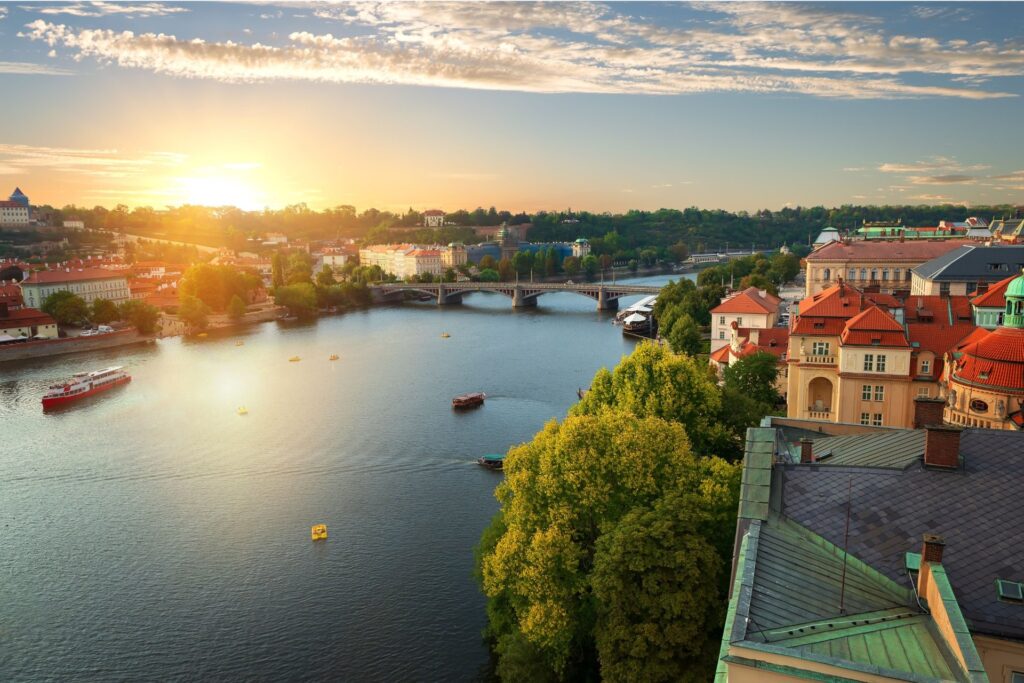
The Vltava River runs through Prague and is the city’s main river.
Its Czech name is Vltava, while “Moldau” is the traditional German name. The river passes directly through the historic center and continues northward, shaping the geography and appearance of Prague along the way.
Prague’s official city information states that the Vltava flows through the city for 31 kilometers and reaches a maximum width of approximately 330 meters. The city also lists nine islands on the river within Prague.
For visitors, the Vltava is the river you encounter again and again. Charles Bridge crosses it, Kampa sits beside one of its branches, Náplavka follows its eastern bank, and numerous bridges connect the city’s districts across the water.
The river is also one of the best ways to understand Prague geographically. On one side, you can see the historic Old Town. On another, Prague Castle rises above Malá Strana. Farther south, the city becomes greener and less densely built, while the riverfront around Náplavka takes on a lively, modern atmosphere.
This is why the Vltava should be your starting point when exploring Prague rivers, even if you eventually decide to venture beyond the famous river.
7 Prague Rivers and Waterways Worth Knowing
Before looking at the seven waterways individually, there is one distinction that makes this guide more accurate than simply calling everything a “river.”
Prague has rivers, streams, tributaries, and artificial channels. Some are major geographical features, while others are best experienced as part of a walking route through a particular neighborhood or natural area.
For tourists, they all tell part of Prague’s story.
1. Vltava River Prague: The City’s Main Waterway
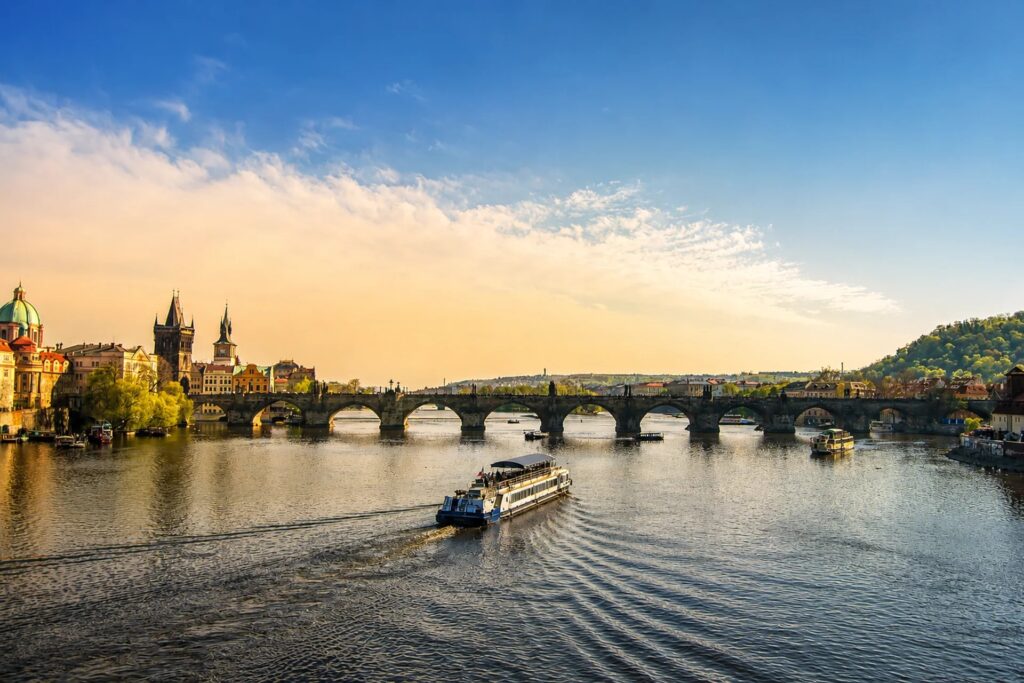
The Vltava River is the obvious starting point for exploring Prague Rivers. It is the waterway most closely associated with Prague’s identity, architecture, history, and tourism.
The river passes through the heart of the city and creates many of the views that appear on postcards, travel websites, and Prague guidebooks. From its banks, you can see Prague Castle, the Old Town, Malá Strana, historic bridges, church towers, islands, and some of Prague’s most remarkable architecture.
Charles Bridge is the obvious highlight, but it is only one part of the experience. Prague’s bridges offer many other viewpoints across the Vltava, from historic crossings to quieter places where you can escape the biggest crowds. As you follow the Vltava through Prague, the character of the riverfront changes constantly. Near Charles Bridge, medieval and Baroque architecture creates the city’s classic riverside scene. The stretch around Kampa feels narrower and more intimate, while the area near the National Theatre opens into a broader waterfront. Further south, Náplavka brings a distinctly modern and social atmosphere, with people gathering along the river for food, events, markets, and leisure.
The Vltava also has an important relationship with Prague’s river islands, which range from lively summer destinations to quieter places where visitors can relax and enjoy views of the city.
The Vltava is also a useful reference point for understanding the other waterways in this article. The Berounka eventually joins it, smaller streams form part of Prague’s broader water system, and Čertovka is directly connected to it.
Best for: first-time visitors, photographers, couples, architecture lovers, river cruises, and anyone wanting the classic Prague experience.
PraguePeek tip: Do not judge the Vltava only from Charles Bridge. Walk south along the river and you will discover a much more varied and local side of Prague.
2. Berounka River: Where Another River Meets Prague
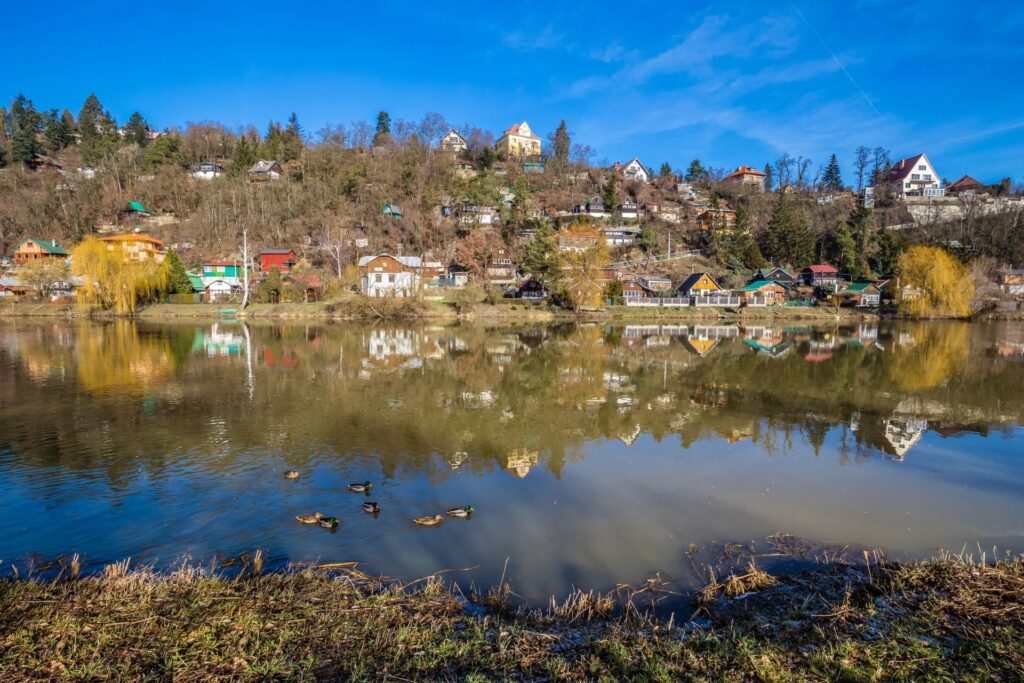
The Berounka River is an interesting addition to any list of Prague Rivers because it reaches the city from the southwest before joining the Vltava.
Its surroundings are very different from the famous central Prague riverfront. You will not find Charles Bridge, Prague Castle, or crowds of tourists gathering along the Berounka. Instead, the landscape becomes more open and natural as you approach the southwestern edge of the city.
The meeting of the Berounka and Vltava is particularly interesting for travelers who enjoy geography. The Vltava is the dominant river of Prague, but the Berounka is an important part of the larger river system that shapes the southern part of the city.
This area also illustrates how dramatically Prague can change within a relatively short distance. A visitor can spend the morning surrounded by medieval architecture in the center and later encounter a much quieter landscape around the city’s southern waterways.
The Berounka is therefore not really a “must-see attraction” in the conventional tourist sense. It is better suited to travelers who have already explored the main sights or who enjoy cycling, walking, nature, and less conventional city experiences.
If you go there expecting another postcard view of Prague, you may be disappointed. If you go because you want to understand another part of the city’s geography, it becomes much more interesting.
Best for: travelers interested in geography, cycling, nature, and quieter parts of Prague.
Tourist tip: Treat the Berounka as part of an exploration of southwestern Prague rather than as a quick sightseeing stop.
3. Botič: A Lesser-Known Prague Waterway
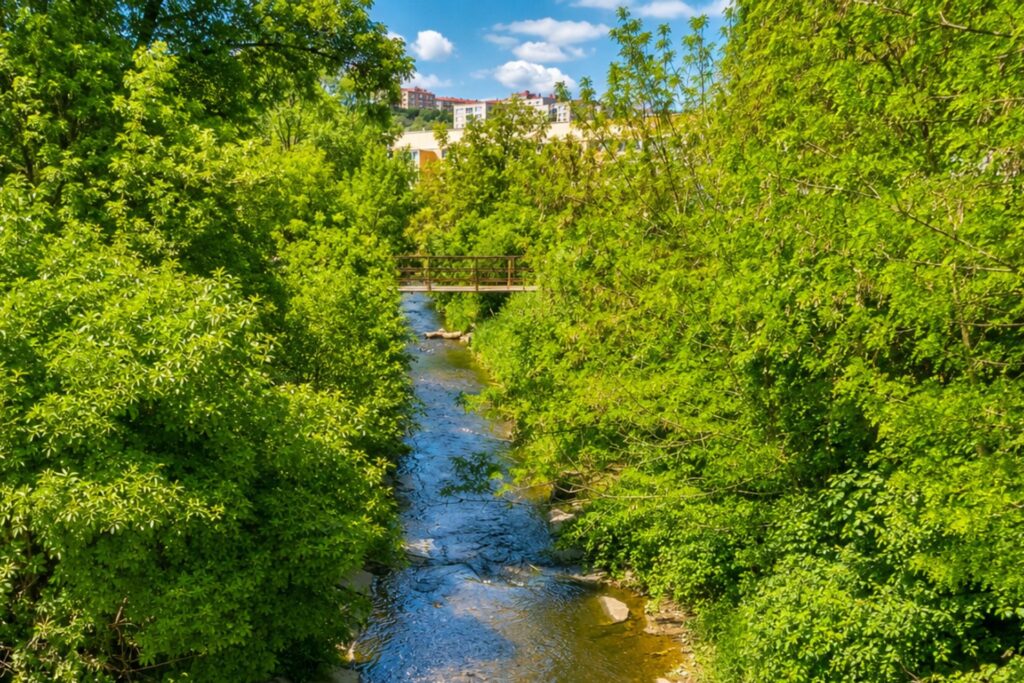
The Botič is one of the most notable smaller watercourses in Prague, although very few international tourists arrive in the city knowing its name.
Unlike the Vltava, Botič does not form the backdrop to Prague’s most famous landmarks. Instead, it passes through southern and central parts of the city, becoming part of ordinary Prague life.
That is precisely what makes it interesting.
Along the Botič, you are more likely to encounter residential areas, local streets, parks, bridges, and everyday city scenery than grand historic monuments. The waterway shows how Prague’s relationship with water extends beyond the spectacular riverfront that tourists normally see.
Botič also demonstrates an important point about exploring Prague: not every interesting feature has to be a famous attraction. Some of the city’s character is hidden in the ordinary spaces between the major sights.
For a first-time visitor staying in Prague for only two or three days, Botič probably should not replace Prague Castle or Charles Bridge. But for a longer stay, or for someone returning to Prague for a second visit, following part of the waterway can be a pleasant way to see neighborhoods that rarely appear in standard tourist itineraries.
The experience is especially good when combined with nearby parks or residential districts rather than treating the stream as an isolated attraction.
Best for: travelers who want to see Prague away from the main tourist route.
PraguePeek tip: Botič works best as part of a neighborhood walk rather than as a destination you travel across the city just to photograph.
4. Rokytka: One of Prague’s Longest Streams
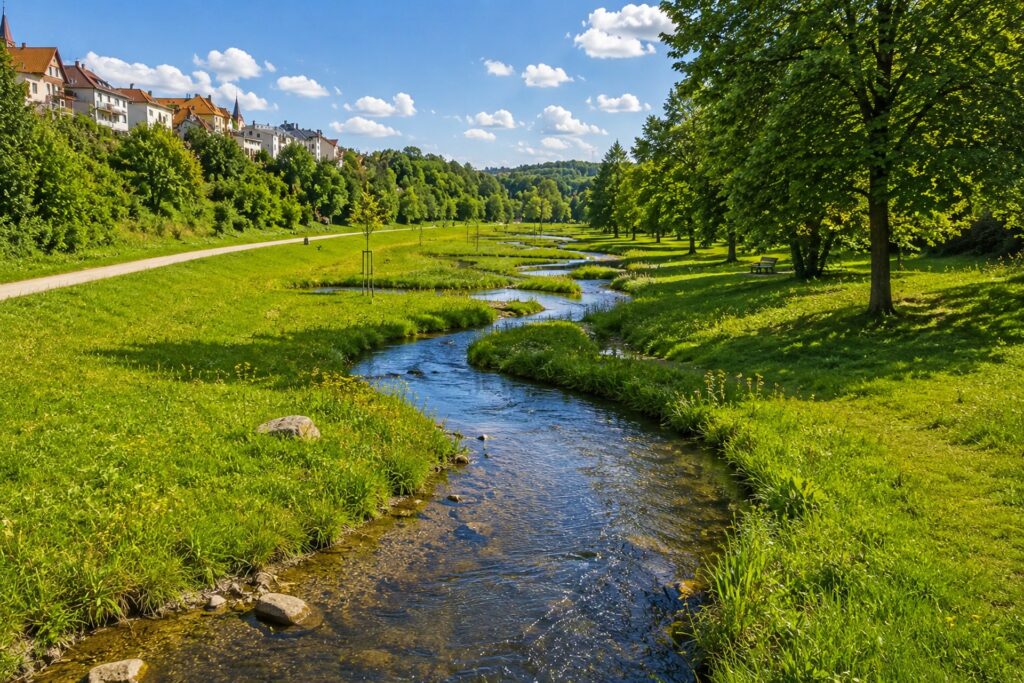
If you want to discover one of the more surprising Prague Rivers and waterways, look beyond the historic center to Rokytka.
Technically a stream, Rokytka is one of the longest watercourses in Prague, flowing for more than 30 kilometers through the city’s territory. Prague’s environmental authorities describe it as an important watercourse and have carried out multiple revitalization projects along its route.
Those projects are part of what makes Rokytka particularly interesting today. In several locations, Prague has been working to make the watercourse more natural while also improving flood protection and ecological conditions.
One recent example is the area beneath Smetanka in Hrdlořezy. A second stage of revitalization was completed in 2025, creating new meanders, islands, and an expanded ecological area along the stream. A new gravel path was also created beside the water.
Other revitalized sections around Rokytka have also created spaces that are useful for recreation and nature. The city describes parts of the watercourse as examples of restoring streams toward a more natural appearance while improving their ecological and recreational value.
This makes Rokytka more than just an obscure stream on a map. It is an example of how Prague is trying to reconnect urban areas with natural waterways.
For tourists, however, you do not need to follow all 30-plus kilometers. Choose one of the greener sections and combine it with a walk through the surrounding neighborhood or landscape.
The contrast with the Vltava is striking. At Charles Bridge, the river is surrounded by historic architecture and thousands of visitors. Along Rokytka, you can find meanders, vegetation, paths, and much quieter surroundings.
Best for: walkers, nature lovers, repeat visitors, and travelers interested in Prague beyond the historic center.
Tourist tip: Choose one accessible green section of Rokytka rather than trying to follow the entire stream.
5. Čertovka: Prague’s Famous Canal at Kampa
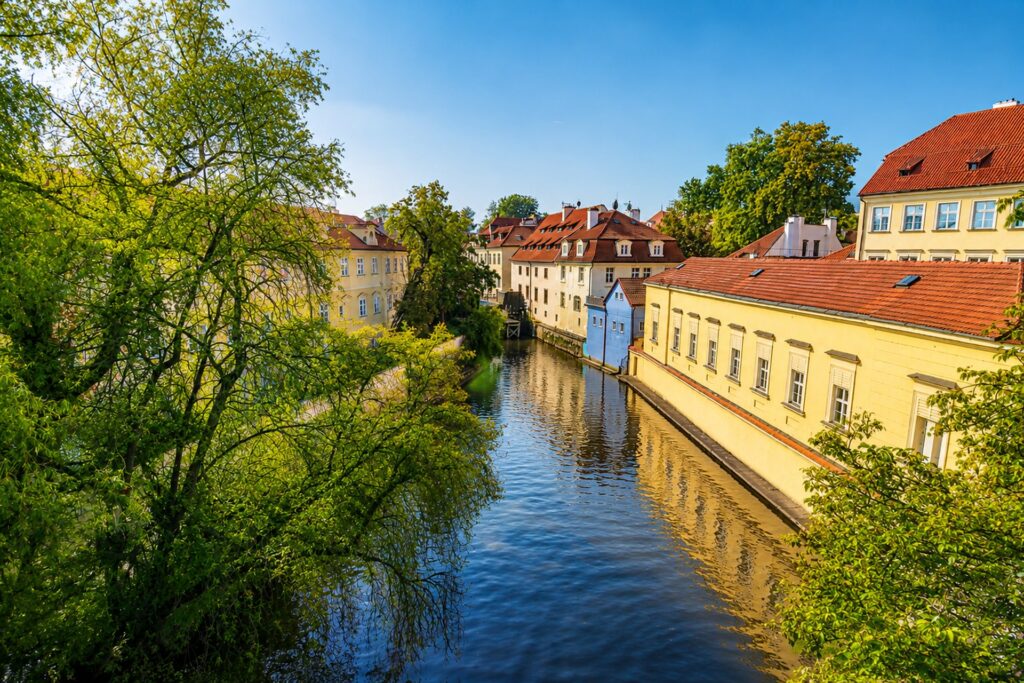
Čertovka is perhaps the most tourist-friendly of Prague’s lesser-known waterways, even though it is not a separate natural river.
Prague City Tourism describes Čertovka as an artificial distributary channel, or side branch, of the Vltava. It separates Kampa Island from Malá Strana and has a long connection with the area’s historic mills.
The waterway is one of the reasons Kampa has such a distinctive atmosphere. Instead of seeing a broad river, you encounter a narrow channel lined with historic buildings, bridges, greenery, and old mill structures.
This is also where Prague’s nickname “Prague Venice” becomes understandable. The combination of the narrow waterway, old architecture, bridges, and riverside atmosphere creates one of the city’s most picturesque corners.
The historic connection with mills is particularly interesting. The channel was originally created to regulate water flow to mills, and Prague City Tourism notes that the former Grand Priory Mill and other historic mill buildings remain part of the landscape.
Kampa itself is an island between the main Vltava channel and Čertovka. The area includes grassy spaces, paths, historic buildings, the Lennon Wall, Museum Kampa, and several beautiful viewpoints over the water.
For tourists, Čertovka is much easier to incorporate into an itinerary than some of Prague’s smaller streams. You can see it while exploring Malá Strana and Kampa, without making a special trip to the outskirts.
Best for: photography, couples, history lovers, romantic walks, and first-time visitors.
PraguePeek tip: Do not just photograph Čertovka from one bridge. Walk along Kampa and look for the old mills, narrow waterways, and views back toward the historic center.
6. Šárecký Potok: Prague’s Green Side
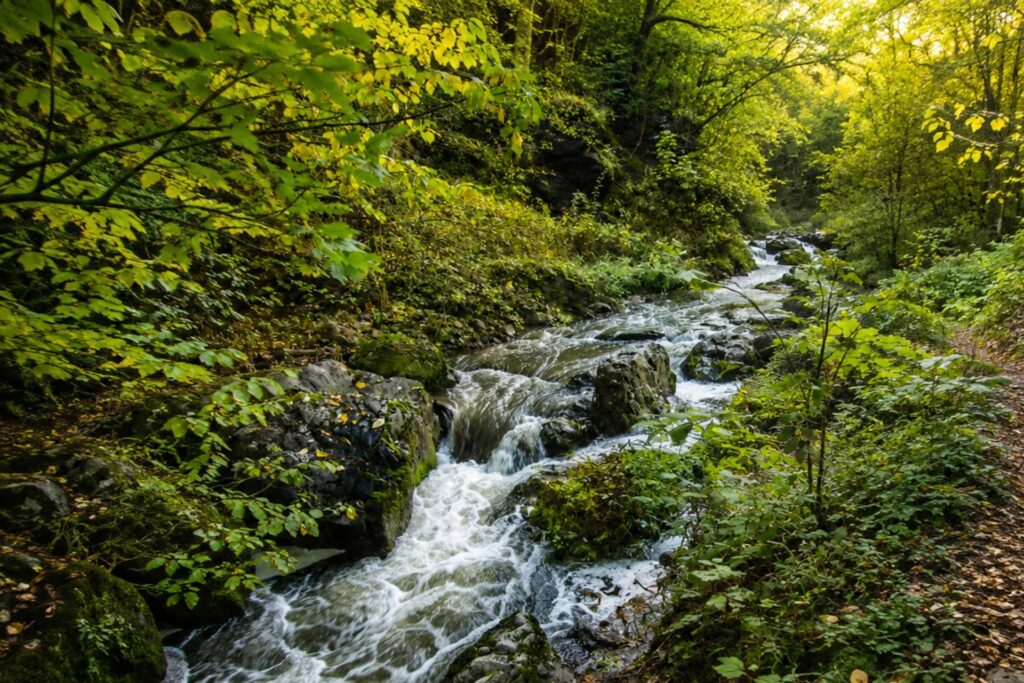
Šárecký potok demonstrates just how green parts of Prague can become.
The waterway is associated with the Šárka landscape and the dramatic natural surroundings of Divoká Šárka. Here, the experience is completely different from the polished riverfront around the Old Town.
Instead of boats, cruises, and historic bridges, you get rocky landscapes, trees, walking paths, open spaces, and a feeling that you have temporarily left the city.
That is exactly why Šárecký potok deserves a place in a guide to Prague Rivers and waterways. It shows that Prague’s relationship with water is not limited to a grand urban river. Some waterways are closely connected with valleys, forests, and recreational landscapes.
Prague has also carried out revitalization work on sections of Šárecký potok and other streams, with the aim of improving ecological, landscape, and recreational functions.
For visitors, the surrounding landscape is more important than the stream itself. Prague’s parks and green spaces offer another way to escape the busy historic center, with several areas providing walking paths, viewpoints, and peaceful places to relax.
This makes it an excellent choice for travelers who have already seen the major attractions and want something different.
Best for: hiking, nature, photography, and travelers who want a break from central Prague.
PraguePeek tip: Combine Šárecký potok with a walk through Divoká Šárka rather than treating the stream as a standalone attraction.
7. Dalejský Potok: A Waterway Through Prague’s Valleys
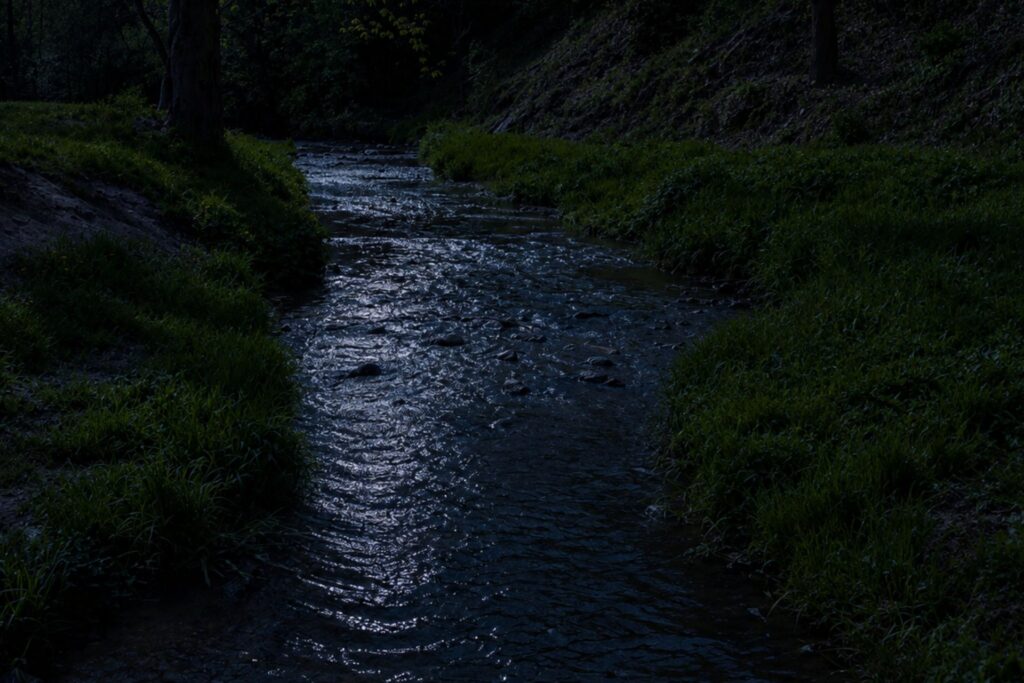
Dalejský potok flows through the southwestern part of Prague and forms part of the city’s network of green valleys and natural corridors.
For most international visitors, the name will mean nothing before they arrive. That is not necessarily a disadvantage. If your image of Prague is Old Town Square, Charles Bridge, and Prague Castle, exploring the landscape around Dalejský potok can be a striking reminder that the city is much larger and more varied than its historic center.
The surrounding landscape is the main attraction. Rather than famous bridges or grand buildings, visitors can encounter paths, vegetation, valleys, and quieter sections of the city.
The stream becomes part of a wider natural experience, making it more appropriate for walking and exploration than conventional sightseeing.
This is also why the smaller Prague waterways are valuable for repeat visitors. After you have already visited the city’s most famous attractions, you can start looking for the places that reveal how locals experience Prague.
Dalejský potok is not something you need to squeeze into a short weekend itinerary. But if you have several days, enjoy hiking, or have already visited Prague several times, it can offer a completely different experience.
Best for: hikers, repeat visitors, nature lovers, and travelers looking for quieter Prague landscapes.
Tourist tip: Think of Dalejský potok as part of a nature route, not as a conventional sightseeing attraction.
Prague Rivers: The Vltava Is Only the Beginning
This is where many travelers get confused.
If someone asks, “What are the Prague Rivers?” they usually mean the Vltava. For a first visit, that is completely understandable because the Vltava dominates the city’s tourist landscape.
But Prague’s relationship with water is much broader. The city contains the Vltava and Berounka rivers as well as numerous smaller watercourses, including Botič, Rokytka, Šárecký potok, and Dalejský potok. Prague’s environmental portal also documents ongoing work to restore and improve several of these waterways.
The Vltava is the part you photograph.
The smaller waterways are the part you discover.
And Čertovka sits somewhere in between, combining the history of a working water channel with one of Prague’s most beautiful tourist neighborhoods.
The Best Places to See Prague Rivers
If you only have limited time, do not try to visit all seven waterways.
Instead, concentrate on the Vltava and choose a few excellent viewpoints.
Charles Bridge: The Classic Vltava River Prague View
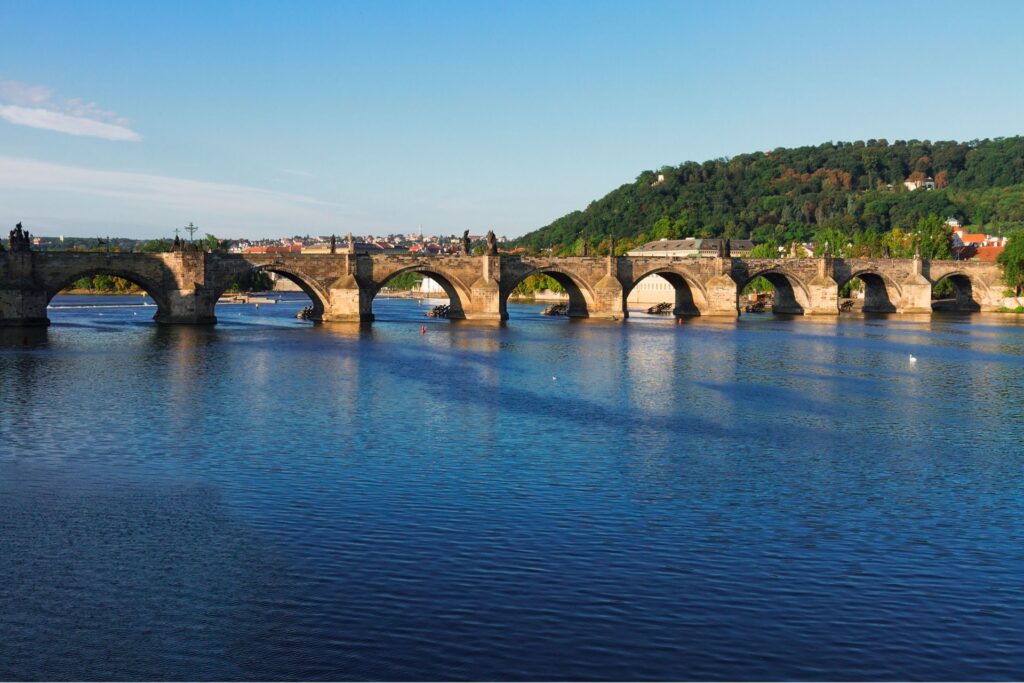
Charles Bridge is the classic introduction to the Vltava.
From the bridge, you can look toward Prague Castle, Kampa, Malá Strana, Old Town, and several historic bridges. The combination of the river, architecture, towers, and statues explains why this remains one of the most recognizable views in Prague.
It is also one of the busiest.
If you want to experience the river without the largest crowds, arrive early in the morning or return later in the evening. The same view can feel completely different when the bridge is quieter. For more ideas on what to do after dark, see our guide to Prague Night Activities, which covers evening walks, river experiences, viewpoints, and other ways to enjoy the city at night.
Best for: first-time visitors and classic Prague photography.
Kampa Island: Where the Vltava Meets Čertovka
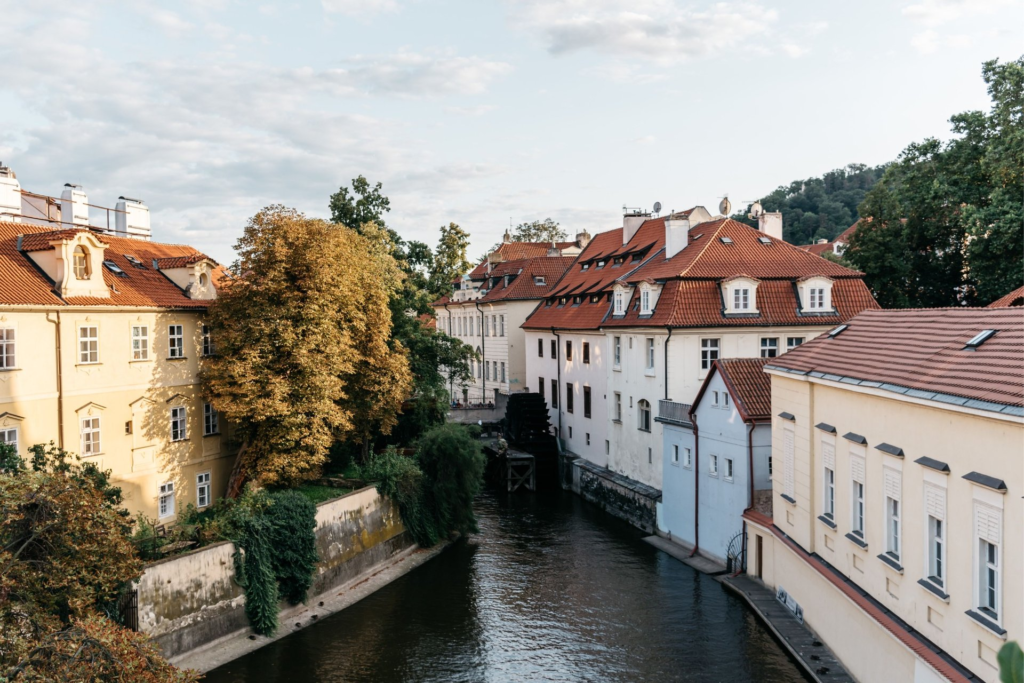
Kampa is one of the most atmospheric places to experience Prague’s waterways.
The park sits between the Vltava and Čertovka, with historic mills and the narrow channel creating a very different atmosphere from the broad river nearby. Prague City Tourism calls Kampa one of the city’s most romantic and picturesque places.
The area is especially rewarding because you can combine several experiences in one walk. You can see Čertovka, explore Kampa Park, visit Museum Kampa, find the Lennon Wall, and then return toward the Vltava and Charles Bridge.
Best for: photography, couples, history, and romantic walks.
Náplavka: Prague’s Lively Riverfront
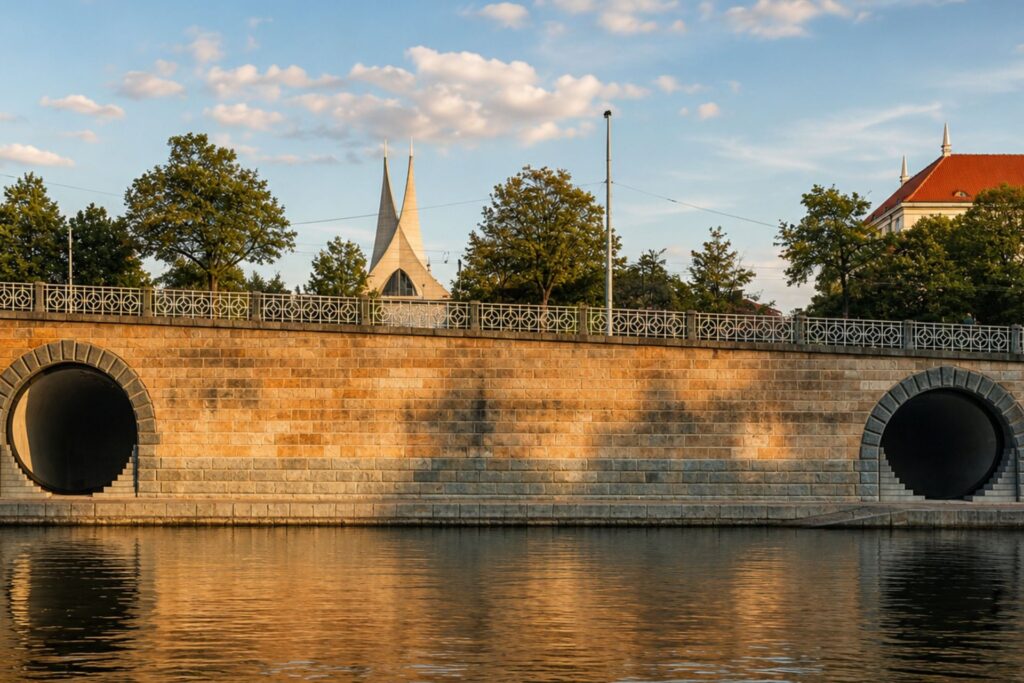
For a more modern river experience, head to Náplavka on Rašínovo Embankment.
Náplavka is one of Prague’s best places to see how the river is used by locals. Instead of focusing only on monuments, the riverfront becomes a place for markets, food, cultural events, walking, socializing, and relaxing.
Prague City Tourism describes Náplavka as a lively riverfront space with views toward the Hradčany panorama and a range of cultural and gastronomic activities.
Saturday is particularly interesting because of the farmers’ market, while evenings can bring a more social atmosphere along the waterfront.
Best for: food, people-watching, river walks, markets, and contemporary Prague.
Letná: See the Vltava From Above
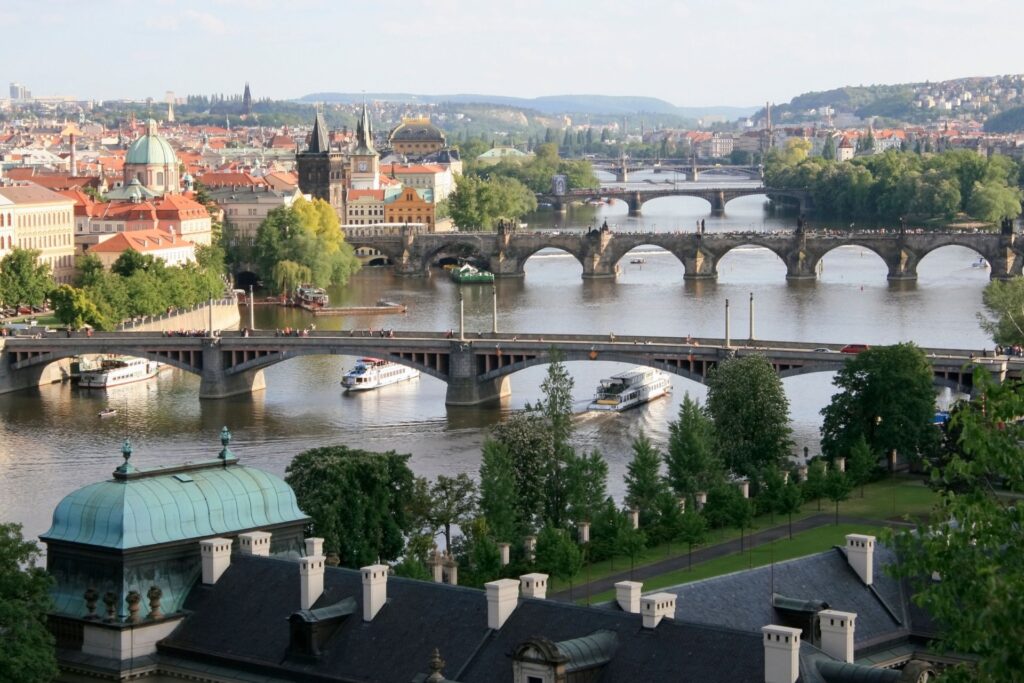
Letná gives you a different perspective on the Vltava.
Instead of standing beside the water, you look down toward the river from an elevated position. This makes it easier to understand the relationship between Prague’s bridges, islands, riverbanks, and neighborhoods.
The panorama is particularly impressive around sunset, when the river and bridges begin to catch the changing light.
For photographers, this is one of the best ways to capture the Vltava as a geographical feature rather than simply a backdrop for a single monument.
Best for: panoramic views and photography.
Vyšehrad: A Quieter River View
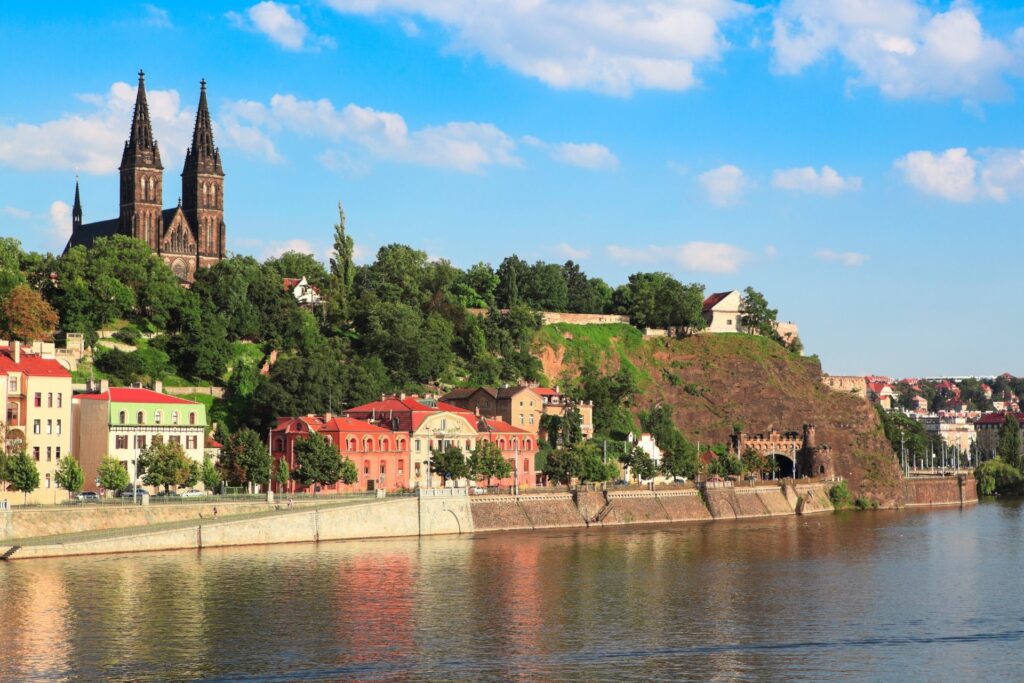
Vyšehrad offers another perspective over the Vltava, this time from a historic elevated position south of the central tourist area.
The fortress, gardens, historic cemetery, and views make Vyšehrad worth visiting even without the river. Add the Vltava panorama and it becomes an excellent stop for travelers who want to combine history with scenery.
Because it is outside the busiest central routes, the atmosphere can also feel considerably calmer than Charles Bridge.
Best for: history, views, photography, and travelers who prefer quieter attractions.
Are Prague River Cruises Worth It?
A cruise can be one of the easiest ways to experience the Vltava, especially if you have limited time.
You can see several bridges and landmarks from the water without walking between them, and a boat trip can be a relaxing change after spending hours exploring Prague’s streets.
Prague City Tourism lists sightseeing cruises and other river boat experiences as part of Prague’s attractions.
But do not assume that a cruise is automatically the best way to experience Prague Rivers.
A cruise makes sense if:
- You want to see Prague from the water.
- You are visiting Prague for the first time.
- You enjoy sightseeing without walking long distances.
- You want a relaxing activity after a busy day.
- You are traveling with someone who would particularly enjoy a boat trip.
Walking may be better if:
- You are on a tight budget.
- You want to stop whenever you see an interesting view.
- You want to explore Kampa and Náplavka.
- You prefer discovering neighborhoods rather than following a fixed route.
If you’re planning a longer day of sightseeing around Prague, our Prague travel tips can help you prepare for getting around, timing your visits, and avoiding common problems.
PraguePeek tip: If your main goal is simply to see the Vltava, you do not need an expensive cruise. Prague’s riverbanks already provide excellent views for free.
Common Mistakes Tourists Make With Prague Rivers
Most tourists do not make serious mistakes around Prague’s waterways. However, some simple mistakes can affect your experience, especially if you are unfamiliar with the city’s tourist areas. For more general advice, see our guide to things to avoid in Prague.
1. Thinking Prague Has Only One Waterway
The Vltava dominates the tourist experience, but Prague has a much wider network of waterways.
Once you understand this, you start noticing smaller streams, green valleys, bridges, and channels that would otherwise seem unrelated to the famous river.
2. Calling Čertovka a Separate River
Čertovka looks like a river, but it is an artificial distributary channel and side branch of the Vltava around Kampa.
That is one of the easiest Prague river facts to get wrong.
3. Spending the Entire River Visit at Charles Bridge
Charles Bridge is spectacular, but it is only one viewpoint.
Try Kampa, Náplavka, Letná, or Vyšehrad as well. Each reveals a different side of the Vltava.
4. Assuming Every Waterway Is a Tourist Attraction
Some smaller streams are interesting mainly because of their surrounding parks, valleys, and walking routes.
Do not expect every waterway to have cafés, boats, and famous buildings beside it. Sometimes the landscape is the attraction.
5. Paying for a Cruise Without Knowing What You Want
A cruise can be worthwhile, but decide whether you want sightseeing, food, a romantic evening, or simply a view of the city.
If you only want to see the river, a walk may give you more flexibility.
6. Ignoring Prague’s Greener Waterways
If you have already visited the Old Town, Prague Castle, and Charles Bridge, exploring one of the city’s greener waterways can give you a much more unusual experience.
The smaller streams can take you into parts of Prague that feel dramatically different from the historic center.
A Simple Prague River Walking Route
If this is your first time experiencing the Vltava, you can create a river-focused walk without booking anything:
- Charles Bridge
Start with Prague’s most famous bridge and enjoy the classic Vltava views. - Kampa Island
Explore Kampa and see the picturesque Čertovka canal and historic mills. - Smetana Embankment
Continue along the river for beautiful views of the Old Town and Prague Castle. - National Theatre
Stop to admire one of Prague’s most recognizable buildings beside the Vltava. - Dancing House
Continue south to see one of Prague’s most distinctive examples of modern architecture. - Rašín Embankment and Náplavka
Finish at Náplavka, where you can enjoy the riverfront atmosphere, food, markets, and views.
This route combines historic architecture, bridges, islands, river views, and modern Prague.
Kampa gives you the chance to see both the Vltava and Čertovka. From there, you can continue along the river toward the National Theatre and Dancing House before reaching Náplavka.
Náplavka is an especially good place to finish because you can stop for food or a drink while enjoying the river.
If you still have energy, continue south toward Vyšehrad for another elevated view of the Vltava.
PraguePeek tip: Do not rush this route. The river is most enjoyable when you allow yourself time to stop at the viewpoints rather than treating it like another checklist of attractions.
Prague Rivers for Different Types of Travelers
Not everyone needs the same river experience.
| Traveler | Best choice | Why |
|---|---|---|
| First-time visitor | Vltava | Classic Prague views |
| Photographer | Vltava + Letná | Bridges and panoramas |
| Couples | Vltava + Čertovka | Romantic scenery |
| Food lovers | Náplavka | Markets and riverfront atmosphere |
| History lovers | Vltava + Čertovka | Bridges, mills, and historic districts |
| Nature lovers | Šárecký potok | Green landscapes |
| Hikers | Rokytka or Dalejský potok | Walking and nature |
| Repeat visitors | Smaller waterways | Less touristy Prague |
What Is the Most Beautiful River in Prague?
For most visitors, the Vltava is the most beautiful river in Prague, largely because of the extraordinary architecture surrounding it. Few urban rivers offer such a combination of historic bridges, Baroque buildings, church towers, Prague Castle, islands, and modern architecture within such a compact area.
However, the “most beautiful” waterway depends on what you want to experience. The Vltava is the obvious choice for historic architecture and classic Prague views, while Kampa and Čertovka offer a more intimate and romantic atmosphere. Travelers looking for forests, valleys, and natural scenery may find Prague’s smaller waterways more rewarding than the busy central riverfront.
For a lively atmosphere, Náplavka is hard to beat, especially when the riverfront is filled with markets, food, events, and people enjoying the waterfront. Those looking for panoramic views should head to Letná or Vyšehrad, where the elevated viewpoints reveal the Vltava and Prague’s skyline from a completely different perspective.
Ultimately, there is no single “best” Prague river experience. The Vltava is the clear winner for first-time visitors, while the smaller waterways and historic channels offer something more unusual for travelers who want to discover a different side of the city.
Can You Swim in Prague Rivers?
The Vltava is not something tourists should treat like an ordinary swimming pool.
Water conditions, currents, boat traffic, weather, and local rules all matter. A river can look calm from the bank while conditions in the water are very different.
For a normal sightseeing trip, there is no reason to enter the Vltava simply because you see people near the water.
If swimming is an important part of your Prague trip, check current local information and use appropriate designated facilities rather than choosing an improvised spot along the river.
Why Are Prague Rivers Important?
Prague’s waterways are not simply scenery.
They have influenced the city’s geography, development, natural environment, recreation, and flood management for centuries.
The Vltava forms the central geographical axis of Prague, while smaller watercourses create green corridors and valleys across different parts of the city.
Modern Prague is also investing in the restoration of its smaller waterways. Rokytka, for example, has undergone several revitalization projects designed to improve ecological conditions, landscape quality, recreation, and water management.
The city’s environmental portal also documents continuing work on Prague’s streams and water infrastructure, showing that these waterways remain important to the city today, not just historically.
So when you walk beside a small stream far from Charles Bridge, you are still experiencing part of Prague’s larger geographical and environmental story.
Frequently Asked Questions About Prague Rivers
The Vltava River runs through Prague and is the city’s main river. It flows through the historic center, passing landmarks such as Charles Bridge, Kampa Island, and Náplavka before continuing north.
Prague has two main rivers, the Vltava and Berounka, along with numerous smaller streams and waterways. Important smaller watercourses include Botič, Rokytka, Šárecký potok, and Dalejský potok. Not all of these are technically rivers.
No, the Vltava is not the only river associated with Prague. The Berounka also reaches the city and joins the Vltava, while several smaller streams flow through different parts of Prague. However, the Vltava is by far the most important river for sightseeing.
The best places to see the Vltava include Charles Bridge, Kampa Island, Náplavka, Letná, and Vyšehrad. Each offers a different perspective, from historic bridges and architecture to panoramic views and lively riverfront areas.
Čertovka is not a separate river. It is an artificial channel and side branch of the Vltava around Kampa Island. It is famous for its narrow waterway, historic mills, bridges, and picturesque views in Malá Strana.
Prague river cruises can be worth it, especially for first-time visitors who want to see the city from the Vltava. They offer views of Prague’s bridges, riverfront architecture, and landmarks without requiring a long walk. However, if you are on a budget, walking along the Vltava provides excellent views for free.
Final Thoughts on Prague Rivers
The Vltava is the river that gives Prague its postcard image, but it is only the beginning. From the Berounka and Botič to the quieter Rokytka, Šárecký potok, Dalejský potok, and the historic Čertovka canal, the city’s waterways connect historic neighborhoods with green valleys, peaceful walking routes, and places most visitors never see.
You do not need to visit all seven to appreciate them. Start with the Vltava, explore Kampa and Náplavka, then venture farther out if you want to discover a quieter side of the city. Once you look beyond Charles Bridge, Prague rivers become one of the most interesting ways to understand Prague.
 Main Rivers: Vltava River & Berounka River
 Most Famous River: Vltava, Prague’s main river, flowing through the heart of the city
 Best Way to Experience: River cruises, paddle boats, riverside walks & boat trips
 Must-See Views: Charles Bridge, Letná Park, Vyšehrad & Náplavka
 Riverside Areas: Kampa Island, Čertovka Canal, Náplavka & Střelecký Island
 Best Time to Visit: Late spring to early autumn for cruises and outdoor activities; sunset offers beautiful river views
 Getting Around: Easily accessible by Metro, trams, buses & walking
 Top Activities: River cruises, kayaking, paddleboarding, riverside dining & relaxing walks
 Local Tip: Visit the riverbanks around sunset when Prague’s bridges and historic buildings reflect beautifully on the water
 Recommended Duration: 2–4 hours for a river-focused visit; half a day to combine the river with nearby attractions