
The Prague Metro is one of the fastest and most convenient ways to travel around the Czech capital. Clean, safe, and efficient, it connects many of the city’s most important districts, transport hubs, and tourist attractions. As a result, it is one of the most convenient ways to travel around Prague.
Opened in 1974, the metro is a key part of Prague’s integrated public transportation system. In addition, it works together with trams, buses, trains, and the Petřín Funicular, allowing visitors to move easily across the city.
For travelers visiting Prague for the first time, learning how to use the metro can save time and make exploring the city much easier. This guide explains the lines, transfer stations, tickets, and helpful travel tips for tourists.
Overview of the Prague Metro System
The metro system is known for its speed, reliability, and efficiency. Every day, hundreds of thousands of residents and visitors use the Metro to travel quickly across the city without dealing with traffic.
Key facts about the metro:
- The Prague Metro opened in 1974
- It has 3 lines
- There are 61 Metro stations
- The metro network covers about 65 kilometers
- It connects with trams, buses, trains, and the Petřín Funicular
Today, the metro carries more than one million passengers daily. Therefore, it serves as the backbone of Prague’s public transportation network.
It is particularly useful for reaching districts outside the historic center and for connecting to other forms of public transportation.
Prague Metro Map and Network Layout
Understanding the Metro map makes navigating the system very easy. The metro consists of three color-coded lines identified by letters.
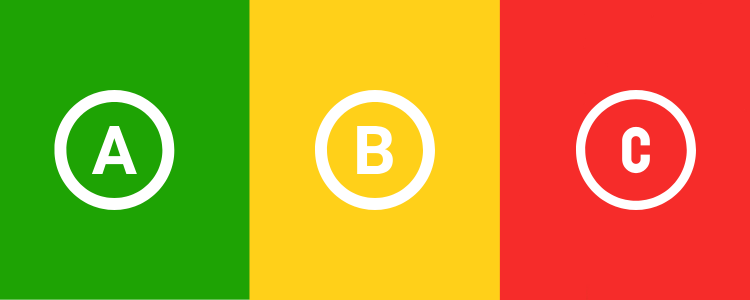
Each station uses the same colors shown on the Metro map, helping passengers quickly identify the correct line and direction.
The lines intersect at several central transfer stations, allowing passengers to move easily between different Metro routes.
➤ If you are new to the system, it helps to first understand the Prague Metro map and how the lines connect across the city.
Metro Lines and Main Stations
The metro network consists of three lines, each identified by a letter and color. Learning these lines will help visitors navigate the system with confidence.
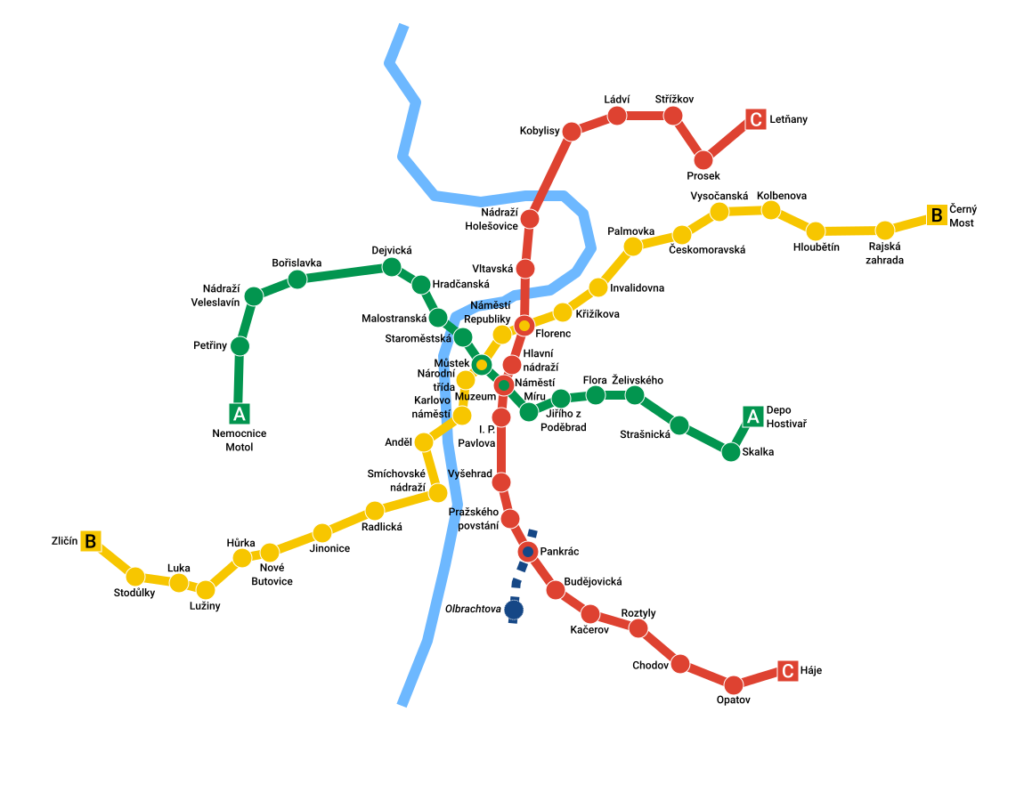
Photo: Prague Metro map showing Lines A (green), B (yellow), and C (red) by:
🟢 Prague Metro Line A – Green Line
Prague Metro Line A runs from Nemocnice Motol to Depo Hostivař.
Important stations on Line A include:
- Nádraží Veleslavín – connection to airport buses
- Malostranská – near Prague Castle and Malá Strana
- Staroměstská – close to Old Town Square
- Můstek – near Wenceslas Square
- Muzeum – transfer station to metro Line C
Line A is frequently used by tourists visiting Old Town and Prague Castle.
🟡 Prague Metro Line B – Yellow Line
Prague Metro Line B runs from Zličín to Černý Most and is the longest line of the Prague Metro.
Important stations on Line B include:
- Anděl – popular shopping and entertainment district
- Karlovo náměstí – near the Dancing House
- Národní třída – near the National Theatre
- Náměstí Republiky – close to Powder Tower
- Florenc – Prague Metro transfer station to Line C and central bus station
🔴 Prague Metro Line C – Red Line
Prague Metro Line C runs from Letňany to Háje.
Important stations on Line C include:
- Florenc – transfer to metro Line B
- Hlavní nádraží – Prague’s main railway station
- Muzeum – transfer to metro Line A
- Vyšehrad – near the historic Vyšehrad fortress
Line C is especially useful for travelers arriving by train or visiting major transport hubs.
How to Enter the Metro Station
Prague Metro entrances are easy to recognize and are marked by a large letter “M”, the universal sign for the Prague Metro.
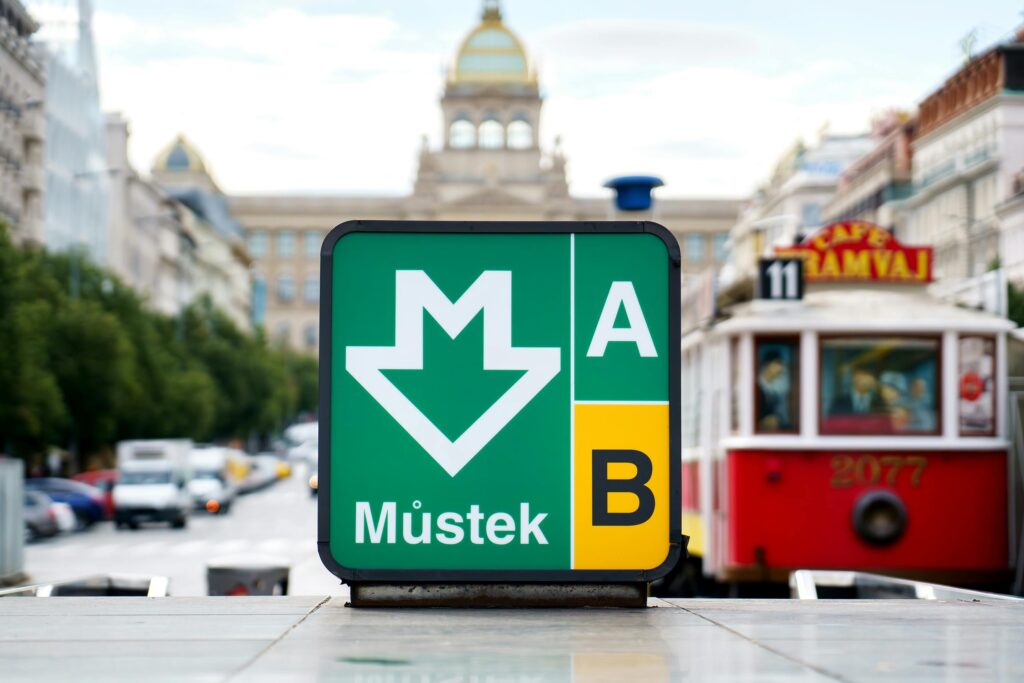
Most metro stations are underground and can be accessed using:
- escalators
- elevators
- stairs
Inside a Metro station, clear signs show:
- Prague Metro line colors
- travel directions
- platform locations
Most stations are clean, modern, and well monitored, making the system comfortable and safe for visitors.
Buying Metro Tickets
The Prague Metro ticket system is integrated with Prague’s trams and buses. A single Metro ticket allows travel on all forms of public transportation within the selected time limit.
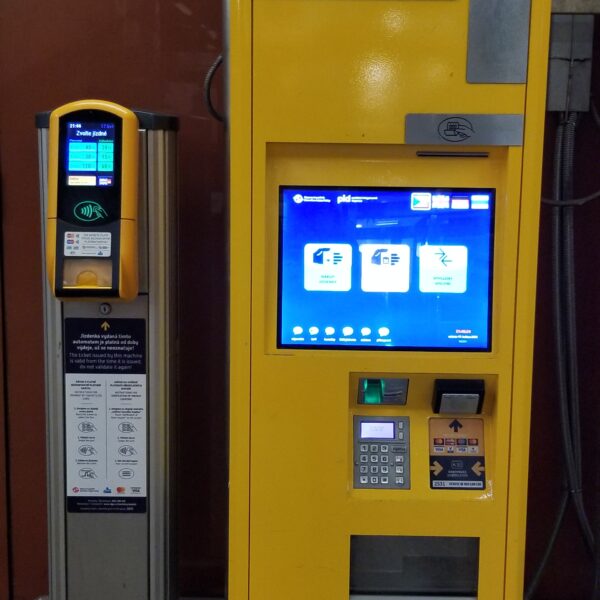
Photo: Prague public transit ticket machine by:
Common Prague Metro ticket options include:
- 30-minute ticket
- 90-minute ticket
- 24-hour ticket
- 72-hour ticket
Metro tickets can be purchased from:
- ticket machines inside Metro stations
- ticket machines at tram stops
- Prague public transport information centers
- some convenience stores
Most metro ticket machines accept contactless credit or debit cards, making them convenient for tourists.
Validating Prague Metro Tickets
However, if you purchase a paper ticket, it must be validated before entering the metro platform.
Validation machines are usually located:
- at metro station entrances
- near escalators leading to the metro platforms
Insert the ticket into the yellow validation machine, which stamps the date and time. From that moment, the ticket becomes valid.
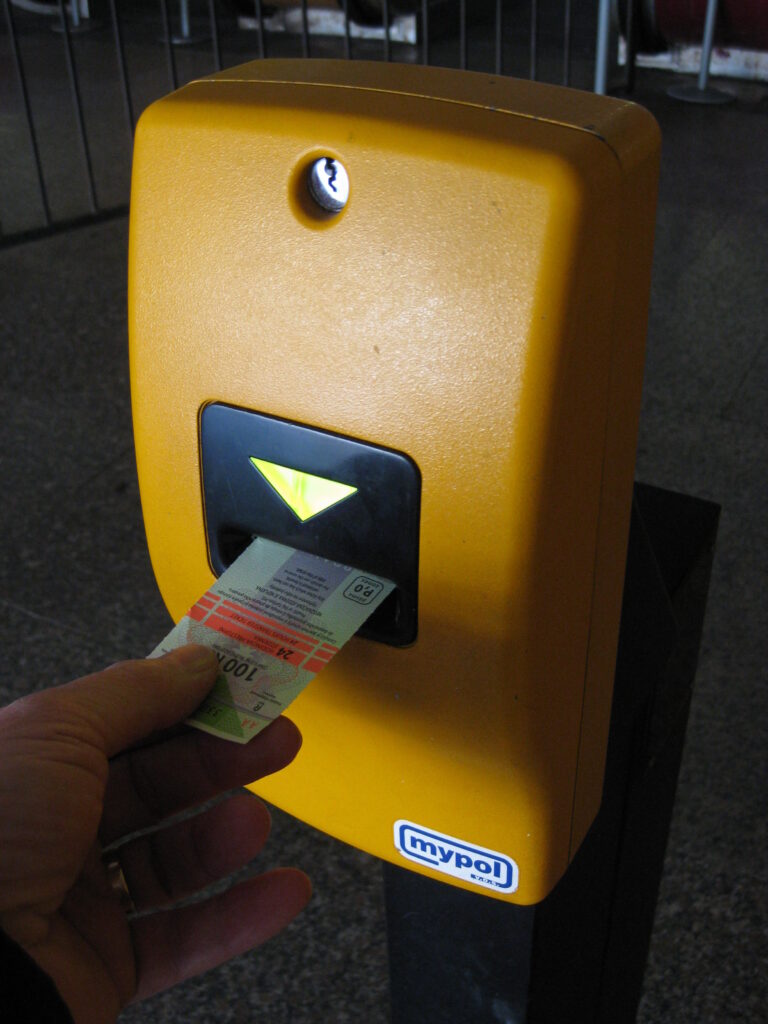
Photo: Prague Metro ticket validation machine used to stamp tickets before entering the metro by:
Chemical Engineer – source: Wikimedia Commons (CC BY-SA 4.0)
Passengers using the metro without validating their ticket may receive a fine during inspections.
Finding the Correct Metro Platform
Finding the correct platform in the metro system is simple once you understand the direction signs.
Follow these steps when using the metro:
- Identify the metro line letter and color.
- Check the terminal station name displayed on metro signs.
- Follow signs pointing toward that metro terminal station.
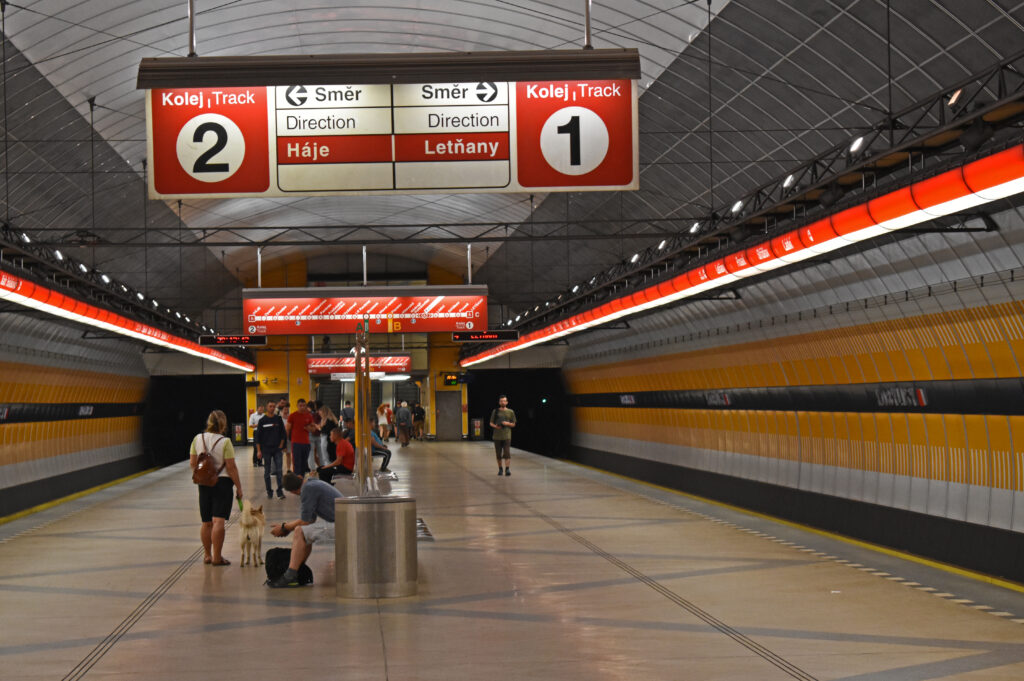
Photo: Kobylisy station platform on Prague Metro Line C. Photo by:
For example, at Kobylisy station on Line C, passengers must choose the correct platform based on the final destination shown on the signs: trains run in one direction toward Háje and in the other toward Letňany.
Once you understand the metro directions, navigating the system becomes very easy.
Metro Transfers
Transfers between metro lines are simple and clearly marked. Three stations serve as the main interchange points.
Muzeum – Metro Transfer Station
Transfer between:
- Metro Line A
- Metro Line C
This Prague Metro station is located at the top of Wenceslas Square.
Můstek – Metro Transfer Station
Transfer between:
- Metro Line A
- Metro Line B
The Můstek Prague Metro station is located between Old Town and Wenceslas Square.
Florenc – Metro Transfer Station
Transfer between:
- Metro Line B
- Metro Line C
Florenc metro station also connects to Prague’s central bus station.
Metro Operating Hours
The operating hours run daily from early morning until midnight.
Typical metro schedule:
- First metro trains: around 5:00 AM
- Last metro trains: around midnight
Metro train frequency:
- every 2–4 minutes during peak hours
- every 4–10 minutes during off-peak hours
After midnight, Prague night trams and night buses take over public transportation.
Prague Metro Safety and Travel Tips
The Prague Metro system is considered one of the safest metro systems in Europe. However, travelers should still follow basic safety precautions when using the metro.
Helpful travel tips:
- Stand on the right side of escalators
- Let passengers exit before boarding the metro train
- Watch for pickpockets in crowded metro stations
- Keep your ticket accessible for inspection
- Follow signs for easier navigation
Thanks to frequent trains and clear signage, the Prague Metro is one of the easiest transportation systems for tourists to use.
Why Tourists Use the Metro
Many visitors prefer the Prague Metro because it allows fast travel between Prague’s main districts without traffic delays.
It connects important locations such as:
- Old Town
- Wenceslas Square
- Prague Castle area
- Prague Main Train Station
- Major bus stations
For longer distances within the city, the Prague Metro is often the fastest and most reliable transportation option for tourists.
 Transport Type: Metro (Subway)
 City: Prague, Czech Republic
 Metro Lines: A, B, C
 Lines Colors: Green, Yellow, Red
 Total Stations: 61
 Network Length: Approx 65 km
 Opening Year: 1974
 Peak Hours Frequency
 Off-Peak Frequency